

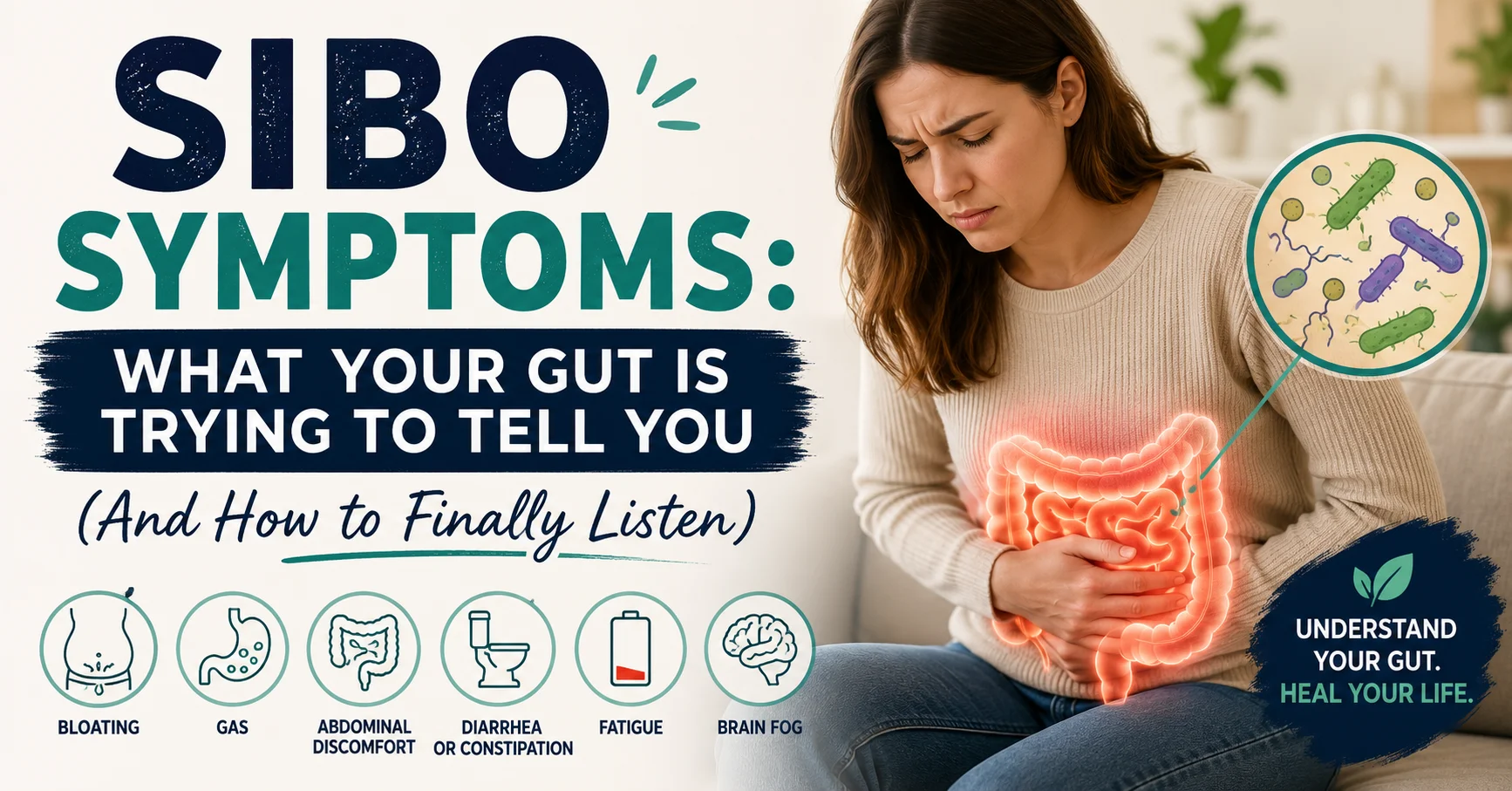
Have you ever felt like your stomach has a mind of its own? One day it’s fine. The next, you’re bloated, gassy, and running to the bathroom — or not going at all. If this sounds familiar, you might be dealing with something called SIBO. And trust me, you are not alone.
SIBO stands for Small Intestinal Bacterial Overgrowth. It’s a condition where too many bacteria grow in the small intestine. Those bacteria don’t belong there in large numbers. When they take over, they cause real trouble. The sibo symptoms they create can turn your daily life upside down.
The tricky part? SIBO symptoms often look like other gut problems. Many people live with them for years without getting the right answer. This article is here to change that. We’ll walk through every major symptom, explain why it happens, and help you understand what to do next. Let’s dig in.
What Is SIBO and Why Does It Mess With Your Body So Much?
Your digestive system is a long, winding road. Food travels from your mouth, through your stomach, into your small intestine, and finally into your large intestine. The large intestine is home to trillions of good bacteria. That’s totally normal and healthy.
But the small intestine is supposed to stay mostly clear of bacteria. It’s where most of your nutrients get absorbed. When bacteria overgrow there, they interfere with that process in a big way. They eat the food before your body can. They produce gases that have nowhere to go. They damage the lining of your gut over time.
This is why sibo symptoms are so wide-ranging. The damage isn’t just in one spot — it affects digestion, immunity, energy, and even your mood. Understanding this helps you connect the dots between symptoms that might seem totally unrelated.
The Most Common SIBO Symptoms You Should Know
When people first learn about SIBO, they’re often surprised by how many symptoms it causes. It’s not just a “tummy ache” situation. The list is long, and it touches many parts of your life. Here are the most common sibo symptoms people experience every day.
Bloating is usually the first thing people notice. Your belly swells up — sometimes after just a few bites of food. It can feel like a balloon is being inflated inside you. Many people say they look “six months pregnant” by evening. This happens because bacteria ferment food and produce gas in places your body wasn’t designed to handle.
Gas and burping go hand in hand with bloating. The excess gas has to go somewhere. It causes frequent burping, flatulence, and embarrassing moments. Some people notice the gas is worse after eating certain foods like bread, pasta, or beans. That’s because bacteria love to ferment carbohydrates and sugars.
Abdominal pain and cramping are also very common. The pain can range from a dull ache to sharp, stabbing sensations. It often gets worse after eating and better after a bowel movement. Many people with sibo symptoms are mistakenly told they have IBS — irritable bowel syndrome. The two conditions are actually closely linked, which we’ll explore later.
Diarrhea, Constipation, or Both? How SIBO Affects Your Bowels
One of the most confusing things about sibo symptoms is that they affect people differently when it comes to bathroom habits. Some people run to the bathroom multiple times a day. Others struggle to go at all. And some unfortunate folks experience both — alternating between the two.
Diarrhea-predominant SIBO is common when hydrogen-producing bacteria overgrow. These bacteria speed up gut motility, meaning things move too fast. You end up with loose, watery stools, urgency, and sometimes accidents. Food doesn’t have time to be absorbed properly, which leads to nutritional losses.
Constipation-predominant SIBO (sometimes called hydrogen sulfide or methane-dominant SIBO) is caused by different bacterial strains. Methane gas actually slows down the movement of your bowel. Things move too slowly. Stools become hard and difficult to pass. You may feel like you never fully empty.
Mixed-type SIBO gives you both. One week you can’t stay out of the bathroom. The next week, nothing moves. This unpredictability makes everyday planning stressful and exhausting. If you recognize this pattern in yourself, SIBO may well be the hidden cause.
Nutritional Deficiencies: A Hidden Consequence of SIBO
Here’s something many doctors don’t explain clearly enough. When bacteria overgrow in the small intestine, they compete with you for nutrients. You eat a healthy meal, and the bacteria take their share first. Over time, this leads to serious nutritional gaps — even if you’re eating well.
Vitamin B12 deficiency is one of the most common results of sibo symptoms going untreated. B12 is essential for nerve function, energy, and red blood cell production. Low B12 causes fatigue, tingling in hands and feet, brain fog, and even memory problems. Many people with SIBO test low for B12 even when their diet is rich in it.
Fat-soluble vitamins like A, D, E, and K are also poorly absorbed when SIBO is present. Bacteria damage bile salts that are needed to digest fats. Without proper fat digestion, these vitamins can’t be absorbed. Low vitamin D leads to weakened immunity and bone loss. Low vitamin K affects blood clotting. These are serious downstream effects of an untreated gut condition.
Iron deficiency is another frequent finding. SIBO damages the villi — tiny finger-like projections in the small intestine that absorb nutrients. When villi are damaged, iron absorption drops. Low iron leads to anemia, which causes exhaustion, pale skin, and shortness of breath. Many women with SIBO are told they’re anemic without ever being checked for the underlying cause.
Brain Fog and Fatigue: When SIBO Symptoms Go Beyond Your Gut
This is the part most people don’t expect. SIBO isn’t just a gut problem. It’s a whole-body problem. Many people with sibo symptoms report feeling mentally foggy, exhausted, and emotionally flat — even when they get enough sleep.
Brain fog is that frustrating feeling of not being able to think clearly. You forget words mid-sentence. You struggle to focus. You feel like you’re thinking through a thick cloud. Research now shows that the gut and brain communicate constantly through what’s called the gut-brain axis. When your gut is inflamed and imbalanced, it sends distress signals to your brain. Those signals disrupt cognitive function and mood.
Chronic fatigue is incredibly common with SIBO. Part of it is nutritional — your body isn’t absorbing the B vitamins, iron, and other nutrients it needs for energy production. Part of it is inflammatory. When bacteria overgrow, your immune system goes into overdrive. This chronic low-grade inflammation drains your energy reserves day after day.
Some people describe feeling like they’ve “hit a wall” every afternoon. Others feel tired even after a full night’s sleep. If fatigue and brain fog have been your constant companions — especially alongside gut problems — SIBO could be the missing piece of the puzzle.
Skin Problems Linked to SIBO Symptoms
Your skin is a reflection of what’s happening inside. When your gut is in trouble, your skin often shows it. This connection is sometimes called the gut-skin axis, and it’s backed by growing scientific evidence.
Rosacea — a condition causing facial redness, flushing, and visible blood vessels — has a strong association with SIBO. Studies have found that people with rosacea are significantly more likely to test positive for SIBO than those without it. When SIBO is treated, many rosacea sufferers see dramatic improvement in their skin.
Eczema and acne are also commonly reported alongside sibo symptoms. The gut produces important compounds that regulate skin inflammation. When SIBO disrupts the gut microbiome and increases intestinal permeability (often called “leaky gut”), inflammatory molecules enter the bloodstream. They show up on the skin as breakouts, rashes, and irritation.
If you’ve tried every cream, serum, and skincare routine and nothing works long-term, it might be time to look inward — literally. Healing the gut has helped many people finally clear stubborn skin issues that topical treatments never could.
Food Intolerances That Suddenly Appear With SIBO
One of the most baffling parts of living with SIBO is suddenly developing food intolerances you never had before. Foods you used to enjoy now make you miserable. You start avoiding more and more things. Your diet shrinks. Your anxiety around eating grows.
Lactose intolerance often develops or worsens with SIBO. The bacteria damage the lactase enzyme in the small intestine. Without enough lactase, you can’t digest the sugar in dairy. Even a splash of milk in your coffee causes gas, cramping, and diarrhea.
Fructose intolerance is another common one. Fruits, honey, and high-fructose corn syrup become problematic. Your gut bacteria ferment these sugars excessively, causing bloating and pain within hours of eating.
Gluten sensitivity — even without celiac disease — is reported by many SIBO patients. The intestinal damage caused by bacterial overgrowth may trigger immune reactions to gluten. Many people feel significantly better going gluten-free, though treating the underlying SIBO is the more permanent solution.
The Connection Between SIBO and IBS
If you’ve already been diagnosed with irritable bowel syndrome (IBS), here’s something important to know. Research suggests that a significant percentage of IBS cases — some studies say up to 80% — may actually be caused or worsened by SIBO. The sibo symptoms and IBS symptoms overlap almost completely.
Both conditions cause bloating, gas, abdominal pain, and unpredictable bowel habits. The difference is the cause. IBS is often described as a “functional” disorder — meaning something is wrong with how the gut works, but tests come back normal. SIBO is a structural issue — there’s an actual bacterial overgrowth that can be measured and treated.
If you have IBS and you’ve never been tested for SIBO, it might be worth bringing it up with your doctor. A breath test — a simple, non-invasive test — can detect whether SIBO is present. Many people find that treating SIBO finally gives them relief that years of IBS management never provided.
What Causes SIBO in the First Place?
Understanding sibo symptoms is only half the story. Knowing what causes SIBO helps you address the root issue — not just manage symptoms. Several factors can allow bacteria to overgrow where they shouldn’t.
Low stomach acid is one major culprit. Stomach acid is a natural barrier. It kills most bacteria before they ever reach the small intestine. Many people have low stomach acid due to stress, aging, or long-term use of acid-suppressing medications (like proton pump inhibitors). Without that protection, bacteria slip through.
Impaired gut motility is another big factor. Your small intestine has a cleaning mechanism called the migrating motor complex (MMC). It sweeps bacteria out between meals, like a housekeeper clearing the floor. If this process is disrupted — by hypothyroidism, diabetes, Lyme disease, or even food poisoning — bacteria accumulate.
Structural issues like scar tissue from surgeries, Crohn’s disease, or an abnormal connection between the large and small intestines can also allow bacteria to migrate upward. Previous episodes of food poisoning are particularly linked to post-infectious SIBO, where damage to gut nerves impairs the MMC long after the initial infection is gone.
How SIBO Is Diagnosed and Why It’s Often Missed
One of the biggest challenges with sibo symptoms is getting a proper diagnosis. This condition is frequently missed, minimized, or mistaken for something else. Many patients spend years going from doctor to doctor before someone finally connects the dots.
The lactulose or glucose breath test is the most widely used diagnostic tool. You drink a sugar solution and breathe into a tube every 20 minutes for a few hours. If bacteria in the small intestine ferment the sugar, they produce hydrogen or methane gas that shows up in your breath readings. A positive test confirms SIBO.
The test isn’t perfect — it has a margin of error and different labs use different thresholds. This is why clinical judgment matters too. An experienced practitioner will look at your full symptom picture, your history, and your test results together before making a diagnosis.
Small intestine aspirate and culture is more accurate but invasive. It involves inserting a tube into the small intestine to collect fluid and test for bacteria directly. It’s rarely done in everyday clinical practice but can be useful in complex cases.
If you suspect SIBO, keep a detailed symptom diary and ask your doctor specifically about breath testing. Bringing a written list of your symptoms — including when they started, what makes them better or worse, and what you’ve already tried — makes a big difference in getting taken seriously.
Managing and Treating SIBO Symptoms Effectively
The good news is that SIBO is treatable. The challenge is that it can come back without addressing the root causes. Most treatment approaches include a combination of antibiotics or herbal antimicrobials, dietary changes, and gut motility support.
Rifaximin is the most commonly prescribed antibiotic for SIBO. Unlike regular antibiotics, it stays mostly in the gut and doesn’t destroy your systemic microbiome. For methane-dominant SIBO, doctors often add a second antibiotic called neomycin. Many patients see significant reduction in sibo symptoms within 2–4 weeks of treatment.
Herbal antimicrobials are an alternative that some practitioners prefer. Combinations of herbs like berberine, oregano oil, and neem have shown promising results in research. They can be effective for people who want to avoid pharmaceutical antibiotics or who have had recurrences.
Dietary approaches like the Low-FODMAP diet help by starving the bacteria of fermentable carbohydrates. This reduces symptoms while treatment takes effect. It’s not a cure on its own, but it provides significant relief and makes the treatment window more tolerable.
Motility support — addressing the underlying reason the gut isn’t clearing bacteria properly — is crucial for preventing relapse. This might mean taking low-dose prokinetic medications, addressing hypothyroidism, reducing stress, or spacing out meals to allow the MMC to do its job between eating sessions.
Frequently Asked Questions About SIBO Symptoms
Q1: Can SIBO symptoms come and go?
Yes, absolutely. Many people notice that their sibo symptoms flare up after eating certain foods — especially sugary, starchy, or high-fiber foods that bacteria love to ferment. Symptoms may be mild for a few days, then suddenly worsen. Stress is also a known trigger for flares, since it affects gut motility and the immune system. This on-and-off pattern is actually one of the hallmarks of SIBO and helps distinguish it from other gut conditions.
Q2: Is SIBO the same as leaky gut?
They’re related but not the same thing. SIBO can cause leaky gut — also called intestinal permeability — over time. When bacteria damage the gut lining, the tight junctions between intestinal cells loosen. This allows bacteria, toxins, and undigested food particles to pass into the bloodstream. Leaky gut can then cause systemic inflammation, food sensitivities, and immune reactions. Treating SIBO often helps heal leaky gut as well, especially when combined with gut-supportive nutrients like L-glutamine and zinc carnosine.
Q3: Can stress alone cause SIBO symptoms?
Stress doesn’t directly cause SIBO, but it plays a big role in creating the conditions for it. Chronic stress reduces stomach acid, disrupts the migrating motor complex, alters gut immune function, and changes the composition of the gut microbiome. All of these effects make it easier for bacteria to overgrow in the small intestine. Many people first notice their sibo symptoms starting or worsening during a particularly stressful period of life — a major illness, a job change, grief, or trauma.
Q4: How long does it take to feel better after SIBO treatment?
This varies from person to person. Some people feel noticeably better within the first week of antibiotic or herbal treatment. Others take several months to fully recover, especially if they had SIBO for a long time before diagnosis. Nutritional deficiencies need to be corrected, the gut lining needs to heal, and dietary habits may need to shift. Patience is key. Tracking your symptoms weekly helps you see progress even when improvement feels slow.
Q5: Can SIBO cause weight loss or weight gain?
Both are possible. Some people with sibo symptoms lose weight because they’re not absorbing nutrients properly — especially fats and proteins. Others gain weight, possibly because bacteria extract extra calories from fermented carbohydrates, or because hormonal disruptions from nutritional deficiencies affect metabolism. Unexplained weight changes alongside digestive symptoms are a good reason to investigate SIBO.
Q6: Can children get SIBO?
Yes, children can develop SIBO, though it’s less often discussed in pediatric medicine. Children with a history of gastrointestinal infections, motility disorders, or frequent antibiotic use are at higher risk. Sibo symptoms in children may look like recurrent tummy aches, failure to thrive, or unexplained anemia. If your child has persistent gut problems that aren’t explained by other conditions, SIBO is worth discussing with a pediatric gastroenterologist.
Your Gut Is Sending You a Message — It’s Time to Listen
Living with the sibo symptoms we’ve covered in this article is exhausting. The bloating, the pain, the fatigue, the brain fog, the food fears — none of it is “in your head,” and none of it is something you just have to accept as your new normal.
SIBO is a real, diagnosable, treatable condition. More and more doctors are becoming aware of it. More research is being published every year. The conversation around gut health has shifted enormously, and patients today have more tools, more options, and more knowledgeable practitioners available than ever before.
If you read this article and saw yourself in many of these sibo symptoms, that’s important information. Write it down. Share it with your doctor. Ask about breath testing. Advocate for yourself — because you deserve answers, not just band-aids.
Your gut works incredibly hard for you every single day. When it’s struggling, it’s not being difficult. It’s asking for help. And now, you’re better equipped to give it exactly that.T
