

Introduction: Why Lupus Is Called “The Great Imitator”
Imagine waking up every morning and not knowing how your body will feel. One day you’re tired beyond words. The next, your joints ache so badly that lifting a cup of coffee feels impossible. Then a rash appears on your face out of nowhere.
This is the daily reality for millions of people living with lupus.
Lupus is a long-term autoimmune disease. That means your immune system — which is supposed to protect you — starts attacking your own healthy tissue instead. It can affect your skin, joints, kidneys, heart, lungs, and even your brain. Because lupus symptoms look so similar to dozens of other conditions, doctors often call it “the Great Imitator.”
According to the Lupus Foundation of America, at least 1.5 million Americans are living with lupus right now. Worldwide, that number reaches over 5 million. Most of them are women between the ages of 15 and 44. But lupus can affect anyone — men, children, and older adults too.
In this guide, you’ll learn everything about lupus symptoms — what they look like, why they happen, how they differ between people, and what to do if you think you might have lupus. Let’s get started.
What Is Lupus, Exactly?
Before we talk about lupus symptoms, it helps to understand what lupus actually is.
Lupus is not contagious. You can’t catch it from someone else. It’s a chronic (long-lasting) condition where your immune system goes into overdrive and begins harming your own body. Scientists don’t fully understand why this happens, but they believe it’s a mix of genetics, hormones, and environmental triggers like sunlight, infections, or certain medications.
There are four main types of lupus:
| Type | Description |
|---|---|
| Systemic Lupus Erythematosus (SLE) | The most common and serious form. Affects multiple organs. |
| Cutaneous Lupus | Mainly affects the skin. Causes rashes and lesions. |
| Drug-Induced Lupus | Triggered by certain medications. Usually goes away when you stop the drug. |
| Neonatal Lupus | A rare condition that affects newborns of mothers with certain antibodies. |
When most people talk about lupus symptoms, they’re usually referring to SLE — the most widespread form. This guide focuses on SLE unless otherwise noted.
The Most Common Lupus Symptoms You Should Know
Lupus symptoms can range from mild to life-threatening. They also tend to “flare up” and then go into remission — meaning they get worse for a while, then calm down. Here are the most recognized lupus symptoms you need to know about.
1. The Butterfly Rash (Malar Rash)
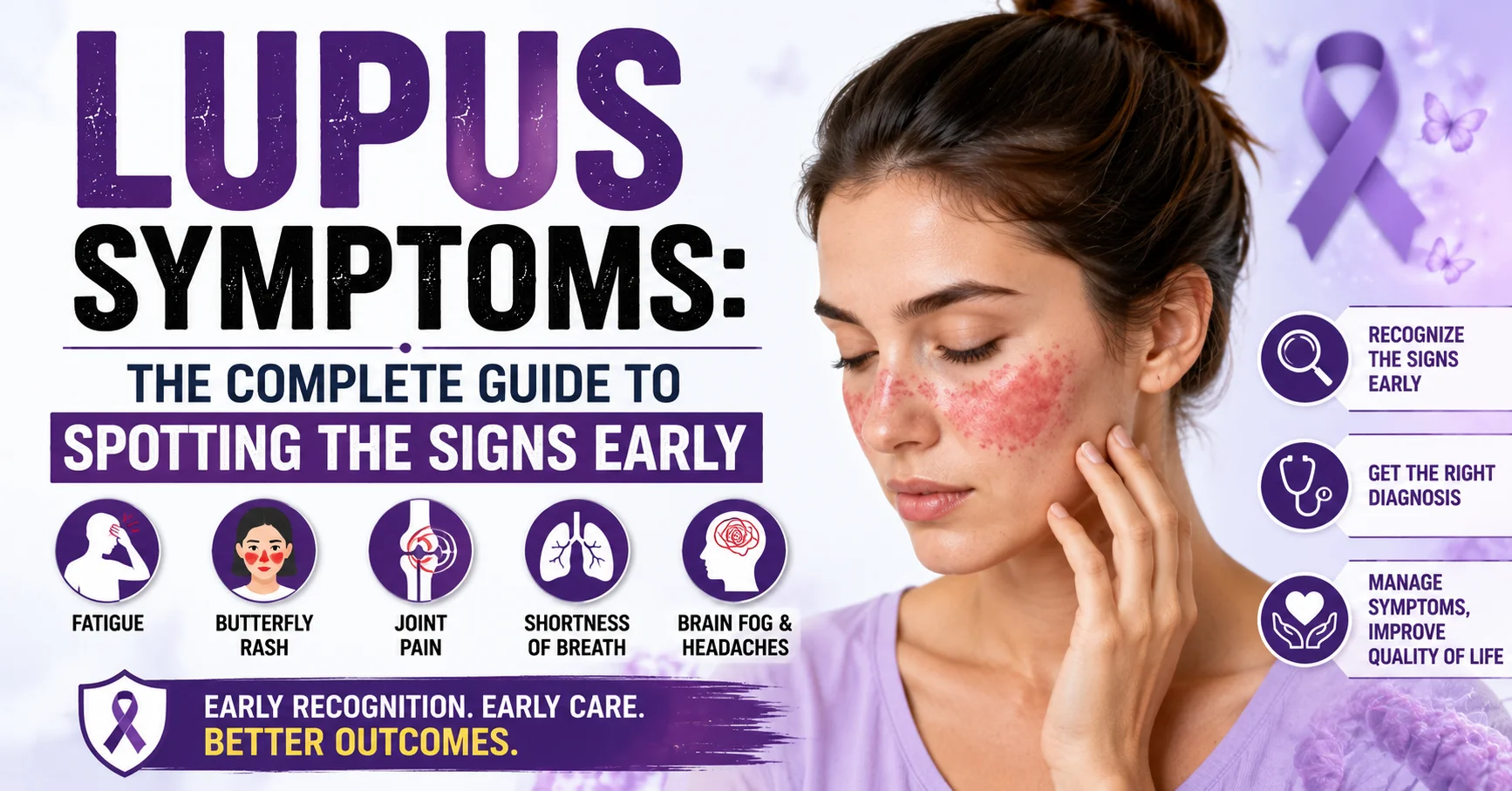
One of the most distinctive lupus symptoms is a red or purplish rash that spreads across both cheeks and over the nose. Doctors call it a “butterfly rash” because of its shape. It looks like a butterfly with its wings spread wide.
This rash appears in about 30–60% of people with lupus. It’s usually flat or slightly raised and can feel warm to the touch. Sunlight often makes it worse. If you notice this kind of rash on your face — especially after being in the sun — that’s an important sign to bring to your doctor’s attention.
Some people confuse this rash with rosacea or sunburn. But a lupus butterfly rash tends to last longer and doesn’t fade with normal skincare routines. It’s one of the most telltale lupus symptoms doctors look for during diagnosis.
2. Extreme Fatigue
Fatigue is reported by over 90% of people with lupus. But this isn’t regular tiredness. It’s a deep, crushing exhaustion that doesn’t go away with rest or sleep. You might sleep 10 hours and still wake up feeling like you haven’t slept at all.
This type of fatigue is caused by inflammation in the body, anemia (low red blood cells), and the immune system constantly working in overdrive. It can make everyday tasks feel overwhelming. Simple things like grocery shopping, cooking, or even taking a shower can feel like running a marathon.
Many people with lupus say fatigue is one of the hardest lupus symptoms to explain to others, because you look fine on the outside. This often leads to misunderstanding, stress, and emotional difficulty. Recognizing this as a real, physical lupus symptom is crucial for both patients and their loved ones.
3. Joint Pain and Swelling
Joint pain is one of the earliest and most frequent lupus symptoms. It often affects both sides of the body at once — for example, both wrists or both knees. The pain is usually worse in the morning and gets a little better as the day goes on.
Unlike rheumatoid arthritis, lupus-related joint damage is generally less severe and less likely to cause permanent deformity. But the pain is real and can limit your daily movement. Some people describe it as a deep, aching soreness. Others say it feels like their joints are being squeezed.
Lupus can also cause inflammation in the lining of the joints, a condition called synovitis. This can lead to warmth, redness, and swelling around the affected joints. If you’re experiencing symmetrical joint pain alongside other lupus symptoms, it’s worth talking to a rheumatologist.
4. Skin Rashes Beyond the Face
The butterfly rash is the most famous skin sign, but lupus symptoms can show up on the skin in many other ways. Some people develop a type of rash called discoid lupus, which causes round, coin-shaped lesions. These can scar the skin if not treated.
Photosensitivity — sensitivity to UV light — is also a key lupus symptom. Many people with lupus will develop rashes or feel sick after even a short time in the sun. This means wearing sunscreen every day becomes essential, not just a good idea.
Other skin-related lupus symptoms include hair loss, mouth ulcers (small sores inside the mouth), and skin discoloration. Some people notice purplish marks or broken blood vessels near the skin surface. These may not seem alarming at first, but they’re important clues that something deeper is happening.
5. Kidney Problems (Lupus Nephritis)
About 50% of people with SLE develop kidney problems, known as lupus nephritis. This is one of the more serious lupus symptoms because the kidneys play such a vital role in filtering waste from your blood.
Early signs of lupus nephritis can be subtle. You might notice foamy urine (a sign of protein in the urine), swelling in your ankles or feet, or high blood pressure. In more advanced cases, the kidneys may begin to fail.
Because the early lupus symptoms of kidney involvement are so quiet, regular urine tests and blood tests are important for anyone with lupus. Catching kidney problems early gives doctors the best chance to protect your long-term kidney function.
6. Chest Pain and Breathing Difficulty
Lupus can cause inflammation in the lining around the lungs (pleuritis) or around the heart (pericarditis). These are serious lupus symptoms that should never be ignored.
Pleuritis causes sharp chest pain that gets worse when you take a deep breath or cough. Pericarditis causes pressure or pain in the chest, sometimes spreading to the shoulder or back. Both conditions sound scary — and while they are serious — they are treatable when caught early.
Some people with lupus also develop a condition called “shrinking lung syndrome,” where the lungs become smaller over time due to muscle weakness. This is rare but important to know about. Shortness of breath, persistent chest pain, or a cough that won’t go away should always be reported to your doctor, especially if you have other lupus symptoms.
7. Brain and Nervous System Effects
Lupus can affect the brain and nervous system — an area sometimes called neuropsychiatric lupus. This is one of the most complex and misunderstood groups of lupus symptoms.
Cognitive symptoms include memory loss, confusion, difficulty concentrating, and what many patients call “brain fog.” Imagine trying to think through thick mud. That’s what brain fog feels like. Simple tasks like remembering where you put your keys or following a conversation become genuinely difficult.
Other neurological lupus symptoms include headaches, seizures, vision problems, and in some cases, stroke-like episodes. Mood changes — including depression and anxiety — are also common. These aren’t just emotional responses to having a chronic illness. Lupus can directly affect brain chemistry and function.
8. Raynaud’s Phenomenon
Raynaud’s phenomenon is a condition where blood flow to the fingers and toes becomes restricted when exposed to cold or stress. The skin turns white, then blue, then red as blood flow returns. This color change can be painful or cause numbness and tingling.
Raynaud’s is found in about 30–40% of people with lupus and is considered one of the associated lupus symptoms. It’s not dangerous on its own in most cases, but it signals that blood vessels are inflamed and reacting abnormally.
Keeping your hands warm, wearing gloves in cold weather, and managing stress can help control Raynaud’s episodes.
9. Fever Without a Clear Cause
A low-grade fever — usually between 98.6°F and 101°F — is a common but often overlooked lupus symptom. During a lupus flare, the body’s immune system is highly active, which raises body temperature.
What makes this tricky is that fevers can also be caused by infections, which people with lupus are more prone to because of their immune system issues. So a fever in a lupus patient always needs careful evaluation — is this a flare or an infection? Getting the answer right is important because the treatments are different.
If you have lupus and develop a fever, don’t ignore it. Talk to your doctor promptly.
10. Blood Disorders
Several blood-related lupus symptoms are important to watch for. These include:
- Anemia — low red blood cells, causing fatigue and pale skin
- Leukopenia — low white blood cells, making you more prone to infections
- Thrombocytopenia — low platelets, causing easy bruising or bleeding
Blood disorders are often discovered through routine blood tests rather than noticeable symptoms. This is another reason why regular check-ups are essential for anyone with lupus or suspected lupus symptoms.
Lupus Symptoms: How They Differ Between People
One of the hardest things about lupus is that no two people experience it exactly the same way. Some people have mostly skin-related lupus symptoms. Others have mainly joint pain. Some struggle with kidney problems while others deal primarily with fatigue and brain fog.
This variation makes lupus difficult to diagnose. On average, it takes nearly 6 years for someone to receive a correct lupus diagnosis after their symptoms first appear. During that time, many people are told they have depression, fibromyalgia, rheumatoid arthritis, or even that they’re making things up.
Women of color — particularly Black, Hispanic, and Asian women — are diagnosed with lupus more often and tend to have more severe lupus symptoms. They’re also less likely to receive a timely diagnosis. Advocacy and education are changing this, but slowly.
Lupus Symptoms vs. Flares: What’s the Difference?
Lupus doesn’t behave the same way every day. It cycles between flares (when symptoms get worse) and remission (when symptoms calm down or disappear).
Common flare triggers include:
- Sun exposure
- Stress (physical or emotional)
- Infections
- Lack of sleep
- Hormonal changes (like during pregnancy or menstruation)
- Certain medications
Recognizing your personal triggers can help you manage lupus symptoms and reduce how often flares happen. Many doctors encourage patients to keep a symptom journal to track patterns.
When to See a Doctor About Lupus Symptoms
You should see a doctor if you experience any combination of these warning signs:
- A persistent butterfly-shaped rash on your face
- Unexplained fatigue that doesn’t improve with rest
- Joint pain in multiple joints, especially symmetrically
- Recurring mouth sores
- Hair thinning or loss
- Chest pain or difficulty breathing
- Brain fog or memory problems
- Sensitivity to sunlight
- Swollen feet or ankles
No single lupus symptom confirms the disease. Doctors use a combination of physical exams, blood tests (like the ANA test), urine tests, and your medical history to piece together the picture. The earlier lupus is caught, the better the outcomes tend to be.
How Lupus Symptoms Are Diagnosed
Diagnosing lupus requires a full picture. There’s no single test that says “yes, you have lupus.” Instead, doctors look at criteria developed by the American College of Rheumatology. Having 4 or more of 11 criteria supports a lupus diagnosis.
Key diagnostic tests include:
| Test | What It Checks |
|---|---|
| ANA (Antinuclear Antibody) | Flags autoimmune activity; positive in 95% of lupus patients |
| Anti-dsDNA Antibody | More specific to lupus; also tracks disease activity |
| Complete Blood Count (CBC) | Checks for anemia, low white cells, or low platelets |
| Urinalysis | Looks for protein or blood in urine (kidney involvement) |
| Complement Levels (C3, C4) | Low levels suggest active lupus |
| ESR / CRP | Inflammation markers |
A positive ANA test alone doesn’t mean lupus. Many healthy people test positive. But combined with other lupus symptoms and test results, it helps complete the diagnostic puzzle.
Living With Lupus Symptoms: Practical Tips
A lupus diagnosis is life-changing, but it’s not a death sentence. Millions of people manage their lupus symptoms and live full, meaningful lives. Here are some real strategies that help:
Sun Protection: Use SPF 50+ sunscreen every day — even on cloudy days. Wear protective clothing and try to avoid peak sun hours (10 AM to 4 PM).
Pace Yourself: Learn to recognize when your energy is running low and rest before you hit empty. This is called “pacing” and it’s one of the most effective tools for managing lupus fatigue.
Eat Anti-Inflammatory Foods: A diet rich in vegetables, fruits, whole grains, and omega-3 fatty acids can help reduce inflammation. Limit processed foods, sugar, and alcohol.
Reduce Stress: Chronic stress is a major lupus trigger. Meditation, yoga, gentle exercise, and therapy can all help lower stress levels and reduce flares.
Build Your Medical Team: Lupus often requires a team of specialists — a rheumatologist (the lead doctor), a nephrologist for kidneys, a dermatologist for skin, and sometimes a cardiologist or neurologist.
Join a Support Group: Connecting with others who share your experience makes an enormous difference. Organizations like the Lupus Foundation of America offer resources, forums, and local support groups.
FAQs About Lupus Symptoms
Q1: Can lupus symptoms come and go?
Yes, absolutely. One of the defining features of lupus is that symptoms flare up and then improve or disappear during periods called remission. You might feel completely fine for months, then experience a flare triggered by sun exposure, stress, or illness. This unpredictable pattern is one of the most challenging parts of living with lupus.
Q2: Can men get lupus symptoms too?
Yes, men can get lupus, though it’s much less common. About 1 in 10 people with lupus is male. Men with lupus often develop more serious kidney and cardiovascular lupus symptoms than women. Because lupus is usually thought of as a “women’s disease,” men are sometimes diagnosed later, which can lead to more damage over time.
Q3: Are lupus symptoms the same in children?
Children can develop lupus (called pediatric lupus), and their lupus symptoms can be more severe than in adults. Children with lupus are more likely to have kidney involvement and serious organ damage. Symptoms include rashes, joint pain, fatigue, and fever, similar to adult lupus. Early diagnosis and treatment are especially critical in children.
Q4: What is the difference between lupus and rheumatoid arthritis?
Both conditions cause joint pain and swelling, but they’re different diseases. Rheumatoid arthritis mainly attacks the joints and tends to cause more permanent joint damage. Lupus affects multiple organ systems beyond the joints. Also, lupus has unique lupus symptoms like the butterfly rash and photosensitivity that are not seen in rheumatoid arthritis. Blood tests can help tell them apart.
Q5: Can lupus symptoms be mild?
Yes. Some people have very mild lupus symptoms — mostly fatigue and skin rashes — that don’t seriously affect their daily life. Others have severe, life-threatening symptoms affecting the kidneys, heart, or brain. The severity varies widely from person to person, and it can change over time. Even mild lupus requires monitoring because it can become more severe without warning.
Q6: Is there a cure for lupus?
Currently, there is no cure for lupus. But the good news is that treatment has advanced significantly. Medications like hydroxychloroquine (Plaquenil), corticosteroids, immunosuppressants, and newer biologic drugs can control lupus symptoms very effectively. Many people with lupus go into long-term remission and live normal lives. Researchers are actively working on new treatments and are hopeful about future breakthroughs.
Conclusion: Knowledge Is Your First Line of Defense
Lupus symptoms are complex, varied, and often misunderstood. From the unmistakable butterfly rash to invisible struggles like brain fog and crushing fatigue, lupus affects the whole person — body, mind, and spirit.
The most powerful thing you can do is educate yourself. Knowing what lupus symptoms look like — and not dismissing them as stress or aging — can make the difference between early treatment and years of unnecessary suffering.
If you recognize yourself or someone you love in this article, don’t wait. Talk to a doctor, ask for testing, and advocate for yourself. Lupus is manageable. With the right care, support, and awareness, a full and meaningful life is absolutely within reach.
Share this article with someone who might need it. You could be the reason they finally get the answers they’ve been searching for.
