

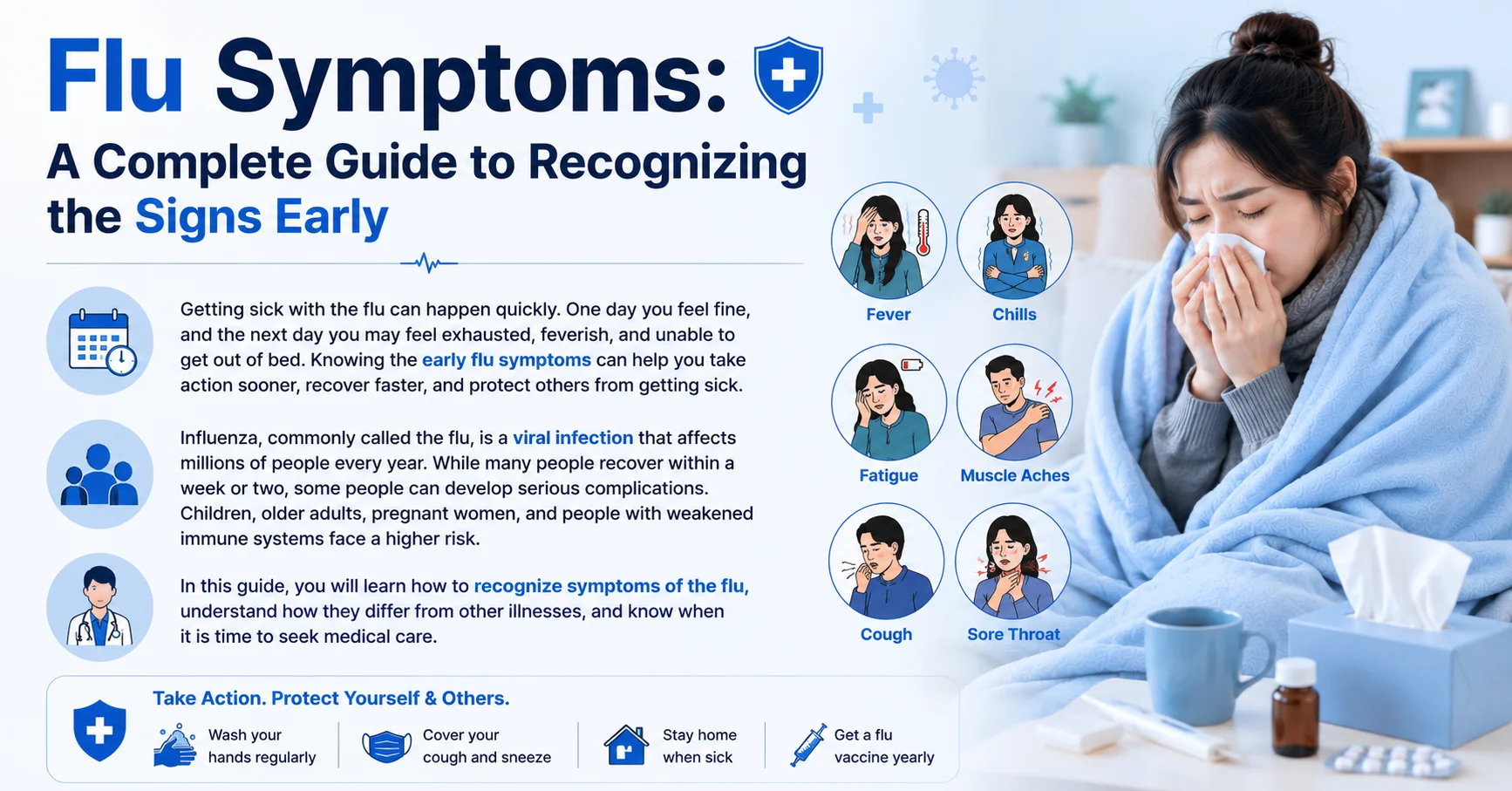
Getting sick with the flu can happen quickly. One day you feel fine, and the next day you may feel exhausted, feverish, and unable to get out of bed. Knowing the early flu symptoms can help you take action sooner, recover faster, and protect others from getting sick.
Influenza, commonly called the flu, is a viral infection that affects millions of people every year. While many people recover within a week or two, some people can develop serious complications. Children, older adults, pregnant women, and people with weakened immune systems face a higher risk.
In this guide, you will learn how to recognize symptoms of the flu, understand how they differ from other illnesses, and know when it is time to seek medical care.
Quick Overview: Common Flu Symptoms
| Symptom | How Common Is It? | Typical Severity |
|---|---|---|
| Fever | Very common | Moderate to high |
| Chills | Very common | Moderate |
| Cough | Very common | Mild to severe |
| Body aches | Very common | Moderate to severe |
| Fatigue | Very common | Severe |
| Headache | Common | Moderate |
| Sore throat | Common | Mild to moderate |
| Runny or stuffy nose | Common | Mild |
| Nausea or vomiting | More common in children | Mild to moderate |
| Diarrhea | Sometimes | Mild |
What Are Flu Symptoms?
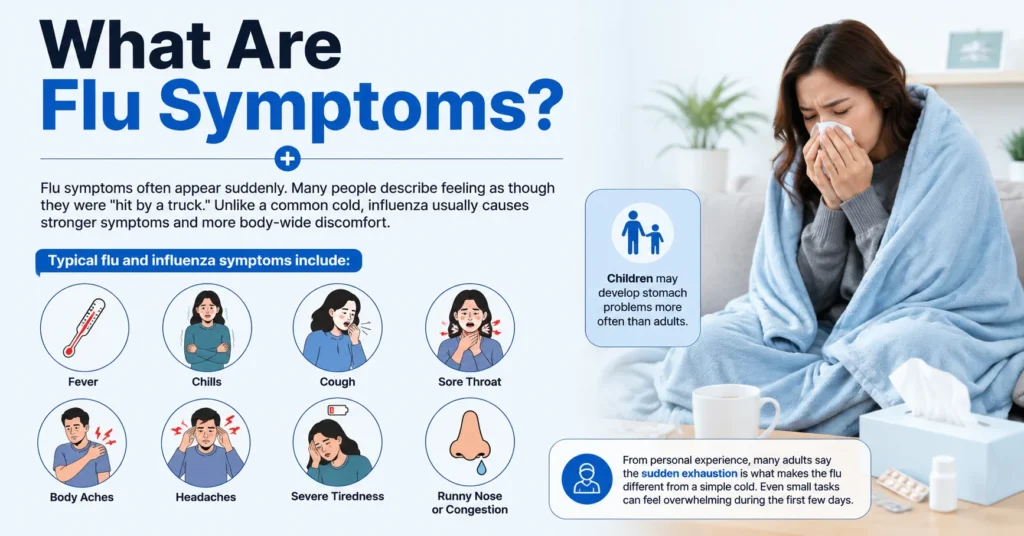
Flu symptoms often appear suddenly. Many people describe feeling as though they were “hit by a truck.” Unlike a common cold, influenza usually causes stronger symptoms and more body-wide discomfort.
Typical flu and influenza symptoms include fever, chills, cough, sore throat, body aches, headaches, and severe tiredness. Some people also experience a runny nose or congestion. Children may develop stomach problems more often than adults.
From personal experience, many adults say the sudden exhaustion is what makes the flu different from a simple cold. Even small tasks can feel overwhelming during the first few days.
Early Warning Signs of the Flu
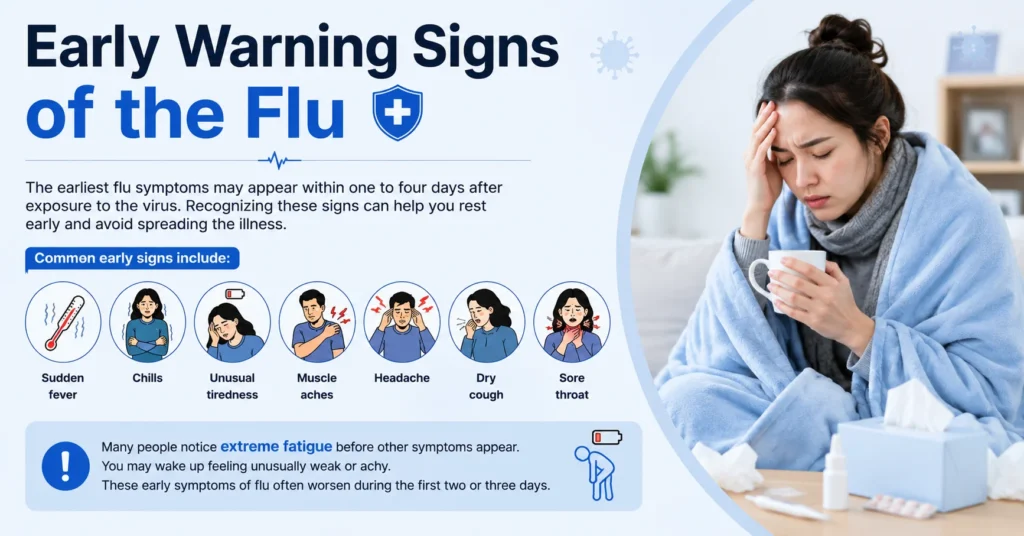
The earliest flu symptoms may appear within one to four days after exposure to the virus. Recognizing these signs can help you rest early and avoid spreading the illness.
Common early signs include:
- Sudden fever
- Chills
- Unusual tiredness
- Muscle aches
- Headache
- Dry cough
- Sore throat
Many people notice extreme fatigue before other symptoms appear. You may wake up feeling unusually weak or achy. These early symptoms of flu often worsen during the first two or three days.
Flu Symptoms 2026: Are This Year’s Symptoms Different?
Many people search for flu symptoms 2026 because they want to know whether current strains are causing new problems. In most years, influenza symptoms remain largely the same. Fever, cough, body aches, chills, and fatigue continue to be the most common signs.
However, health experts report that circulating strains can affect people differently each season. Some years bring stronger respiratory symptoms, while others may cause more digestive complaints.
The best approach is to stay aware of public health updates in your area and seek medical advice if symptoms become severe. Annual flu vaccination remains one of the best ways to reduce serious illness.
Symptoms of the Flu in Adults
Adults usually experience classic influenza symptoms that affect the whole body.
Common symptoms include:
- High fever
- Dry cough
- Muscle pain
- Headache
- Chills
- Extreme tiredness
- Loss of appetite
- Sore throat
Many adults report that fatigue lasts longer than other symptoms. Even after the fever disappears, weakness can continue for several days or weeks.
Adults with chronic conditions such as asthma, diabetes, or heart disease should monitor their symptoms carefully because complications can develop more easily.
Flu Symptoms in Kids
Flu symptoms in kids can look different from symptoms seen in adults. Children often develop higher fevers and may become irritable, sleepy, or less interested in eating.
Signs to watch for include:
- Fever above 100.4°F (38°C)
- Chills
- Cough
- Runny nose
- Ear pain
- Vomiting
- Diarrhea
- Reduced appetite
- Excessive sleepiness
Young children may struggle to explain how they feel. Parents should watch for unusual behavior, trouble breathing, or signs of dehydration.
If a child has blue lips, severe breathing difficulty, confusion, or refuses fluids, immediate medical care is necessary.
Understanding Stomach Flu Symptoms
Many people confuse influenza with the stomach flu. However, they are different illnesses.
True influenza mainly affects the respiratory system. The stomach flu, known medically as viral gastroenteritis, affects the digestive system.
Typical stomach flu symptoms include:
- Nausea
- Vomiting
- Diarrhea
- Stomach cramps
- Mild fever
- Dehydration
Although some people with influenza may experience nausea or vomiting, especially children, severe digestive symptoms usually suggest another illness.
Understanding this difference can help prevent confusion when seeking treatment.
Flu A Symptoms: What Makes Influenza A Unique?
Influenza A is one of the main types of seasonal flu viruses. Most seasonal outbreaks involve Influenza A strains.
Flu A symptoms are generally similar to other influenza infections and may include:
- Sudden fever
- Severe body aches
- Dry cough
- Chills
- Extreme fatigue
- Headache
- Nasal congestion
Some people experience stronger symptoms with Influenza A compared with other strains. Because symptoms overlap significantly, laboratory testing is often required to confirm the exact type.
Regardless of the strain, early rest and proper hydration remain important parts of recovery.
How Flu Symptoms Differ From a Common Cold
People often wonder whether they have a cold or the flu. While both illnesses affect the respiratory system, there are important differences.
| Feature | Flu | Common Cold |
|---|---|---|
| Onset | Sudden | Gradual |
| Fever | Common | Rare |
| Body aches | Common | Mild |
| Fatigue | Severe | Mild |
| Cough | Common | Mild |
| Sneezing | Sometimes | Common |
| Chills | Common | Rare |
| Headache | Common | Rare |
If symptoms appear suddenly and include fever with severe body aches, influenza is more likely.
How Long Do Flu Symptoms Last?
Most people begin feeling better within one to two weeks.
Typical timeline:
Days 1–3: Fever, chills, aches, and fatigue peak.
Days 4–7: Fever usually improves, but cough and tiredness continue.
Days 7–14: Energy gradually returns.
A lingering cough can last several weeks after other symptoms disappear. Children, older adults, and people with underlying conditions may take longer to recover.
Warning Signs That Require Medical Attention
While most cases improve at home, certain symptoms require prompt medical care.
Seek immediate help if you experience:
- Difficulty breathing
- Chest pain
- Persistent dizziness
- Confusion
- Severe dehydration
- Seizures
- Symptoms that improve and then suddenly worsen
Children should be evaluated quickly if they show breathing problems, bluish skin, severe irritability, or difficulty waking up.
Early treatment may reduce complications in high-risk individuals.
Tips to Recover Faster From the Flu
Recovery requires patience and proper self-care.
Helpful strategies include:
Get Plenty of Rest
Sleep helps your immune system fight infection.
Stay Hydrated
Drink water, broth, herbal tea, and electrolyte drinks.
Eat Nutritious Foods
Simple foods like soup, fruit, and toast are easier to tolerate.
Manage Fever Safely
Use fever-reducing medicines only as directed by a healthcare professional.
Avoid Spreading the Virus
Stay home until you are fever-free for at least 24 hours without medication.
How to Prevent the Flu
Prevention remains the best defense against influenza.
Simple preventive steps include:
- Get an annual flu vaccine.
- Wash hands often.
- Cover coughs and sneezes.
- Avoid close contact with sick people.
- Clean frequently touched surfaces.
- Stay home when sick.
These habits can significantly reduce the spread of seasonal flu.
Frequently Asked Questions
1. What are the first flu symptoms?
The first flu symptoms usually include sudden fever, chills, body aches, fatigue, and headache.
2. How do symptoms of the flu differ from a cold?
Flu symptoms appear suddenly and are usually more severe. Colds develop gradually and are generally milder.
3. Are flu symptoms in kids different from adults?
Yes. Children often experience higher fevers, vomiting, diarrhea, and increased irritability.
4. Can influenza cause stomach problems?
Yes. Some people, especially children, may experience nausea, vomiting, or diarrhea, although respiratory symptoms remain the main signs.
5. How long is someone contagious with the flu?
Most people can spread the virus from one day before symptoms appear until about five to seven days after becoming sick.
6. When should I see a doctor for flu symptoms?
You should seek medical care if you develop breathing difficulties, chest pain, confusion, severe dehydration, or worsening symptoms.
Conclusion
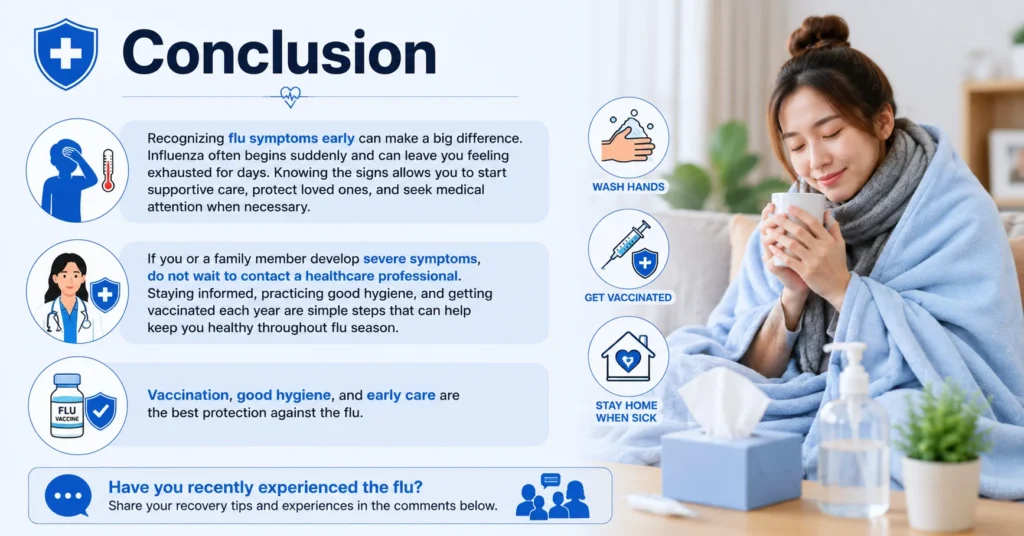
Recognizing flu symptoms early can make a big difference. Influenza often begins suddenly and can leave you feeling exhausted for days. Knowing the signs allows you to start supportive care, protect loved ones, and seek medical attention when necessary.
If you or a family member develop severe symptoms, do not wait to contact a healthcare professional. Staying informed, practicing good hygiene, and getting vaccinated each year are simple steps that can help keep you healthy throughout flu season.
Have you recently experienced the flu? Share your recovery tips and experiences in the comments below.
