
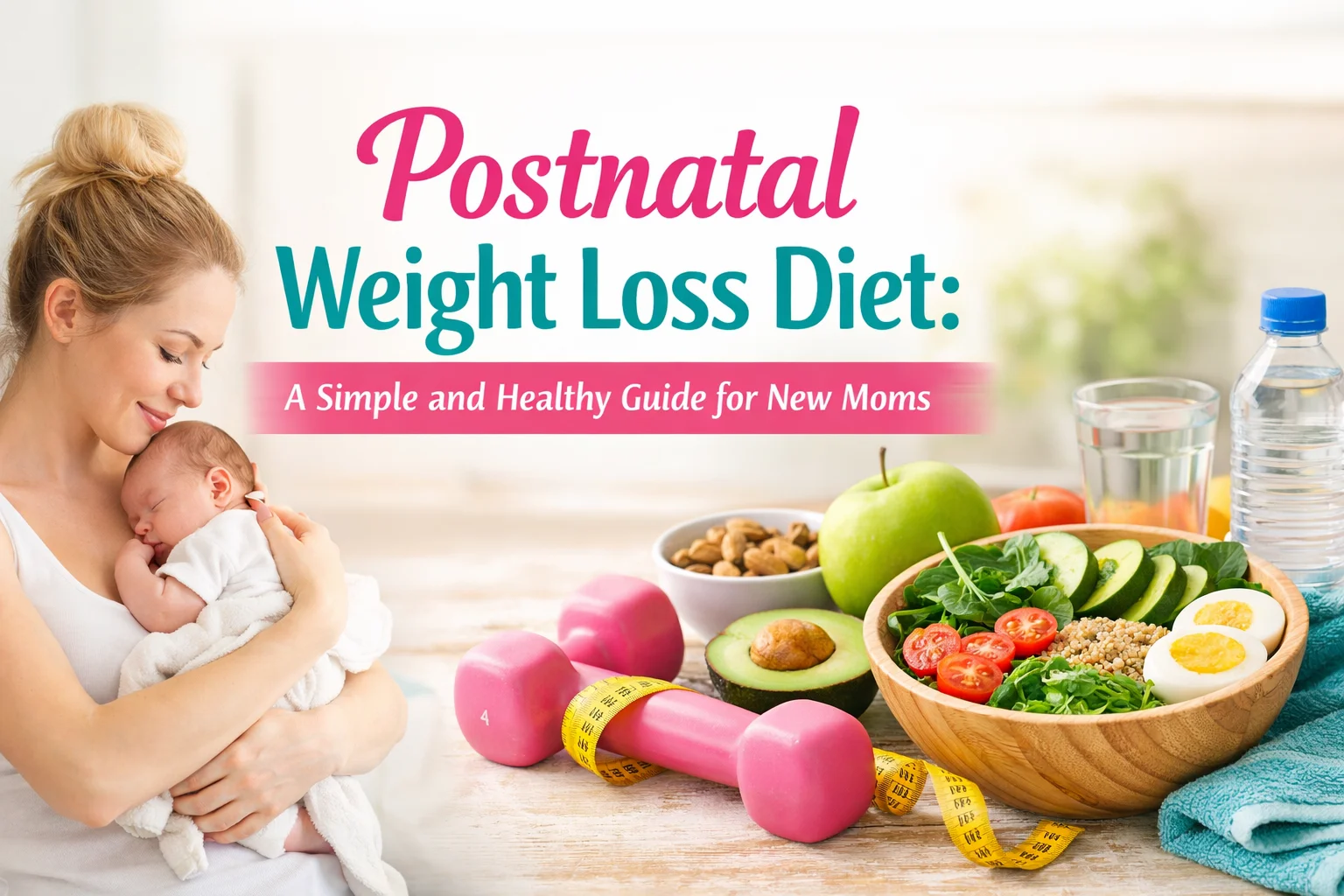
Bringing a baby into the world changes everything. Your sleep changes, your routine changes, and even your body feels different. Many new mothers want to lose pregnancy weight, but the journey should never feel rushed or stressful. A healthy postnatal weight loss diet is not about starving yourself. It is about healing your body, boosting energy, and slowly returning to a healthy weight while caring for your baby.
Many women feel pressure after childbirth. Social media often shows “perfect” celebrity bodies only weeks after delivery. Real life is very different. Your body needs time to recover. Hormones are changing. Sleep is limited. Some days, even eating on time feels difficult. That is why a balanced and realistic plan matters more than a strict diet.
This guide explains everything in a simple way. You will learn what foods help recovery, which habits support healthy fat loss, and how to stay strong during the postpartum period. Whether you had a normal delivery or a C-section, these tips can help you build healthy routines without harming your health or milk supply.
Why Weight Gain Happens After Pregnancy
Pregnancy naturally causes weight gain. Your body stores extra fat to support the growing baby and prepare for breastfeeding. Water retention, hormonal shifts, and reduced movement can also increase weight.
After delivery, some weight goes away quickly. The baby, placenta, and fluids are gone. But many women still carry extra fat around the belly, hips, and thighs. This is completely normal.
Lack of sleep can also affect weight. When you are tired, the body produces hormones that increase hunger. Stress eating becomes common too. Many mothers snack on sugary foods because they are easy and quick.
A healthy postnatal weight loss diet helps your body recover slowly and safely. Fast weight loss methods may reduce energy levels and affect mood. In breastfeeding mothers, crash diets may even lower milk production.
How Soon Can You Start Losing Weight?
Every mother heals at a different pace. Doctors usually suggest waiting at least six weeks before starting serious exercise. However, healthy eating can begin almost immediately after childbirth.
The first goal should be recovery, not rapid fat loss. Your body has gone through major changes. It needs nutrients to repair muscles, balance hormones, and restore energy.
For breastfeeding mothers, calories are important. Producing milk burns extra energy. Most women should avoid very low-calorie diets during this stage. Instead, focus on healthy food choices and balanced meals.
A realistic target is losing around one to two pounds each week after the first recovery period. Slow weight loss is easier to maintain and healthier for the body.
Best Foods for a Healthy Postnatal Recovery
The foods you eat after childbirth can affect healing, energy, mood, and weight loss. Nutrient-rich meals support recovery while keeping you full longer.
Here are some of the best foods to include:
| Food Group | Benefits for New Mothers | Examples |
|---|---|---|
| Protein | Repairs muscles and keeps you full | Eggs, chicken, fish, lentils |
| Whole Grains | Gives long-lasting energy | Oats, brown rice, quinoa |
| Fruits | Provides vitamins and fiber | Apples, berries, bananas |
| Vegetables | Supports digestion and immunity | Spinach, carrots, broccoli |
| Healthy Fats | Helps hormones and brain health | Nuts, avocado, olive oil |
| Dairy | Strengthens bones | Yogurt, milk, cheese |
| Water | Prevents dehydration | Plain water, coconut water |
Eating balanced meals helps prevent overeating later in the day. Small healthy snacks can also help control cravings.
Importance of Protein in a Postnatal Weight Loss Diet
Protein plays a major role in recovery after pregnancy. It helps rebuild tissues, supports muscle strength, and keeps hunger under control.
Many new mothers skip meals because they are busy caring for the baby. This often leads to unhealthy snacking later. Protein-rich foods help keep energy stable and reduce sudden hunger.
Simple protein ideas include boiled eggs, grilled chicken, Greek yogurt, cottage cheese, beans, and lentils. Even a smoothie with milk and nuts can provide a quick protein boost.
One helpful habit is adding protein to every meal. For example:
- Eggs with breakfast
- Lentils with lunch
- Yogurt as a snack
- Fish or chicken at dinner
This simple change can make a big difference in healthy postpartum weight management.
The Truth About Belly Fat After Childbirth
Many women worry most about belly fat. After pregnancy, the stomach area may feel soft or stretched. This is normal. Your abdominal muscles and skin need time to recover.
A postnatal weight loss diet alone cannot instantly flatten the stomach. The body heals gradually. Hormonal changes and water retention also affect the belly area.
One mistake many mothers make is trying extreme belly fat exercises too soon. This can strain weak abdominal muscles. Gentle walking and light movement are safer in the beginning.
Healthy eating, proper sleep, hydration, and patience all work together. Over time, the body naturally adjusts. Some mothers also experience a condition called diastasis recti, where abdominal muscles separate during pregnancy. In such cases, doctor-approved exercises are important.
Smart Snacks for Busy Moms
New mothers often feel hungry throughout the day. Breastfeeding can increase appetite even more. Healthy snacks help avoid junk food cravings.
Good snack choices include:
- Fresh fruit with peanut butter
- Mixed nuts and seeds
- Yogurt with berries
- Boiled eggs
- Homemade smoothies
- Whole grain crackers with cheese
Keeping easy snacks nearby can save time during busy days. Many mothers find meal preparation difficult after childbirth. Preparing snacks in advance makes healthy eating easier.
I have seen many mothers skip meals and then eat sugary foods late at night. This creates energy crashes and slows healthy weight loss. Balanced snacks help maintain energy and improve mood.
Hydration and Its Role in Weight Loss
Water is one of the most overlooked parts of postpartum recovery. Dehydration can cause fatigue, headaches, and stronger cravings.
Breastfeeding mothers especially need extra fluids. Many women mistake thirst for hunger and end up eating unnecessary snacks.
A simple tip is drinking a glass of water every time you feed the baby. Herbal teas, coconut water, and soups also help hydration.
Here are some hydration benefits:
| Hydration Benefit | Why It Matters |
|---|---|
| Boosts energy | Helps fight postpartum tiredness |
| Supports digestion | Reduces constipation |
| Helps milk production | Important for breastfeeding mothers |
| Controls appetite | Prevents overeating |
| Improves skin health | Helps recovery and glow |
Try carrying a water bottle throughout the day. Small habits create long-term results.
Foods to Avoid During Postpartum Weight Loss
No food needs to be completely banned. However, some foods can slow progress and reduce energy.
Try limiting:
- Sugary drinks
- Deep-fried foods
- Packaged snacks
- Excess sweets
- Fast food meals
- Highly processed foods
These foods often contain empty calories and little nutrition. They can also increase bloating and tiredness.
Many new moms eat processed foods because they are convenient. That is understandable. The goal is balance, not perfection. Even replacing one unhealthy snack daily can improve overall health.
Meal Timing Tips for New Mothers
Meal timing matters more than many people realize. Long gaps between meals can increase cravings and low energy.
A simple eating schedule may look like this:
| Time | Meal Idea |
|---|---|
| Morning | Oatmeal with fruit and nuts |
| Mid-Morning | Yogurt or boiled eggs |
| Lunch | Rice, vegetables, and chicken |
| Evening Snack | Fruit smoothie |
| Dinner | Soup, salad, and grilled fish |
Eating smaller balanced meals throughout the day can help maintain energy levels.
Sleep disruption is common after childbirth. Some mothers eat late at night because they stay awake with the baby. Healthy night snacks like nuts or fruit are better than chips or sugary desserts.
Safe Exercise Alongside a Postnatal Weight Loss Diet
Food alone is not the full answer. Gentle movement also supports recovery and healthy weight loss.
Walking is one of the best postpartum exercises. It improves mood, burns calories, and supports heart health without stressing the body.
Other safe activities may include:
- Stretching
- Pelvic floor exercises
- Yoga
- Light strength training
- Postnatal fitness classes
Always check with a doctor before starting intense workouts, especially after a C-section.
One of the biggest mistakes is comparing yourself to others. Every mother recovers differently. Some lose weight quickly. Others need more time. Progress should be measured by health, strength, and energy — not only the number on the scale.
Breastfeeding and Weight Loss
Many people believe breastfeeding automatically causes fast weight loss. This is not always true.
Breastfeeding burns calories, but it can also increase hunger. Some mothers lose weight naturally, while others hold onto extra fat during nursing.
The best approach is balance. Eating too little may reduce milk supply and increase exhaustion. Focus on nutrient-rich meals instead of strict calorie counting.
Healthy breastfeeding meal ideas include:
- Oats with banana
- Vegetable soup with chicken
- Brown rice with lentils
- Smoothies with milk and nuts
A balanced postnatal weight loss diet should support both the mother and the baby.
Emotional Health and Postpartum Eating
Postpartum emotions are powerful. Many women experience stress, anxiety, or sadness after childbirth. Emotional eating is common during this time.
Lack of sleep makes cravings stronger. Sugary foods may provide temporary comfort but often lead to energy crashes later.
Talking with family, resting when possible, and asking for support are important. Mental health matters just as much as physical health.
One thing many mothers need to hear is this: healing takes time. Your body created life. It deserves care and patience, not punishment.
Common Mistakes New Mothers Make
Many women unknowingly follow unhealthy habits after childbirth. These habits can slow recovery and increase frustration.
Here are some common mistakes:
| Mistake | Better Choice |
|---|---|
| Skipping meals | Eat small balanced meals |
| Extreme dieting | Focus on nutrition |
| Drinking sugary beverages | Choose water or herbal tea |
| No physical movement | Start gentle walking |
| Comparing with celebrities | Focus on personal progress |
| Ignoring sleep | Rest whenever possible |
Healthy weight loss is not about perfection. Small consistent habits work better than extreme changes.
A Simple One-Day Postnatal Meal Plan
Here is an easy sample meal plan for new mothers:
Breakfast
Oatmeal with almonds, banana, and milk
Mid-Morning Snack
Greek yogurt with berries
Lunch
Grilled chicken, brown rice, and mixed vegetables
Evening Snack
Apple slices with peanut butter
Dinner
Vegetable soup with whole grain bread
Before Bed
Warm milk or herbal tea
This type of balanced routine supports recovery and healthy fat loss without making you feel deprived.
FAQs About Postnatal Weight Loss Diet
How long does postpartum weight loss take?
Every woman is different. Some lose weight within months, while others need a year or more. Slow progress is healthier and easier to maintain.
Can breastfeeding help with weight loss?
Breastfeeding burns calories, but results vary. Some women lose weight faster, while others retain fat while nursing.
Is it safe to diet right after childbirth?
Extreme dieting is not recommended. Focus on nutritious meals and proper recovery during the first weeks.
What is the best exercise after pregnancy?
Walking is one of the safest and easiest exercises for most new mothers. Gentle stretching and yoga can also help.
Should I avoid carbs completely?
No. Healthy carbs provide energy, especially for breastfeeding mothers. Choose whole grains instead of refined carbs.
Why is postpartum belly fat hard to lose?
Hormonal changes, stretched muscles, and sleep problems can make belly fat harder to reduce. Patience and consistency are important.
Conclusion
A healthy postnatal weight loss diet is not about chasing perfection. It is about helping your body recover while slowly building healthy habits. New mothers already face many physical and emotional changes. Adding extreme diet pressure only creates stress.
The best approach is simple: eat balanced meals, stay hydrated, move gently, and give yourself time. Real progress happens through consistency, not crash diets.
Remember, your body has done something amazing. Treat it with kindness and patience. Healthy postpartum weight loss is possible, but your well-being matters more than quick results.
