
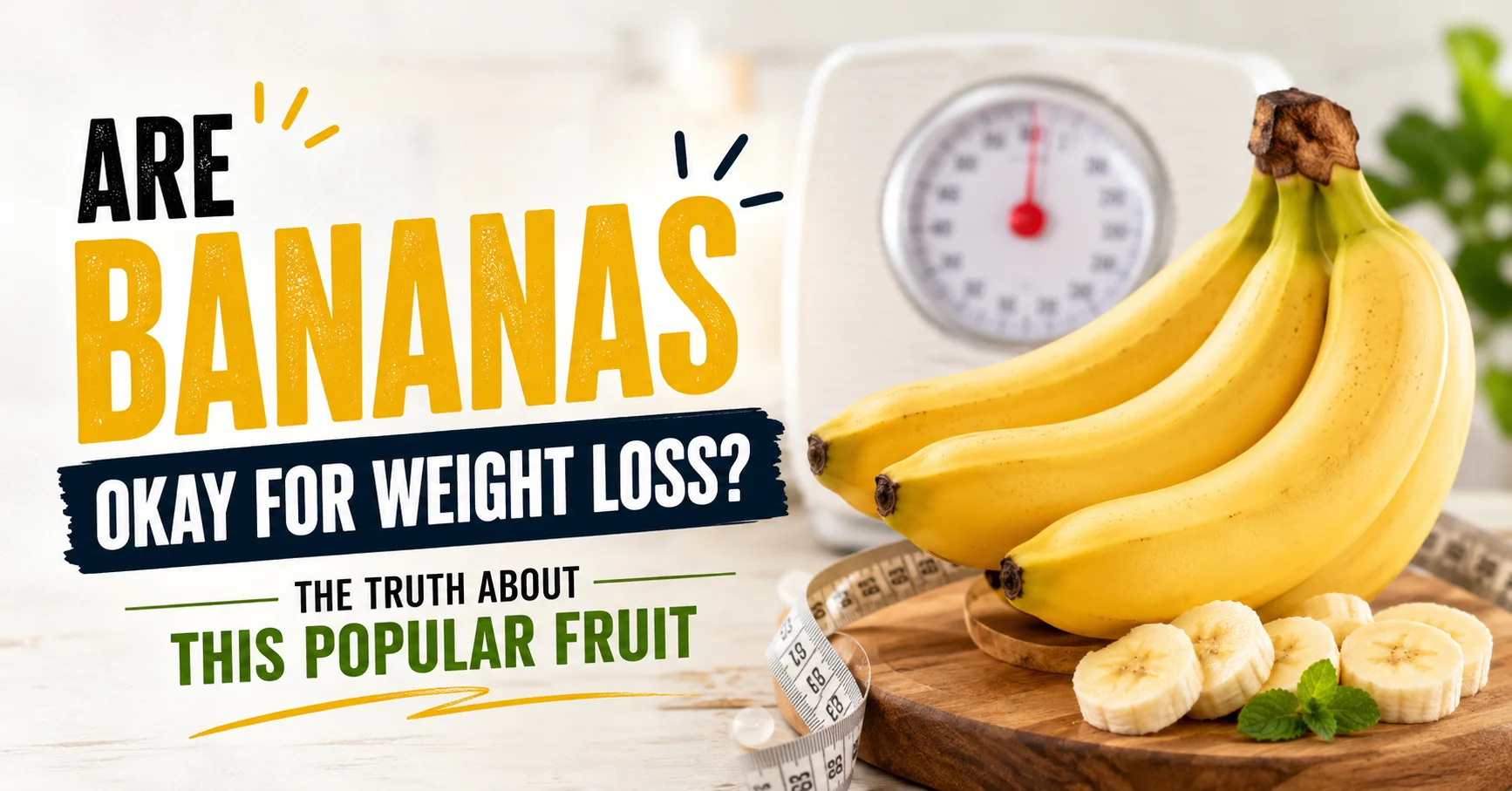
Many people avoid bananas when trying to lose weight. They think bananas have too much sugar or too many carbs. But is that really true?
The answer may surprise you. Bananas can actually support healthy weight loss when eaten the right way. They are filling, easy to carry, and packed with nutrients your body needs.
If you have ever wondered, “are bananas okay for weight loss,” this guide will help you understand the real facts. You will learn how bananas affect hunger, calories, energy, and fat loss. You will also see the best times to eat them and simple ways to include them in your meals.
The best part? Bananas are affordable and easy to find almost anywhere.
Why Bananas Get a Bad Reputation
Bananas are one of the most misunderstood fruits in the weight loss world.
Some people avoid them because they contain natural sugar. Others think bananas are too high in calories compared to berries or apples. Social media often makes carbs look scary. Because bananas contain carbs, they sometimes get blamed for weight gain.
But the truth is more balanced.
A medium banana has about 100 calories. That is not very high for a snack. It also contains fiber, vitamins, and minerals that help your body work properly. Most unhealthy snacks contain far more calories and less nutrition.
The real issue is not the banana itself. Weight gain usually happens from eating too much overall, not from one healthy fruit.
Many diet experts agree that whole fruits are better choices than processed snacks. Bananas fit well into most healthy eating plans.
Are Bananas Okay for Weight Loss?
Yes, bananas are okay for weight loss.
In fact, they can help you stay full longer and reduce cravings. Bananas contain fiber, which slows digestion and keeps hunger under control. They also provide natural energy, making them useful before workouts or during busy days.
People often fail diets because they feel hungry all the time. Bananas can help prevent that problem. A satisfying snack is easier to stick with than extreme restriction.
Bananas also help replace sugary treats. Eating a banana instead of candy, chips, or pastries can lower your total calorie intake.
The key is portion control and balance. Eating one banana a day will not ruin your progress. Eating several large bananas along with high-calorie foods may slow results.
Healthy weight loss is about your full eating pattern, not one single food.
The Nutrients Inside a Banana
Bananas offer more than just carbs.
One medium banana contains potassium, vitamin B6, vitamin C, and small amounts of magnesium. Potassium is especially important because it supports healthy muscles and fluid balance.
Bananas also contain resistant starch, especially when slightly green. Resistant starch acts more like fiber than sugar. It may help improve fullness and support healthy digestion.
Fiber is another major benefit. Many people do not eat enough fiber daily. Foods rich in fiber can help reduce overeating because they digest slowly.
Bananas are naturally fat-free and cholesterol-free. That makes them a smart option for people trying to improve overall health while losing weight.
Unlike packaged diet foods, bananas contain no fake ingredients or chemicals. They are simple, natural, and easy for your body to use.
How Bananas Help Control Hunger
One reason bananas support weight loss is their ability to satisfy hunger.
Foods with fiber and natural carbohydrates can help stabilize energy levels. This means fewer sudden hunger crashes during the day.
Imagine this common situation. Someone skips breakfast, feels starving later, then eats fast food or sweets. That cycle often leads to overeating.
Now picture eating a banana with peanut butter or yogurt in the morning. The combination provides energy and keeps hunger lower for longer.
Bananas are also convenient. Healthy eating becomes easier when healthy foods are easy to grab. A banana needs no preparation and travels well.
Many people snack on unhealthy foods simply because they are available. Keeping bananas nearby can help you make better choices.
Feeling full and satisfied matters during weight loss. Constant hunger usually leads to quitting.
Best Time to Eat Bananas for Weight Loss
There is no perfect time that works for everyone. Still, some times may be more helpful than others.
Many people enjoy bananas in the morning. A banana with protein can create a balanced breakfast. For example, adding banana slices to oatmeal or Greek yogurt works well.
Bananas are also popular before workouts. They provide quick energy without feeling too heavy. Athletes often eat bananas before exercise because they digest easily.
After workouts, bananas can help restore energy levels. Pairing one with protein may support muscle recovery.
Some people avoid bananas late at night because they fear weight gain. But eating a banana at night will not automatically cause fat gain. Total daily calories matter more than timing.
Listen to your body and choose the time that helps you stay consistent with healthy eating.
Can Bananas Make You Gain Weight?
Bananas alone do not cause weight gain.
Weight gain happens when you regularly eat more calories than your body uses. A single banana is unlikely to create that problem.
However, portion size still matters. Eating large amounts of any food can increase calorie intake. This includes healthy foods.
Some banana-based foods are also very high in calories. Banana bread, banana milkshakes, and sugary smoothies may contain lots of sugar and fat. These foods are different from eating a plain banana.
People sometimes blame bananas when the real issue is overall diet habits.
For example, someone may eat fast food, soda, desserts, and oversized meals daily. Then they worry about the banana they ate for lunch. In reality, the banana is probably not the problem.
Whole bananas are usually a healthy choice when eaten in moderation.
Green Bananas vs Yellow Bananas
The color of a banana changes its nutrition slightly.
Green bananas contain more resistant starch and less sugar. They may keep you full longer and support better blood sugar balance.
Yellow bananas are sweeter because the starch turns into natural sugar as the fruit ripens. They are softer and easier to digest.
Both types can fit into a healthy weight loss plan.
Some people prefer green bananas because they feel more filling. Others like ripe bananas because they taste sweeter and blend better into smoothies.
There is no single best choice. The healthier option is the one that helps you avoid processed junk food and stay consistent.
If you struggle with sugar cravings, a ripe banana can be a smart replacement for candy or desserts.
Easy Ways to Add Bananas to a Healthy Diet
Bananas are very flexible and easy to use in meals.
You can slice them into oatmeal for extra sweetness without adding sugar. They also work well in smoothies with milk, yogurt, spinach, or protein powder.
Another simple idea is banana with peanut butter. This snack combines carbs, healthy fats, and protein. It keeps many people full for hours.
Frozen bananas can also replace ice cream in homemade healthy desserts. Blend frozen banana pieces until creamy for a simple treat.
Some people even use mashed bananas in baking instead of oil or sugar.
The goal is balance. Pair bananas with protein or healthy fats for better fullness and stable energy.
Healthy eating does not need to feel boring or difficult.
Common Mistakes People Make With Bananas
One common mistake is drinking banana smoothies loaded with sugar.
A smoothie with ice cream, flavored syrups, and sweetened juice can become very high in calories. The banana is not the problem. The extra ingredients are.
Another mistake is relying only on fruit while ignoring protein. Bananas work best as part of balanced meals.
Some people also avoid bananas completely because of diet myths. This can create unnecessary food fear.
Healthy eating should feel realistic and sustainable. Cutting out nutritious foods without reason often backfires later.
Another issue is eating mindlessly. Even healthy snacks should be eaten with awareness. Pay attention to hunger and fullness signals.
Weight loss works best when habits are simple and manageable.
What Science Says About Bananas and Weight Loss
Research continues to support eating whole fruits during weight loss.
Fiber-rich fruits may help reduce appetite and improve satisfaction after meals. Bananas fit into this category.
Studies also show that diets rich in fruits and vegetables support better long-term weight management. Whole fruits usually provide more fullness than processed snacks.
Bananas contain nutrients that support exercise and energy. This may help people stay active and consistent with workouts.
Some people fear fruit sugar, but natural fruit sugar behaves differently than added sugar in candy or soda. Whole fruits include fiber and nutrients that slow digestion.
Most nutrition experts agree that whole bananas can be part of a healthy lifestyle.
The bigger concern is usually processed foods, sugary drinks, and oversized portions.
Bananas Compared to Other Snacks
Let’s compare bananas with common snack choices.
A candy bar may contain over 200 calories plus added sugar and unhealthy fats. A medium banana contains about half those calories and offers nutrients.
Chips are another popular snack. They often provide little fullness, which makes overeating easy.
Bananas are more satisfying for many people because of their fiber and natural texture.
Even “healthy” snack bars can contain lots of sugar. Reading labels often surprises people.
A banana is simple. No hidden ingredients. No long nutrition label. Just real food.
That simplicity can help people make better choices during busy days.
Real-Life Example of Using Bananas for Weight Loss
A simple example shows how bananas can fit into healthy habits.
Imagine someone who usually eats pastries every afternoon. They feel tired and hungry at work. After eating sweets, they crash again later.
Now they switch to a banana with a handful of nuts.
The snack provides energy and keeps them full longer. Over time, they reduce unnecessary calories without feeling deprived.
Small changes often create the best long-term results.
Weight loss does not always require extreme diets. Sometimes replacing processed snacks with whole foods makes a huge difference.
Bananas can be one helpful tool in that process.
Are Bananas Good Before Exercise?
Yes, bananas are excellent before exercise.
They provide fast energy from natural carbohydrates. They also contain potassium, which supports muscle function.
Many runners, cyclists, and gym-goers eat bananas before workouts because they are easy to digest.
Heavy meals before exercise can feel uncomfortable. Bananas offer a lighter option that still provides energy.
Pairing a banana with yogurt or peanut butter may create an even better pre-workout snack.
Staying active is important for healthy weight loss. Foods that support exercise can indirectly help fat loss too.
FAQs About Bananas and Weight Loss
How many bananas can I eat daily for weight loss?
One to two bananas daily is fine for most people. Balance them with protein, vegetables, and healthy meals.
Are bananas fattening at night?
No. Eating bananas at night does not automatically cause weight gain. Total calories matter more than timing.
Are green bananas better for weight loss?
Green bananas contain more resistant starch and may feel more filling. Both green and yellow bananas can support weight loss.
Can I eat bananas on a low-calorie diet?
Yes. Bananas are moderate in calories and provide important nutrients that support overall health.
Do bananas increase belly fat?
No specific food targets belly fat alone. Weight gain happens from excess calories over time, not from bananas themselves.
Is banana with peanut butter healthy?
Yes, in moderate portions. The combination provides carbs, healthy fats, and protein for better fullness.
Final Thoughts on Bananas and Healthy Weight Loss
So, are bananas okay for weight loss?
Absolutely.
Bananas are nutritious, filling, affordable, and easy to enjoy. They can help control hunger, support workouts, and replace unhealthy snacks.
The key is balance. Eating bananas as part of a healthy diet will not stop weight loss progress. In many cases, they may actually help people stay consistent with better habits.
Do not let diet myths scare you away from whole foods. Real health comes from sustainable choices, not extreme restriction.
If you enjoy bananas, there is no reason to fear them. Pair them with balanced meals, stay active, and focus on long-term habits.
