
A strong core does much more than help you look fit. Your abdominal muscles support your back, improve balance, and help with daily movement. The good news is that you do not need a gym membership or fancy equipment to train your abs. With the right ab workouts at home, you can strengthen your core, burn calories, and improve posture from the comfort of your living room.
Many people think they need hundreds of crunches to get visible abs. That is not true. A healthy diet, regular exercise, and smart core training work together to create results. Home workouts are also easier to follow because they save time and fit into busy schedules.
I started doing home ab exercises during a very busy work season. I only had 20 minutes a day. After a few weeks, I noticed stronger posture and less lower back pain. That simple routine showed me that small daily habits can create real change over time.
In this guide, you will learn beginner-friendly ab workouts at home, common mistakes to avoid, and tips for getting the best results safely.
Why Core Strength Matters
Your core includes more than your six-pack muscles. It also includes deep muscles around your stomach, hips, and lower back. These muscles help stabilize your body during movement.
A strong core helps you stand taller and move better. It also reduces pressure on your spine. Many people with weak abdominal muscles deal with back pain and poor posture. Strengthening your core can improve both problems.
Good core strength also helps in sports and daily life. Carrying groceries, lifting boxes, and climbing stairs all use abdominal muscles. Even walking becomes easier when your core is strong.
Another benefit of home ab workouts is injury prevention. Strong abdominal muscles support better balance and body control. This lowers the chance of falls and muscle strain.
The best part is that most core exercises need very little space. You can train at home using only your body weight and a mat.
Benefits of Doing Ab Workouts at Home
Home workouts offer many advantages. First, they are convenient. You can exercise anytime without driving to a gym.
Second, home workouts save money. You do not need expensive machines or memberships. Many effective abdominal exercises use body weight only.
Another major benefit is comfort. Some people feel nervous exercising in public gyms. At home, you can move at your own pace and focus on proper form.
Home ab workouts are also flexible. You can create short sessions before work, during lunch, or in the evening. Even 15 minutes can make a difference when done consistently.
Parents often find home workouts easier because they can stay close to their children. Busy professionals also enjoy the time-saving aspect.
Finally, home routines help build consistency. When exercise becomes part of your daily environment, it feels easier to stick with it long term.
How Often Should You Train Your Abs?
Many beginners think they should train abs every day. In reality, your muscles need recovery time to grow stronger.
For most people, three to four ab sessions weekly work well. Each workout can last between 15 and 30 minutes. Rest days help your muscles repair and recover.
You should also combine abdominal training with full-body exercise. Walking, strength training, and cardio help burn body fat and improve fitness.
Nutrition also matters. Even the best ab workouts at home cannot overcome poor eating habits. Focus on balanced meals with lean protein, fruits, vegetables, and whole grains.
Sleep is another important factor. Poor sleep affects recovery and energy levels. Aim for seven to eight hours of rest each night.
Consistency matters more than perfection. A simple routine done regularly works better than extreme workouts done once in a while.
Warm-Up Before Starting
A proper warm-up prepares your muscles and reduces injury risk. Never jump straight into intense abdominal exercises.
Start with light movement for three to five minutes. March in place, jog lightly, or do jumping jacks. This increases blood flow and warms your body.
Next, stretch gently. Twist your torso slowly and reach your arms overhead. Loosen your hips and lower back.
Breathing is important too. Deep breathing activates your core muscles and improves focus during exercise.
I once skipped warm-ups because I felt rushed. After a few days, my lower back became tight and sore. Since then, I always spend a few minutes warming up first.
A simple warm-up can make your workouts feel smoother and safer.
Beginner-Friendly Crunches
Crunches are one of the most common core exercises. They mainly target the upper abdominal muscles.
Lie on your back with knees bent and feet flat on the floor. Place your hands behind your head without pulling your neck. Slowly lift your shoulders off the ground, then lower back down.
Move slowly and focus on squeezing your abs. Fast movements reduce effectiveness and increase strain.
Beginners can start with two sets of 10 to 15 repetitions. As strength improves, increase repetitions gradually.
Crunches are simple but useful when done correctly. They help beginners learn how to activate abdominal muscles properly.
Avoid jerking your neck forward. Keep your movements controlled and smooth.
Planks for Full Core Strength
Planks are among the best ab workouts at home because they train many muscles at once.
Start in a push-up position with forearms on the floor. Keep your body straight from head to heels. Tighten your stomach and avoid sagging hips.
Hold the position for 20 to 30 seconds at first. Over time, work toward one minute or longer.
Planks strengthen the abs, lower back, shoulders, and hips. They also improve posture and stability.
One thing I noticed with planks is that quality matters more than time. A strong 30-second plank with good form is better than a shaky two-minute hold.
If regular planks feel too hard, place your knees on the floor. This makes the exercise easier while still building strength.
Bicycle Crunches for Better Muscle Activation
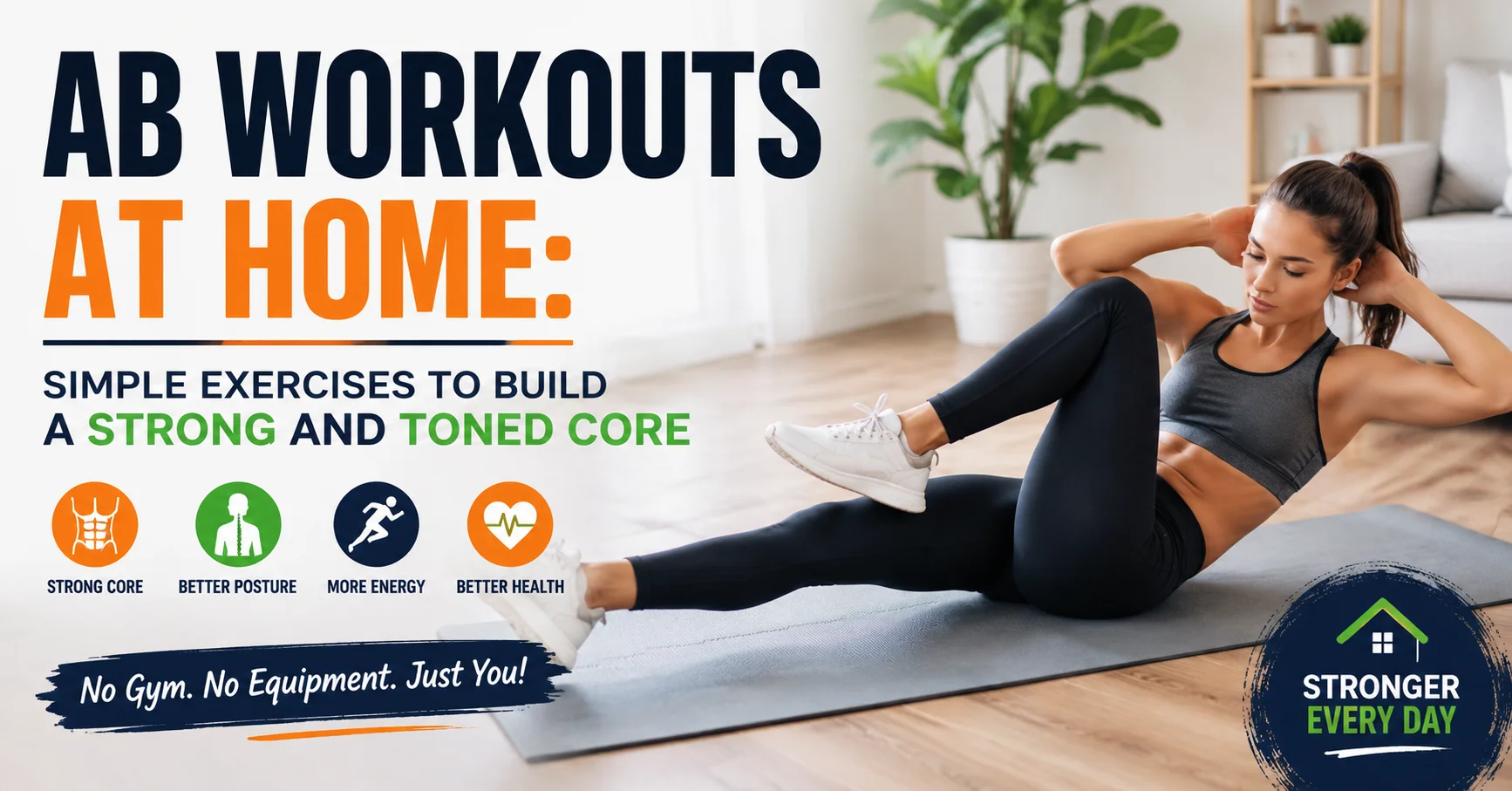
Bicycle crunches are excellent for targeting both upper abs and obliques.
Lie on your back and lift your legs slightly. Bring one knee toward your chest while twisting your opposite elbow toward it. Alternate sides in a slow cycling motion.
This movement works multiple muscles together. It also improves coordination and balance.
Keep your lower back pressed into the floor during the exercise. Controlled movement prevents strain.
Beginners should aim for 10 repetitions per side. Focus on form instead of speed.
Many fitness trainers include bicycle crunches because they activate abdominal muscles effectively without equipment.
Leg Raises to Strengthen Lower Abs
Lower abdominal muscles are often harder to target. Leg raises are one of the most effective exercises for this area.
Lie flat on your back with legs straight. Slowly lift your legs upward until they form a right angle. Lower them slowly without touching the floor completely.
Keep your movements controlled to avoid back strain. If your lower back lifts off the floor, bend your knees slightly.
Leg raises also improve hip strength and flexibility. They can feel challenging at first, but progress comes with practice.
This exercise became one of my favorites because I noticed stronger lower core control after a few weeks.
Start with two sets of 10 repetitions and increase gradually.
Mountain Climbers for Cardio and Core
Mountain climbers combine cardio with abdominal training. They raise your heart rate while strengthening your core.
Begin in a push-up position. Bring one knee toward your chest, then quickly switch legs in a running motion.
Keep your hips stable and your hands firmly planted. Move at a comfortable pace.
Mountain climbers help burn calories and improve endurance. They also engage shoulders and leg muscles.
This exercise works well in short home workouts because it trains several muscle groups at once.
Beginners can perform slow mountain climbers first before increasing speed.
Russian Twists for Obliques
Russian twists target the side abdominal muscles, also called obliques.
Sit on the floor with knees bent. Lean back slightly while keeping your back straight. Twist your torso from side to side.
You can keep your feet on the floor or lift them slightly for more challenge.
This movement improves rotational strength and balance. Athletes often use it to improve sports performance.
Move slowly and avoid swinging your arms too quickly. The twist should come from your core muscles.
Adding a small weight or water bottle later can increase difficulty.
Best Equipment for Home Ab Workouts
You do not need equipment to get strong abs, but a few simple tools can help.
A yoga mat provides comfort and support during floor exercises. Resistance bands add variety and challenge.
Stability balls improve balance and engage deeper core muscles. Dumbbells can make twisting exercises harder.
Many beginners buy expensive machines they never use. Start simple first. Bodyweight exercises already provide strong results.
If you later want more challenge, add equipment gradually.
Remember that consistency matters more than fancy workout gear.
Common Mistakes to Avoid
Many people make mistakes that slow progress or cause discomfort.
One common mistake is using poor form. Fast, sloppy movements reduce effectiveness. Slow and controlled movements work better.
Another mistake is training abs only. Full-body exercise and healthy eating are important for visible results.
Some people also ignore breathing. Exhale during effort and inhale during relaxation.
Overtraining is another issue. Your muscles need recovery time to repair and grow stronger.
Lastly, avoid comparing yourself to social media fitness models. Real fitness progress takes time and consistency.
Sample Weekly Ab Workout Plan
A simple schedule helps beginners stay organized and motivated.
Monday
- Crunches
- Planks
- Leg raises
Tuesday
- Light walking or stretching
Wednesday
- Bicycle crunches
- Mountain climbers
- Russian twists
Thursday
- Rest or yoga
Friday
- Full core workout using favorite exercises
Saturday
- Cardio like walking or cycling
Sunday
- Rest and recovery
This balanced plan supports muscle recovery while keeping you active.
Nutrition Tips for Stronger Abs
Exercise alone is not enough for visible abdominal muscles. Nutrition plays a huge role.
Focus on whole foods instead of processed snacks. Eat lean protein, fruits, vegetables, and healthy fats.
Drink enough water daily. Hydration supports muscle recovery and energy levels.
Reduce sugary drinks and excess fast food. These can increase body fat and slow progress.
Protein-rich foods help muscles recover after workouts. Eggs, chicken, yogurt, fish, and beans are good options.
Healthy habits matter more than strict diets. Small changes over time create lasting results.
Staying Motivated With Home Workouts
Motivation can be difficult when exercising at home. Creating a routine helps.
Set small goals instead of chasing perfect abs quickly. Celebrate progress like holding a plank longer or completing extra repetitions.
Music can also improve energy during workouts. Many people enjoy following workout videos for guidance and structure.
Tracking your progress helps too. Write down exercises and repetitions weekly.
Some days you may feel tired or busy. Even a short workout is better than skipping completely.
I learned that consistency beats intensity. Simple workouts done regularly created better results than occasional extreme sessions.
FAQs About Ab Workouts at Home
Can beginners do ab workouts at home?
Yes. Many home ab exercises are beginner-friendly and require no equipment.
How long does it take to see results?
Most people notice stronger muscles within a few weeks. Visible abs take longer and depend on diet and body fat levels.
Do I need equipment for ab workouts?
No. Bodyweight exercises like planks and crunches are very effective.
Are daily ab workouts safe?
Training abs daily is usually unnecessary. Three to four sessions weekly work well for most people.
Which exercise is best for beginners?
Planks and crunches are great starting exercises because they are simple and effective.
Can ab workouts reduce belly fat?
Ab exercises strengthen muscles, but fat loss also depends on nutrition and overall activity.
Conclusion
Building a stronger core does not require expensive equipment or long gym sessions. The right ab workouts at home can improve strength, posture, balance, and confidence using simple bodyweight exercises.
Start slowly and focus on proper form. Choose exercises that match your fitness level and stay consistent with your routine. Combine your workouts with healthy eating, enough sleep, and regular movement for the best results.
Remember that progress takes time. Strong abs are built through patience and daily habits, not quick fixes. Even short workouts can create major changes when done regularly.
If you are just starting, begin with simple exercises like planks, crunches, and leg raises. Stay committed, track your progress, and enjoy the journey toward a healthier and stronger body.
