

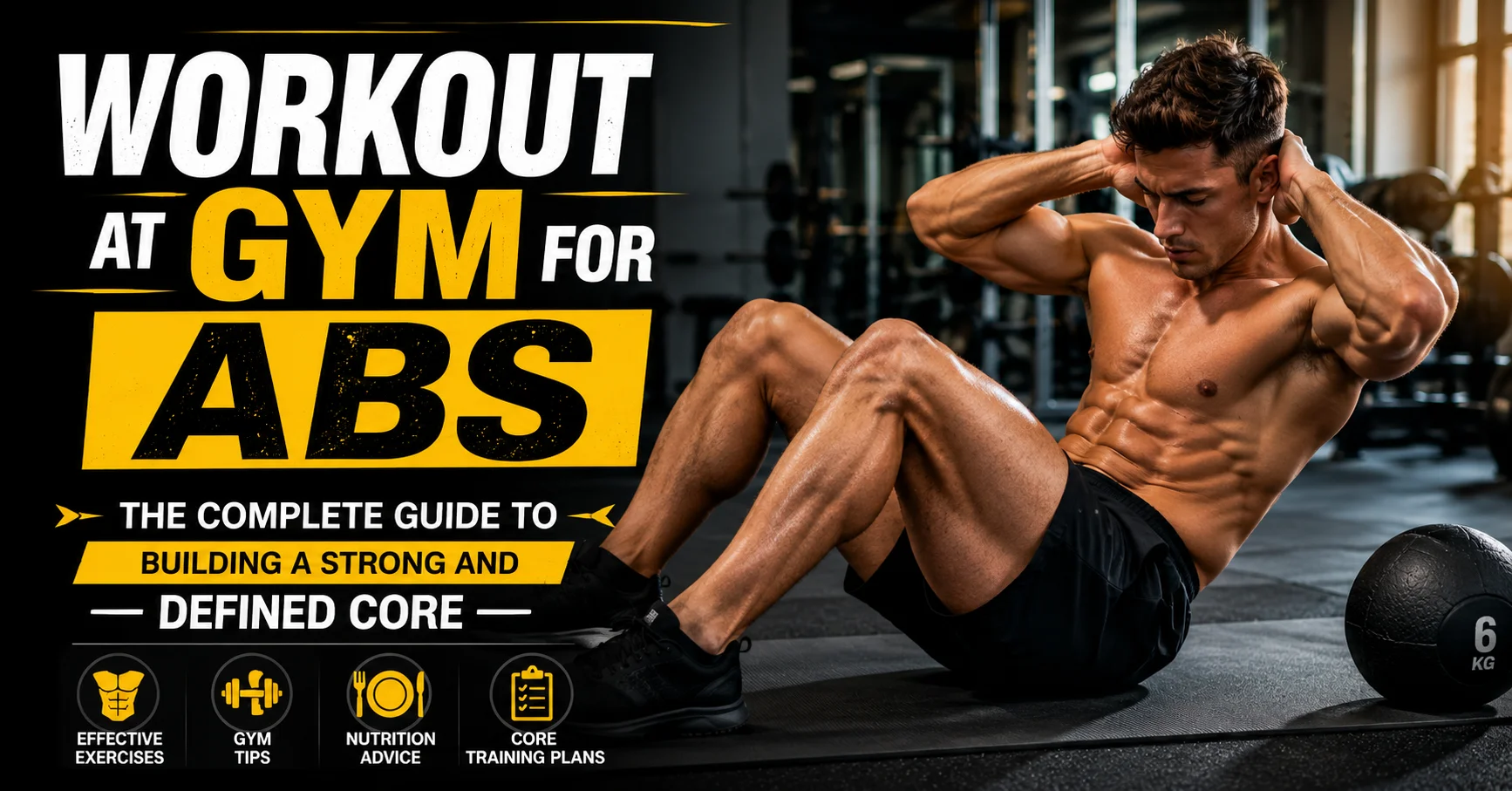
Getting strong abs is not only about looking good. A strong core helps your balance, posture, and overall fitness. Many people spend hours doing crunches but still struggle to see results. The truth is simple. You need the right workout at gym for abs, smart nutrition, and consistency.
Your abs work during almost every movement. They support your spine when you lift weights, run, or even walk. That is why training your core correctly matters so much. The good news is that you do not need fancy tricks. You only need the right exercises and a proper plan.
I learned this after wasting months doing endless sit-ups. My progress changed when I started combining gym workouts, strength training, and better eating habits. My abs became stronger, and my posture improved too.
In this guide, you will learn the best workout at gym for abs, beginner-friendly exercises, common mistakes, nutrition tips, and ways to get visible results faster. Everything is explained in simple words so you can start today with confidence.
Why Abs Training Is Important
Many people think abs training is only for appearance. That is not true. Your core muscles protect your lower back and help your body stay stable. Strong abs also improve athletic performance and reduce injury risk.
When your core is weak, other muscles work harder. This often causes back pain and poor posture. A good workout at gym for abs helps your body move better during daily activities and sports.
Strong abs also help during heavy exercises like squats and deadlifts. Your core keeps your spine stable during those movements. That means you can lift safer and perform better.
Another great benefit is balance. Whether you play sports or simply walk upstairs, your core helps control movement. That is why trainers often include core work in almost every fitness plan.
Abs training also improves confidence. Feeling stronger physically often improves mental focus too. Many people notice better posture and energy after regular core workouts.
The key is balance. You should not only train upper abs. A complete core workout includes upper abs, lower abs, obliques, and deep core muscles.
Understanding Your Ab Muscles
Before starting any workout at gym for abs, it helps to understand your abdominal muscles. Your core is made of several muscles working together.
The rectus abdominis is the muscle most people call the “six-pack.” This muscle runs down the front of your stomach. Crunches and leg raises mainly target this area.
Your obliques are on the sides of your waist. They help your body twist and bend sideways. Exercises like Russian twists work these muscles well.
The transverse abdominis is a deep core muscle. It acts like a natural belt around your waist. Planks are excellent for training this muscle.
Your lower back muscles are also part of the core system. A strong core is not only about the front abs. The entire middle section of your body must work together.
Understanding these muscles helps you train smarter. Instead of repeating one exercise, you can build a balanced routine that trains every part of the core.
This approach improves strength, posture, and visible definition over time.
Can You Get Abs Only from Gym Workouts?
This is one of the most common questions in fitness. The answer is both yes and no. A workout at gym for abs is important, but nutrition matters just as much.
You can build strong abdominal muscles with gym exercises. However, if body fat covers those muscles, they may not be visible. That is why diet plays a major role.
Think of abs like muscles hidden under a blanket. Exercise builds the muscles, while proper eating removes the blanket. Both are necessary for visible results.
Cardio also helps. Activities like treadmill walking, cycling, or rowing burn calories and support fat loss. Combining cardio with strength training gives better results.
Another important factor is patience. Social media often shows quick transformations, but real fitness takes time. Most people need several months of consistent effort.
Sleep and stress also affect results. Poor sleep can increase hunger and slow recovery. High stress may increase belly fat in some people.
The best strategy is simple. Combine a strong workout at gym for abs with healthy eating, enough sleep, and regular activity.
Best Warm-Up Before Abs Training
A warm-up prepares your muscles and reduces injury risk. Many people skip this step, but it can improve workout performance.
Start with five minutes of light cardio. Walking on a treadmill or cycling increases blood flow. This wakes up your body before training.
Next, do simple stretches for your hips, back, and core. Cat-cow stretches and torso twists work well. These movements improve flexibility and mobility.
Dynamic movements are also helpful. High knees, jumping jacks, or mountain climbers activate your core muscles quickly.
Breathing matters too. Deep breathing helps engage your core properly during exercises. Many beginners forget to breathe correctly while training abs.
A proper warm-up also improves focus. Your body and mind become ready for exercise, which helps you perform better.
Never rush into heavy movements without preparation. Even a short warm-up can make a big difference in safety and results.
Best Workout at Gym for Abs for Beginners
Beginners should focus on proper form instead of intensity. Simple exercises done correctly are more effective than difficult exercises with poor technique.
Start with basic crunches. Lie on the floor and lift your shoulders slightly. Avoid pulling your neck. Move slowly and feel your abs working.
Planks are another great beginner exercise. Hold your body straight while resting on your elbows. Start with 20 seconds and slowly increase time.
Leg raises target the lower abs. Lie flat and raise your legs carefully without swinging. This exercise builds core control and strength.
Cable crunches are excellent gym exercises for abs. The cable machine adds resistance and helps build stronger abdominal muscles.
You can also try hanging knee raises. Use a pull-up bar and raise your knees toward your chest. Beginners can bend their knees to make it easier.
Train abs two to three times weekly. Your muscles need recovery time to grow stronger.
Focus on quality movement, steady breathing, and controlled reps. These habits build a strong fitness foundation.
Advanced Gym Exercises for Stronger Abs
Once basic exercises become easy, you can move to advanced core training. Advanced exercises challenge stability, endurance, and strength.
Weighted cable crunches are excellent for muscle growth. Adding resistance makes your abs work harder. Keep movements slow and controlled.
Decline bench sit-ups increase difficulty because of the angle. You can also hold a weight plate for extra resistance.
Hanging leg raises are one of the best advanced exercises. Keep your legs straight while lifting them slowly. This movement strongly activates the lower abs.
Ab wheel rollouts are very challenging. They train the entire core, including deep stabilizing muscles. Beginners should start carefully with small movements.
Medicine ball slams combine cardio and abs training. They improve power while burning calories quickly.
Another powerful exercise is the dragon flag. This move requires full-body control and strong core strength. Many athletes use it for advanced training.
Progress slowly with advanced exercises. Good form is always more important than heavy resistance or difficult movements.
Sample Weekly Workout at Gym for Abs
Having a schedule makes training easier and more consistent. Here is a simple weekly plan for better core strength.
Monday – Core Strength
- Cable crunches
- Planks
- Hanging knee raises
- Russian twists
Wednesday – Lower Abs Focus
- Leg raises
- Reverse crunches
- Mountain climbers
- Bicycle crunches
Friday – Full Core Workout
- Ab wheel rollouts
- Side planks
- Decline sit-ups
- Medicine ball slams
You can add light cardio after each workout. Walking on an incline treadmill works very well for fat loss.
Rest days are also important. Your muscles recover and grow during rest. Overtraining can slow progress and increase injury risk.
Keep workouts around 20 to 30 minutes. You do not need hours of ab training for good results.
Consistency matters more than doing extreme workouts once in a while.
Best Gym Equipment for Abs Training
Gyms offer many tools for core workouts. Some equipment is very effective when used properly.
Cable machines are excellent because they allow adjustable resistance. Cable crunches provide constant tension during movement.
Roman chairs help strengthen lower abs and hip flexors. They are great for leg raises and knee raises.
Stability balls improve balance and engage deeper core muscles. Exercises become harder because your body must stabilize itself.
Medicine balls are useful for dynamic movements. They add resistance and improve power during twists and slams.
Ab wheels are simple but highly effective. They challenge the entire core and improve stability.
Decline benches increase exercise difficulty by changing body angle. Sit-ups become more intense on these benches.
Remember that equipment is only a tool. Proper technique and consistency matter more than fancy machines.
Common Mistakes During Abs Workouts
Many people train hard but still see poor results because of simple mistakes.
One common mistake is training abs every day. Like other muscles, abs need recovery. Overtraining can lead to soreness and slow progress.
Another mistake is using poor form. Fast and sloppy reps reduce effectiveness and increase injury risk. Controlled movement works better.
Many people also focus only on crunches. A complete workout at gym for abs should include different movements for all core muscles.
Ignoring nutrition is another major issue. You cannot out-train a poor diet. Healthy eating is essential for visible abs.
Some people hold their breath during exercises. Proper breathing improves muscle activation and endurance.
Using momentum instead of muscle control is also common. Swinging during leg raises reduces core engagement.
Avoid comparing yourself to others. Everyone’s body responds differently. Focus on your own steady progress.
Nutrition Tips for Visible Abs
Exercise builds muscle, but nutrition reveals it. Healthy eating is critical for getting visible abs.
Protein is very important. It helps repair and grow muscles after workouts. Good sources include eggs, chicken, fish, yogurt, and beans.
Drink enough water daily. Proper hydration improves performance and digestion. Many people confuse thirst with hunger.
Limit sugary drinks and processed snacks. These foods often add extra calories without nutrition.
Eat more vegetables and fruits. They provide fiber, vitamins, and minerals that support fat loss and recovery.
Healthy fats are also important. Nuts, avocados, and olive oil support hormone balance and overall health.
Do not skip meals to lose belly fat quickly. Extreme dieting often causes muscle loss and low energy.
Instead, focus on balanced eating habits you can follow long term. Sustainable changes give the best results.
Cardio and Abs: Why Both Matter
Many people separate cardio and abs training, but they work well together. Cardio helps reduce body fat, making abdominal muscles more visible.
Running, cycling, rowing, and stair climbing are excellent options. These activities burn calories and improve heart health.
High-intensity interval training, also called HIIT, is very effective. Short bursts of intense exercise burn calories quickly and save time.
Walking on an incline treadmill is another simple option. It burns calories while being easier on the joints.
You do not need hours of cardio daily. Even 20 to 30 minutes several times weekly can help.
Combining cardio with a workout at gym for abs creates better overall fitness. You build muscle while improving endurance and fat loss.
Choose activities you enjoy. Consistency is easier when exercise feels fun instead of forced.
How Long Does It Take to See Abs?
This question depends on body fat, diet, consistency, and genetics. Some people notice changes within weeks, while others need several months.
Beginners often feel stronger before they see visible abs. That is completely normal. Strength improvements usually happen first.
People with higher body fat may need more time because fat covers the abdominal muscles. Healthy eating becomes very important here.
Consistency matters most. Small efforts repeated daily create big results over time.
Avoid chasing fast transformations online. Many photos use perfect lighting, editing, or temporary tricks.
Focus on real progress like better posture, increased strength, and improved fitness. Visible abs will come naturally with steady habits.
Remember that health matters more than appearance alone. A strong and functional core benefits your entire body.
Mental Benefits of Core Training
Abs training does more than improve physical appearance. It can also support mental well-being.
Exercise releases endorphins, which help improve mood and reduce stress. Many people feel more energetic after workouts.
Core exercises also require focus and control. This improves body awareness and concentration.
Achieving small fitness goals builds confidence. Completing difficult planks or improving strength feels rewarding.
Regular gym workouts create healthy routines. Structured habits often improve discipline in other areas of life too.
Training can also become social. Working out with friends or gym partners increases motivation and accountability.
Fitness is not about perfection. It is about becoming healthier and stronger step by step.
FAQs About Workout at Gym for Abs
How often should I do a workout at gym for abs?
Most people get good results training abs two to three times weekly. Your muscles need rest to recover and grow stronger.
Are crunches enough for building abs?
No. Crunches mainly target one part of the core. A complete routine should include planks, leg raises, twists, and resistance exercises.
Can I get abs without dieting?
You can build strong abs without dieting, but visible abs usually require healthy eating and lower body fat levels.
Conclusion
Building strong abs takes more than endless crunches. The best workout at gym for abs combines smart exercises, proper nutrition, cardio, and consistency.
Your core supports almost every movement in daily life. Strong abs improve posture, balance, and athletic performance while reducing injury risk.
Start with beginner-friendly exercises and focus on proper form. Slowly increase difficulty as your strength improves. Remember that recovery and healthy eating are just as important as workouts.
Real fitness results take time. Stay patient and consistent. Small efforts repeated every week create lasting change.
Most importantly, enjoy the process. Fitness should make you feel stronger, healthier, and more confident. Keep showing up, and your results will follow naturally.
Tipsforhealthy.com
