

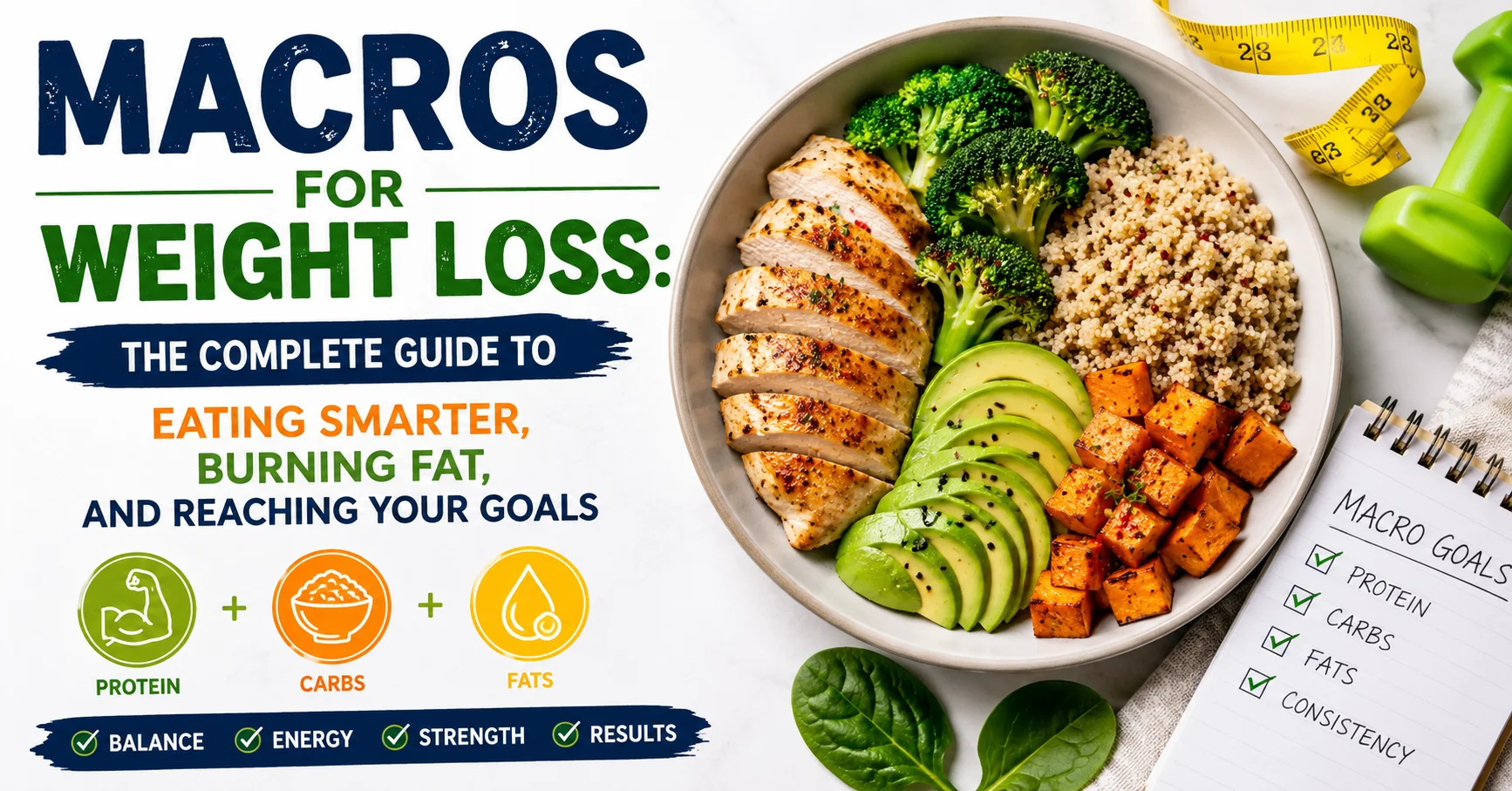
Have you ever felt frustrated because you were eating less but still not losing weight? Many people focus only on calories. While calories matter, the types of foods you eat matter too. This is where macros for weight loss become important.
Macros, short for macronutrients, are the nutrients your body needs in large amounts every day. They include protein, carbohydrates, and fats. Learning how to balance these nutrients can help you lose fat, keep muscle, stay full longer, and maintain energy throughout the day.
Many successful weight loss journeys are built around understanding macros instead of following strict diets. The good news is that you do not need to be a nutrition expert to learn them. Once you understand a few simple principles, you can make smarter food choices and create a sustainable eating plan.
In this guide, you will learn what macros are, why they matter, how to calculate them, and how to adjust them for your personal goals. Whether you are a beginner or looking to improve your current nutrition plan, this guide will help you understand macros for weight loss in a simple and practical way.
What Are Macros and Why Do They Matter?
Macronutrients are the nutrients that provide energy for your body. Every food you eat contains some combination of protein, carbohydrates, and fats. These nutrients fuel your daily activities and support important functions like muscle repair, hormone production, and brain health.
Protein contains 4 calories per gram. Carbohydrates also contain 4 calories per gram. Fat contains 9 calories per gram. Because fat is more calorie-dense, it provides more energy in smaller amounts.
Understanding macros helps you move beyond simply counting calories. Two meals may contain the same calories but affect your body differently. A meal rich in protein and fiber can keep you satisfied for hours, while a sugary snack may leave you hungry again quickly.
This is why many nutrition experts recommend focusing on macros for weight loss instead of only tracking calories.
How Weight Loss Actually Works
Weight loss happens when your body uses more energy than it receives from food. This is called a calorie deficit.
However, the quality of your calories affects how easy it is to maintain that deficit. Protein can help reduce hunger. Fiber-rich carbohydrates support energy levels. Healthy fats improve satisfaction and help control cravings.
When people ignore their macro balance, they often feel hungry, tired, and tempted to overeat. A proper macro plan makes weight loss more manageable because it supports fullness and energy while maintaining a calorie deficit.
Think of calories as the budget and macros as how you spend that budget.
Understanding the Three Main Macronutrients
Protein
Protein is often considered the most important nutrient during weight loss. It helps preserve lean muscle while your body burns fat.
Good protein sources include:
- Chicken breast
- Turkey
- Fish
- Eggs
- Greek yogurt
- Cottage cheese
- Tofu
- Beans
- Lentils
Protein also has a higher thermic effect, meaning your body uses more energy digesting it.
Carbohydrates
Carbohydrates are your body’s preferred source of energy. They fuel workouts, brain function, and daily activities.
Healthy carbohydrate sources include:
- Oats
- Brown rice
- Sweet potatoes
- Fruits
- Vegetables
- Whole-grain bread
- Quinoa
Fats
Healthy fats support hormones, brain health, and overall wellness.
Good fat sources include:
- Avocados
- Nuts
- Seeds
- Olive oil
- Fatty fish
- Nut butters
A balanced combination of all three macros is usually the most effective approach.
Table 1: Calories Per Gram of Each Macronutrient
| Macronutrient | Calories Per Gram | Main Function |
|---|---|---|
| Protein | 4 | Muscle repair and growth |
| Carbohydrates | 4 | Energy production |
| Fat | 9 | Hormone support and energy storage |
Why Protein Is Critical for Weight Loss
One lesson many people learn during their weight loss journey is that protein can be a game changer.
Protein helps:
- Increase fullness
- Reduce hunger
- Maintain muscle mass
- Support recovery
- Improve body composition
In my experience, increasing protein intake often makes dieting easier. Many people notice fewer cravings and better satisfaction after meals.
A higher-protein approach is commonly recommended when planning macros for weight loss because it supports both fat loss and muscle retention.
How to Calculate Macros for Weight Loss
Many beginners feel intimidated when trying to calculate macros for weight loss, but the process is simpler than it seems.
Step 1: Calculate Daily Calories
First, estimate your maintenance calories.
Example:
- Maintenance calories: 2,200
- Weight loss calories: 1,800
Step 2: Set Protein
A common recommendation is:
0.7–1 gram of protein per pound of body weight.
Step 3: Set Fat
Most people do well with:
20–30% of calories from fat.
Step 4: Fill Remaining Calories With Carbs
After protein and fat are assigned, the remaining calories come from carbohydrates.
This method provides a balanced framework for sustainable weight loss.
Using a Macro Calculator for Weight Loss
A macro calculator for weight loss can save time and simplify the process.
These calculators use factors like:
- Age
- Weight
- Height
- Activity level
- Gender
- Weight loss goal
The calculator estimates your calorie needs and suggests macro targets. While the numbers are not perfect, they provide a useful starting point.
Remember that calculators offer estimates. You may need to adjust your macros after tracking progress for several weeks.
Table 2: Example Weight Loss Macro Breakdown
| Daily Calories | Protein | Carbs | Fat |
|---|---|---|---|
| 1,500 | 120g | 135g | 50g |
| 1,800 | 150g | 170g | 60g |
| 2,000 | 160g | 210g | 65g |
| 2,200 | 180g | 225g | 75g |
Best Macros for Weight Loss Female
Many women ask about the best macros for weight loss female goals.
While every woman is different, a common starting point looks like this:
| Macronutrient | Percentage |
|---|---|
| Protein | 30-35% |
| Carbohydrates | 35-40% |
| Fat | 25-30% |
This balance often supports fat loss while maintaining energy, hormonal health, and workout performance.
Women who perform regular strength training may benefit from slightly higher protein intake to preserve lean muscle during a calorie deficit.
Common Macro Ratios for Different Goals
Different goals may require different macro distributions.
Fat Loss
- Protein: 35%
- Carbs: 35%
- Fat: 30%
Muscle Gain
- Protein: 30%
- Carbs: 45%
- Fat: 25%
Maintenance
- Protein: 25%
- Carbs: 45%
- Fat: 30%
These are guidelines, not strict rules. Personal preference and lifestyle matter.
Table 3: Sample Macro Ratios by Goal
| Goal | Protein | Carbs | Fat |
|---|---|---|---|
| Fat Loss | 35% | 35% | 30% |
| Muscle Gain | 30% | 45% | 25% |
| Maintenance | 25% | 45% | 30% |
The Biggest Macro Tracking Mistakes
Many people struggle because they make simple mistakes.
Common errors include:
- Ignoring portion sizes
- Not tracking oils and sauces
- Eating too little protein
- Overestimating exercise calories
- Changing macros too often
Consistency matters more than perfection. Small tracking errors will not ruin progress, but frequent mistakes can slow results.
A sustainable approach always beats an overly strict plan.
Foods That Make Macro Tracking Easier
Certain foods naturally fit well into a macro-friendly diet.
High Protein Foods
- Chicken breast
- Tuna
- Egg whites
- Greek yogurt
- Protein powder
Healthy Carbs
- Oatmeal
- Rice
- Potatoes
- Fruit
- Vegetables
Healthy Fats
- Almonds
- Walnuts
- Olive oil
- Avocado
- Salmon
Building meals around these foods makes reaching your macro targets much easier.
A Simple One-Day Macro-Friendly Meal Plan
Here is an example for someone targeting fat loss.
Breakfast
Greek yogurt with berries and oats.
Lunch
Grilled chicken, rice, and vegetables.
Snack
Protein shake and banana.
Dinner
Salmon, sweet potato, and broccoli.
Evening Snack
Cottage cheese with berries.
This meal pattern provides balanced nutrition while supporting macros for weight loss goals.
Table 4: Example Daily Meal Breakdown
| Meal | Protein | Carbs | Fat |
|---|---|---|---|
| Breakfast | 30g | 40g | 8g |
| Lunch | 40g | 50g | 12g |
| Snack | 25g | 30g | 2g |
| Dinner | 45g | 40g | 15g |
| Evening Snack | 20g | 15g | 3g |
Do You Need to Track Macros Forever?
The answer is usually no.
Many people use tracking as a learning tool. After several months, they become familiar with portion sizes and food choices.
Eventually, you can maintain progress without measuring every gram. However, occasional tracking can help if weight loss stalls or habits begin to slip.
The goal is long-term awareness, not lifelong obsession.
How Exercise Works With Macros
Nutrition drives most weight loss results, but exercise enhances them.
Strength training helps preserve muscle while losing fat. Cardio increases calorie expenditure and supports heart health.
When exercise is combined with well-planned macros for weight loss, the results are often better than either strategy alone.
Many successful weight loss transformations come from balancing both nutrition and movement.
Adjusting Macros When Progress Slows
Weight loss is rarely perfectly linear.
If progress stalls for three or four weeks:
- Recheck food tracking accuracy
- Increase daily activity
- Reduce calories slightly
- Prioritize protein intake
- Improve sleep quality
Small adjustments usually work better than dramatic changes.
Patience is one of the most important factors in long-term success.
Frequently Asked Questions
1. What are the best macros for weight loss?
Most people succeed with higher protein intake, moderate carbohydrates, and healthy fats. A common ratio is 35% protein, 35% carbs, and 30% fat.
2. How do I calculate macros for weight loss?
Determine your calorie target, set protein first, assign fats second, and use remaining calories for carbohydrates.
3. Is a macro calculator for weight loss accurate?
It provides a helpful starting point, but adjustments may be needed based on real-world progress.
4. Do I need to count calories and macros?
Macros are part of calorie intake. Tracking both often provides the most accurate results.
5. What are the best macros for weight loss female goals?
Women often benefit from 30–35% protein, 35–40% carbohydrates, and 25–30% fats.
6. Can I lose weight without tracking macros?
Yes. However, tracking can improve awareness, accuracy, and consistency, especially for beginners.
Conclusion
Learning about macros for weight loss can completely change the way you approach nutrition. Instead of focusing only on eating less, you begin focusing on eating smarter. Protein helps preserve muscle and control hunger. Carbohydrates provide energy for daily life and workouts. Healthy fats support hormones and satisfaction.
The most effective strategy is not finding a perfect ratio. It is finding a sustainable balance you can maintain for months and years. Use a macro calculator for weight loss as a starting point, learn how to calculate macros for weight loss, and adjust based on your progress.
Remember, successful weight loss is not about perfection. It is about consistency. Small daily improvements, better food choices, and balanced macros can lead to lasting results. Start today, track your progress, and discover how the right macro plan can help you reach your goals with confidence.
