

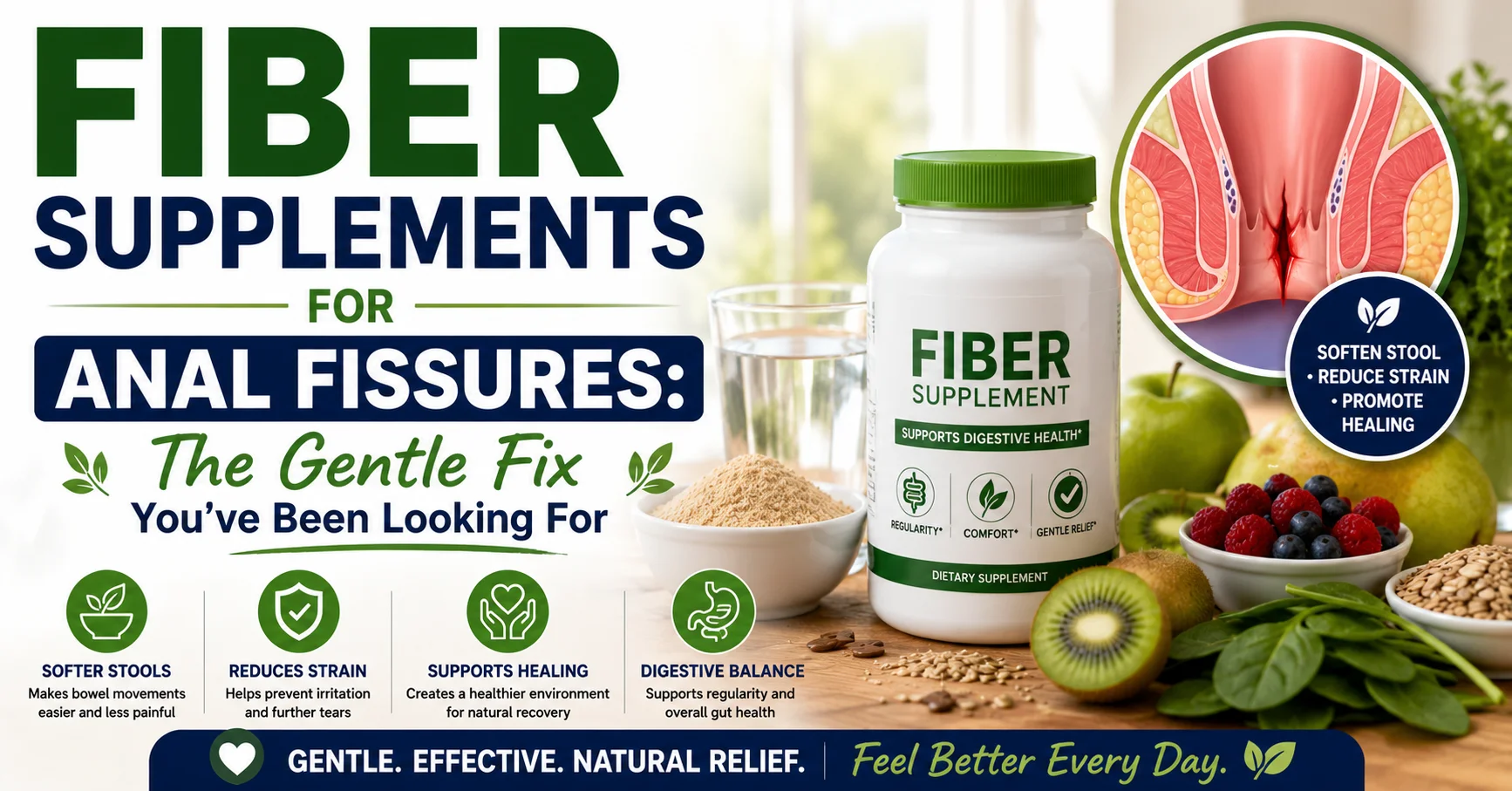
If you’re dealing with the sharp, burning pain of an anal fissure, you know how much it can affect your daily life. Going to the bathroom feels like a dreaded task. You might even start skipping meals just to avoid the discomfort. The good news? There’s a simple, affordable, and effective solution that most doctors recommend first: fiber supplements for anal fissures.
This guide will walk you through everything you need to know. We’ll talk about how fiber helps, which supplements work best, how to use them, and what to expect. By the end, you’ll feel confident about taking the next step toward healing.
What Is an Anal Fissure and Why Does It Hurt So Much?
An anal fissure is a small tear in the lining of the anus. It’s like a paper cut — tiny, but incredibly painful. The area around your anus has many nerve endings, which is why even a small tear causes sharp, burning pain. You might also notice a little blood on the toilet paper or in the toilet bowl.
Most fissures happen because of hard, dry stools that stretch the tissue when passing through. Constipation is the number one cause. Straining too hard on the toilet is another big factor. Pregnancy, diarrhea, and even tight anal sphincter muscles can also cause these painful tears.
The healing process is tricky because every bowel movement irritates the area again. It’s like picking at a scab that never gets the chance to close. That’s why the first priority in treatment is always to make stools softer and easier to pass — and that’s exactly where fiber comes in.
How Fiber Supplements Help Heal Anal Fissures
Fiber is like nature’s stool softener. It works in two main ways. Soluble fiber absorbs water and forms a gel-like substance in your gut. This softens the stool and makes it easier to pass. Insoluble fiber adds bulk to the stool and helps it move through the intestines faster.
When you use fiber supplements for anal fissures, you’re giving your body the tools it needs to produce soft, smooth stools that won’t tear the already-damaged tissue. Think of it as replacing sandpaper stools with something much gentler.
Studies consistently show that increasing fiber intake reduces constipation-related straining and helps anal fissures heal faster. One review published in the American Journal of Gastroenterology found that dietary fiber significantly decreased the recurrence of fissures. That’s a huge deal, because fissures are known to come back once you’ve had one.
The Best Types of Fiber Supplements for Anal Fissures
Not all fiber is the same. Let’s break down the most popular options.
| Fiber Type | Source | How It Works | Best For |
|---|---|---|---|
| Psyllium Husk | Plantago ovata seeds | Forms a gel that softens stools | General constipation, fissure healing |
| Methylcellulose | Synthetic plant fiber | Adds bulk without fermentation | People with gas-prone stomachs |
| Wheat Dextrin | Wheat starch | Dissolves in water, easy to mix | Mild constipation, everyday use |
| Inulin / FOS | Chicory root | Feeds gut bacteria, softens stool | Gut health support |
Psyllium husk is the most widely recommended fiber supplement for anal fissures. Products like Metamucil contain psyllium. It’s gentle, effective, and widely available. Most gastroenterologists recommend it as the first step in managing fissures.
Methylcellulose, sold as Citrucel, is a great choice if psyllium gives you bloating or gas. It doesn’t ferment in the gut, so it tends to be gentler for sensitive stomachs.
Wheat dextrin (like Benefiber) dissolves completely in water and is tasteless, making it easy to add to drinks or food.
How Much Fiber Do You Actually Need?
Most adults need 25 to 38 grams of fiber per day. If you have an active fissure, getting to the higher end of that range — or even slightly above — can help significantly. Here’s a helpful reference:
| Who You Are | Daily Fiber Goal |
|---|---|
| Adult women (under 50) | 25 grams |
| Adult men (under 50) | 38 grams |
| Women over 50 | 21 grams |
| Men over 50 | 30 grams |
| Someone with active anal fissure | 30–40 grams (with doctor’s guidance) |
The average American only gets about 15 grams per day. That’s less than half of what most people need. This gap is a major reason why constipation — and fissures — are so common.
If you’re starting fiber supplements, go slowly. Adding too much too fast can cause bloating, cramps, and gas. Start with a small dose and gradually increase it over 1 to 2 weeks. Your gut bacteria need time to adjust.
Top Fiber Supplement Products: What to Look For
When shopping for fiber supplements for anal fissures, here are things to consider:
- Psyllium content: Look for at least 3–5 grams of fiber per serving
- Added sugar: Avoid products loaded with artificial sweeteners or sugar — they can irritate the gut
- Ease of use: Powders, capsules, and gummies all work — pick what you’ll actually use consistently
- Allergens: Some products contain gluten, so check if you’re sensitive
| Product Name | Main Fiber | Form | Notable Feature |
|---|---|---|---|
| Metamucil | Psyllium Husk | Powder, capsules, gummies | Most recommended by doctors |
| Citrucel | Methylcellulose | Powder, caplets | No gas or bloating |
| Benefiber | Wheat Dextrin | Powder | Tasteless, dissolves completely |
| Garden of Life Raw Fiber | Mixed plant fibers | Powder | Organic, no additives |
| FiberCon | Calcium Polycarbophil | Caplets | Easy to travel with |
All of these are available over the counter. No prescription needed. They’re also affordable — most cost between $10 and $25 for a month’s supply.
Using Fiber Supplements Correctly: Tips That Actually Work
Taking fiber is simple, but a few habits make it much more effective.
Drink plenty of water. This cannot be stressed enough. Fiber absorbs water to work properly. If you take fiber without drinking enough, it can make constipation worse — not better. Aim for at least 8 glasses of water a day when using fiber supplements for anal fissures.
Take it at the same time every day. Consistency helps your gut get into a regular routine. Many people find taking fiber in the morning with breakfast or before bed works well.
Be patient. Fiber doesn’t work overnight. Most people notice a difference within 3 to 7 days. Fissure healing often takes several weeks of consistent fiber use.
Don’t stop too soon. Even once the pain gets better, keep using fiber supplements to prevent the fissure from coming back. Many people stop and then wonder why their fissure returned.
Combine with a stool softener if needed. During the acute phase, your doctor may also recommend docusate sodium (Colace) alongside fiber. This combination can be very helpful for people with severe symptoms.
Fiber-Rich Foods That Help Alongside Supplements
Supplements are great, but real food matters too. Think of supplements as a boost — not a replacement for a healthy diet. Here are some of the best fiber-rich foods to eat alongside your fiber supplements for anal fissures:
| Food | Fiber per Serving | Easy to Eat? |
|---|---|---|
| Avocado (1 whole) | 10 grams | Yes |
| Lentils (1 cup cooked) | 15 grams | Yes |
| Raspberries (1 cup) | 8 grams | Yes |
| Chia Seeds (2 tbsp) | 10 grams | Yes (add to yogurt or smoothies) |
| Black Beans (1 cup) | 15 grams | Yes |
| Oats (1 cup cooked) | 4 grams | Yes |
| Broccoli (1 cup) | 5 grams | Yes |
Adding these foods to your meals while also taking a fiber supplement gives your body the best chance to heal quickly. A diverse fiber intake also feeds healthy gut bacteria, which supports overall digestive health.
What Else Can You Do While Using Fiber Supplements?
Fiber is the foundation of healing, but a few other habits speed up recovery significantly.
Use a sitz bath. Soaking your bottom in warm water for 10 to 20 minutes, two to three times a day, relaxes the sphincter muscle and increases blood flow to the area. More blood flow means faster healing.
Don’t strain on the toilet. Straining is what caused the fissure in the first place. If you’re sitting for more than 5 minutes without a bowel movement, get up and try again later. Use a footstool to elevate your feet — this straightens the angle of the rectum and makes passing stools easier.
Avoid prolonged sitting. Sitting for long periods increases pressure on the anal area. Take breaks and walk around regularly.
Stay hydrated. Water is essential. Dehydration leads to harder stools, which leads to more tearing. Think of water as your best friend during fissure healing.
Avoid irritating foods. Spicy foods, caffeine, and alcohol can all irritate the digestive tract. During healing, try to eat mild, fiber-rich meals.
When Should You See a Doctor?
Most acute anal fissures heal within 4 to 6 weeks with proper care, including fiber supplements. However, there are times when you need professional help.
See a doctor if:
- Pain is severe and not improving after 2 weeks of fiber use
- You notice heavy bleeding (more than a few drops)
- The fissure keeps coming back
- You develop a fever or swelling around the anus
- Your symptoms change suddenly
Chronic anal fissures — those lasting more than 8 to 12 weeks — may need additional treatments like topical nitroglycerin cream, calcium channel blockers, or in rare cases, a procedure called a lateral internal sphincterotomy. But the good news is that most people never need surgery if they catch things early and use fiber supplements consistently.
Can Children and Pregnant Women Use Fiber Supplements for Anal Fissures?
Yes, but with care.
Children can safely take fiber supplements, but the dose must be adjusted for their age and weight. Pediatric-friendly options like FiberCon or age-appropriate psyllium products are available. Always consult a pediatrician first.
Pregnant women are very prone to both constipation and anal fissures due to hormonal changes and pressure from the growing baby. Psyllium husk is considered safe during pregnancy, but it’s always wise to check with your OB/GYN before starting any supplement. Staying hydrated and eating fiber-rich foods is especially important during this time.
Common Mistakes People Make with Fiber Supplements
Even when people know they need fiber, they often make these simple mistakes:
Not drinking enough water. Fiber without water can turn into a hard mass in the intestines. Always follow your fiber supplement with a full glass of water.
Expecting instant results. Healing takes time. Give it at least 2 weeks before deciding if it’s working.
Taking too much too soon. Jumping from zero fiber to 40 grams overnight will cause gas, bloating, and discomfort. Slow and steady wins the race.
Stopping as soon as the pain goes away. This is one of the most common reasons fissures come back. Keep taking fiber supplements as a long-term habit.
Using fiber alone without addressing other causes. If you’re not drinking water, not moving, or still eating lots of processed food, fiber alone can only do so much. It works best as part of an overall healthy lifestyle.
Frequently Asked Questions
Q1: How long do fiber supplements take to heal an anal fissure?
Most people start noticing softer stools within 3 to 7 days of starting fiber supplements. For actual fissure healing, it typically takes 4 to 8 weeks. Chronic fissures can take longer or require additional treatment. Consistency is key — take your fiber every day and stay hydrated.
Q2: Is psyllium husk the best fiber supplement for anal fissures?
Psyllium husk is the most recommended option because it forms a gel that effectively softens stools. However, if psyllium gives you gas or bloating, methylcellulose (Citrucel) is a great alternative. The best supplement is the one you’ll take consistently every day.
Q3: Can I take fiber supplements along with other fissure treatments?
Yes. Fiber supplements are usually the foundation of treatment and work well alongside sitz baths, topical treatments like nitroglycerin cream, and stool softeners like docusate sodium. Always tell your doctor about everything you’re taking so they can give you the best advice.
Q4: How much water should I drink with fiber supplements?
Drink at least 8 to 10 glasses of water per day when taking fiber supplements. Each time you take a fiber supplement, follow it immediately with a full glass of water (at least 8 ounces). This helps the fiber work properly and prevents it from making constipation worse.
Q5: Are there any side effects of fiber supplements?
The most common side effects are bloating, gas, and cramping — especially when you first start. These usually go away within a week or two as your body adjusts. Starting with a lower dose and gradually increasing it helps reduce these effects. Serious side effects are rare.
Q6: Can I get enough fiber just from food without supplements?
Yes, it’s possible, but it requires careful planning. Most people find it hard to consistently eat 30 to 38 grams of fiber from food alone, especially during a busy day. Fiber supplements make it easy and consistent. The ideal approach is to use both food sources and supplements together for the best results.
Conclusion: Start Small, Stay Consistent, Feel Better
Dealing with an anal fissure is no fun — but healing is absolutely possible. The single most important thing you can do right now is start taking fiber supplements for anal fissures consistently, every day. Pair that with drinking more water, taking sitz baths, and eating fiber-rich foods, and you give your body everything it needs to heal.
Most people see a real difference within a few weeks. And once you’ve healed, keeping up with your fiber intake is the best way to make sure the fissure doesn’t come back.
You deserve to live without pain. Start with fiber today — and if things don’t improve in 2 to 4 weeks, don’t wait to see your doctor. Your comfort and health are worth it.
