

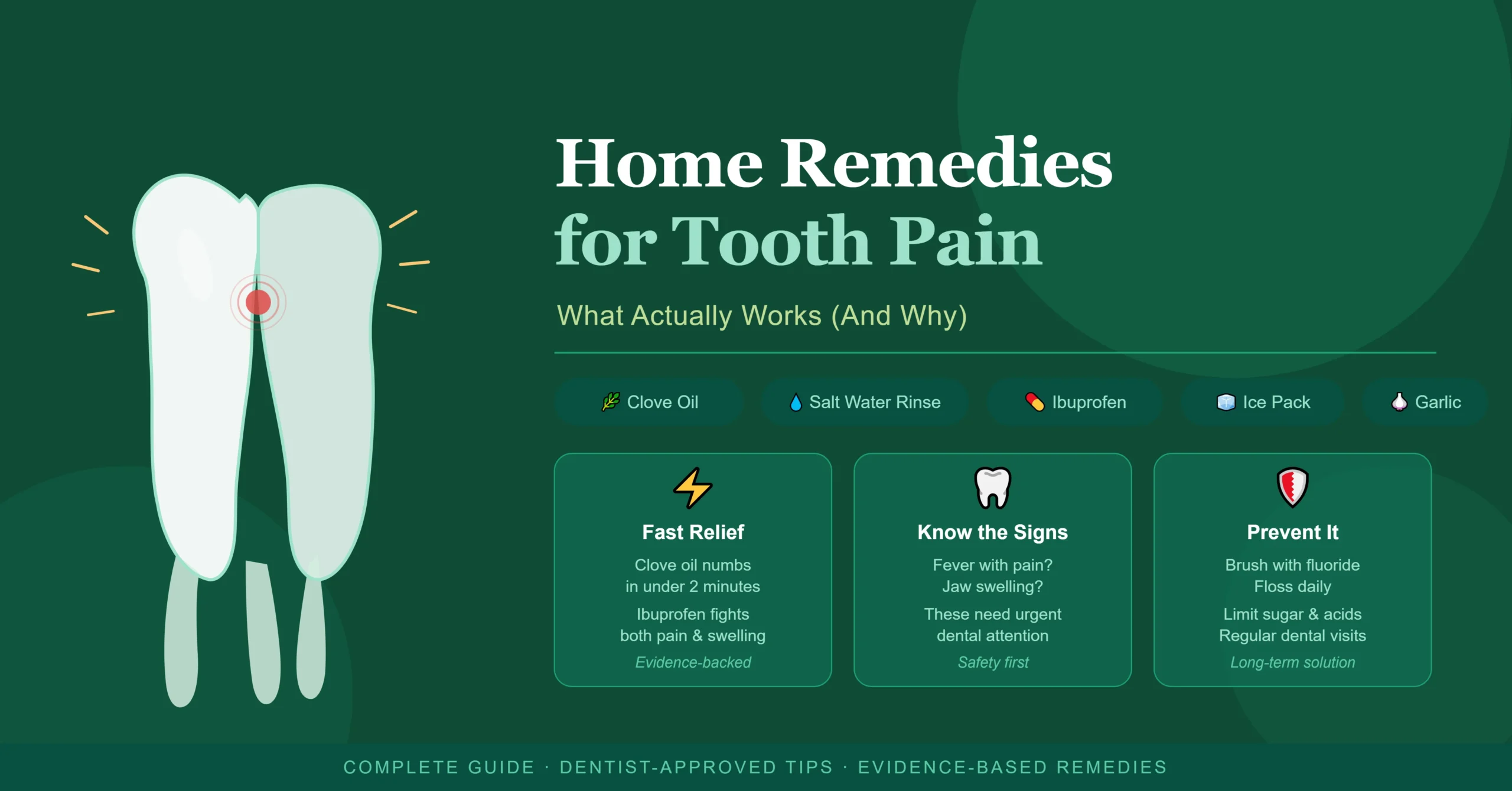
Tooth pain is one of the most disruptive kinds of pain a person can experience. It can show up out of nowhere — right before bed, on a weekend, or when you simply cannot get to a dentist right away. When that happens, knowing which home remedies for tooth pain genuinely work can make a real difference in how you get through the next few hours or days.
This guide does not suggest skipping the dentist. Most tooth pain signals an underlying problem that needs professional attention. But it does give you reliable, well-understood options you can use at home to reduce pain, manage swelling, and keep yourself comfortable until you get proper care.
Why Tooth Pain Happens: A Quick Background
Before picking a remedy, it helps to understand what you are actually dealing with. Tooth pain rarely comes from one single cause. Different causes respond better to different treatments, so identifying the source — even roughly — helps you choose the right approach.
Common Causes of Tooth Pain
Tooth decay (cavities): When bacteria break down the enamel on your tooth, they eventually reach the softer inner layer called dentin. Dentin has tiny channels connected to the nerve, which is why a cavity often causes sharp sensitivity to cold, heat, or sweets. If decay reaches the pulp (the innermost part of the tooth where nerves live), the pain can become constant and intense.
Cracked or fractured tooth: A cracked tooth is tricky because it often causes sharp pain only when you bite down in a certain way. The crack allows pressure or temperature changes to stimulate the nerve directly. You may not even see the crack with the naked eye, but it can cause serious pain.
Gum infection or abscess: An abscess is a pocket of bacteria and pus that forms either at the tip of the root or in the gum tissue. It can cause a throbbing, steady ache and is often accompanied by swelling in the gum or jaw, bad taste in the mouth, and sometimes fever. This is a situation that requires a dentist urgently — home remedies can reduce discomfort temporarily, but an abscess will not resolve on its own.
Exposed tooth root: Gum recession — which happens due to aggressive brushing, gum disease, or aging — leaves the root of the tooth exposed. The root has no enamel protecting it, so it is much more sensitive to temperature and touch.
Food or debris trapped between teeth: Sometimes what feels like deep tooth pain is simply something lodged between the teeth pressing against the gum. Flossing or rinsing often resolves this quickly.
Wisdom tooth problems: Partially erupted wisdom teeth can trap bacteria underneath the gum flap (called pericoronitis), causing significant pain, swelling, and difficulty opening the mouth.
Home Remedies for Tooth Pain That Are Backed by Evidence
Not all home remedies are equal. Some have real scientific support. Others are passed down through generations with mixed results. The remedies below are the most reliable options, explained in enough detail so you can use them correctly.
Clove Oil (Eugenol)
Clove oil is arguably the most well-supported natural remedy for tooth pain. Its active compound, eugenol, is a natural anesthetic and antiseptic. In fact, eugenol is an ingredient in many dental materials used by actual dentists, including temporary fillings and cavity liners. This is not a folk remedy — it is pharmacologically active.
How to use it correctly: Put a small amount of clove oil on a cotton ball. Do not pour it directly onto the tooth. Press the cotton ball gently against the painful tooth or gum for two to three minutes. You will likely feel a numbing sensation within a minute or two. Some people mix two drops of clove oil with half a teaspoon of olive oil to dilute it first, which reduces the risk of irritation to the soft gum tissue.
What to avoid: Do not apply clove oil to open gum tissue, canker sores, or broken skin. It can cause a burning sensation or chemical irritation if used in excess or applied undiluted to sensitive areas. Keep it away from children without guidance, as it can be harmful if swallowed in large quantities.
Salt Water Rinse
A warm salt water rinse is the simplest and most universally recommended home remedy for tooth pain, and it works for a clear reason. Salt water (saline solution) is naturally antiseptic. It reduces the number of bacteria in the mouth, draws out fluid from swollen gum tissue through osmosis, and helps clean out debris around a sore tooth or infected area.
How to use it correctly: Dissolve half a teaspoon of plain table salt in eight ounces of warm (not boiling) water. Swish it gently around your mouth for 30 to 60 seconds, focusing on the painful area, then spit it out. Repeat two to three times per day. It is safe to use multiple times daily and carries almost no risks.
When it helps most: Salt water rinses are especially effective when the pain is associated with swollen gums, a mild gum infection, a tooth that was recently extracted, or food trapped between the teeth causing irritation. It will not numb pain the way clove oil does, but it reduces the inflammation and bacterial load that makes pain worse.
Over-the-Counter Pain Relievers
This might seem obvious, but many people use OTC pain medications the wrong way. There is an important difference between ibuprofen (Advil, Motrin) and acetaminophen (Tylenol) in the context of tooth pain.
Ibuprofen is an anti-inflammatory. Because dental pain almost always involves inflammation — whether in the pulp, gum tissue, or surrounding bone — ibuprofen addresses both the pain and one of its root causes. For most adults without contraindications (stomach ulcers, kidney problems, blood thinners), ibuprofen is the better choice for dental pain.
Acetaminophen reduces pain signals but does not reduce inflammation. It is a good option if you cannot take ibuprofen, or it can be alternated with ibuprofen (not combined without medical guidance) to maintain more consistent relief.
Important note: Take OTC medications at the dose on the label. Do not place an aspirin tablet directly on a tooth or gum — this is a common myth that can actually cause a chemical burn on your soft tissue (aspirin is an acid). Swallow it, or use it as a topical gel designed for that purpose.
Cold Compress or Ice Pack
Applying a cold compress to the outside of your cheek can reduce tooth pain meaningfully, particularly when there is swelling involved. Cold causes blood vessels to narrow (vasoconstriction), which reduces the amount of fluid leaking into the swollen tissue. It also temporarily slows nerve signals in the area, which reduces pain perception.
How to use it correctly: Wrap ice cubes in a thin cloth or use a commercial cold pack. Apply it to the cheek over the painful area for 15 to 20 minutes, then remove it for at least 15 minutes before reapplying. Never apply ice directly to skin — this can cause frostbite or skin damage with prolonged contact.
When it helps most: Cold compresses are most useful for pain with visible swelling, throbbing pain, or pain after an injury to the mouth or jaw. Avoid cold if your pain is triggered or made worse by cold temperatures — in that case, the ice will aggravate sensitive dentin rather than help.
Hydrogen Peroxide Rinse
A diluted hydrogen peroxide rinse can help reduce bacteria and soothe gum inflammation, making it useful when tooth pain is connected to gum disease, a mild infection, or pericoronitis around a wisdom tooth.
How to use it correctly: Mix equal parts of 3% hydrogen peroxide (standard drugstore concentration) with water. Swish it around the mouth for about 30 seconds, then spit it out. Do not swallow it. Use this once or twice a day, not continuously, as overuse can affect the balance of bacteria in your mouth.
What to avoid: Never use undiluted hydrogen peroxide in your mouth — higher concentrations can irritate or damage the soft tissue. This remedy is not appropriate for children who might accidentally swallow the rinse.
Garlic
Garlic has been used medicinally for thousands of years, and modern research confirms it contains a compound called allicin, which has documented antibacterial properties. Allicin is produced when garlic is crushed or chewed, and it can inhibit the growth of oral bacteria associated with tooth decay and gum infection.
How to use it correctly: Crush a fresh garlic clove until it becomes a paste. Apply the paste directly to the painful tooth and surrounding gum, or mix it with a pinch of salt for slightly more antiseptic effect. Leave it in place for a few minutes, then rinse thoroughly with water. Alternatively, you can slowly chew a clove of garlic with the tooth on the affected side.
Realistic expectations: Garlic will not numb the tooth the way clove oil does. Its primary benefit is antibacterial — it reduces the bacterial activity contributing to gum irritation or mild infection. It can reduce the throbbing quality of pain associated with bacterial inflammation over time, but it works slowly and is more of a supportive measure than an immediate pain reliever.
Peppermint Tea Bags
Peppermint contains menthol, a compound with mild numbing and anti-inflammatory properties. While not as potent as clove oil, a warm or cooled peppermint tea bag pressed against a sore tooth or gum can offer temporary comfort.
How to use it correctly: Steep a peppermint tea bag in hot water for a few minutes, then allow it to cool to a comfortable temperature (you can also let it cool completely in the refrigerator if cold feels better). Press it gently against the affected area for 15 to 20 minutes. The tannins in the tea also have mild astringent properties that can reduce gum swelling slightly.
Vanilla Extract
Pure vanilla extract (not imitation vanilla) contains small amounts of alcohol and eugenol — yes, the same compound found in clove oil. The alcohol acts as a mild anesthetic, and eugenol contributes antiseptic and numbing effects. This makes pure vanilla extract a legitimate, if mild, home remedy.
How to use it correctly: Dab a small amount of pure vanilla extract onto your fingertip or a cotton ball and apply it to the sore tooth and surrounding gum two to three times a day. Make sure you are using real vanilla extract, which lists “alcohol” and “vanilla bean extractives” on the label, not artificial vanilla flavoring, which does not contain the same compounds.
Elevation (Sleeping Position)
This one is often overlooked but is genuinely useful. When you lie flat, blood pressure in the head increases slightly, which can intensify throbbing tooth pain — especially pain from pulp inflammation or an abscess. Keeping your head elevated at night by propping up with an extra pillow reduces this pressure and often significantly reduces the intensity of nighttime tooth pain.
This is not a remedy on its own, but combined with other approaches like a salt water rinse and ibuprofen before bed, it can make the difference between a sleepless night and a manageable one.
Remedies That Are Not Reliable (And Why)
A few popular suggestions circulate online that are either ineffective or potentially harmful. Knowing what to skip saves you time and avoids making things worse.
Rubbing whiskey or alcohol on the tooth: While alcohol does have some numbing effect on the gum surface, the concentration you get from dabbing spirits is too low to significantly numb a toothache. It does not address infection, inflammation, or the nerve itself.
Placing a whole aspirin on the tooth: Aspirin is acetylsalicylic acid. Placing it directly on gum tissue creates a localized acid burn, not relief. You will likely end up with a white, painful lesion on your gum in addition to the original toothache. Swallow aspirin or use it as directed — never topically.
Oil pulling as an acute pain remedy: Oil pulling (swishing coconut oil for 20 minutes) has been studied for its effect on long-term oral bacterial levels, with modest evidence of benefit. However, it is not an acute pain remedy and will not meaningfully reduce toothache pain in the short term.
When Home Remedies Are Not Enough: Warning Signs to Act On
Home remedies for tooth pain are a bridge — they get you through until you can see a dentist, not a permanent solution. Some situations require urgent dental or medical care, and waiting can lead to serious complications, including infections that spread to the jaw, neck, or airway.
Go to an emergency dentist or emergency room if you experience any of the following:
- Fever alongside tooth pain, especially if it is above 101°F (38.3°C). A fever means your body is fighting an infection that may be spreading.
- Swelling of the jaw, cheek, or neck that is increasing in size or making it difficult to open your mouth or swallow.
- Difficulty breathing or swallowing — this is a dental emergency requiring immediate medical attention, as it may indicate the infection is affecting your airway.
- Pain that is worsening steadily despite all pain relief attempts, or pain that radiates to the ear, jaw, or temple.
- Pus or discharge coming from the gum around a tooth.
- A tooth that feels loose in an adult (not a child losing baby teeth).
Preventing Tooth Pain Before It Starts
The best home remedy for tooth pain is preventing it in the first place. Most dental pain is the end result of problems that developed over months or years — problems that are largely preventable.
Brush twice daily with fluoride toothpaste. Fluoride strengthens enamel and makes it more resistant to the acids produced by bacteria. Use a soft-bristled brush and focus on the gum line, where bacteria tend to collect.
Floss at least once a day. Cavities and gum disease most commonly develop between teeth, where a toothbrush cannot reach. Flossing removes the food debris and plaque that feed the bacteria responsible for decay and infection.
Drink water, especially fluoridated water. Water rinses bacteria and food from the mouth between meals. Fluoridated water also provides a passive, low-level fluoride exposure that strengthens teeth over time.
Limit sugary and acidic foods and drinks. The bacteria that cause cavities feed on sugar and produce acid as a byproduct. Frequent sugar exposure throughout the day gives bacteria more opportunities to damage enamel. When you do eat something sugary, rinse with water afterward.
See a dentist regularly. Even without pain, a dentist can identify early cavities, cracked teeth, or gum disease before they become painful and expensive to treat. Most dental problems are far easier and cheaper to address in early stages.
Final Thoughts
Home remedies for tooth pain are genuinely useful tools for managing discomfort in the short term. Clove oil and ibuprofen are your strongest options for immediate pain relief. Salt water rinses and hydrogen peroxide rinses help reduce bacterial load and inflammation. Cold compresses reduce swelling. Proper head elevation at night can make a meaningful difference in sleep quality when you are dealing with a toothache.
But none of these remedies fix the underlying cause. Tooth pain is almost always a signal that something in your mouth needs professional attention. Use these remedies to stay comfortable, and then get to a dentist as soon as you can. The sooner the underlying problem is treated, the less pain, cost, and complexity you will face in the long run.
