

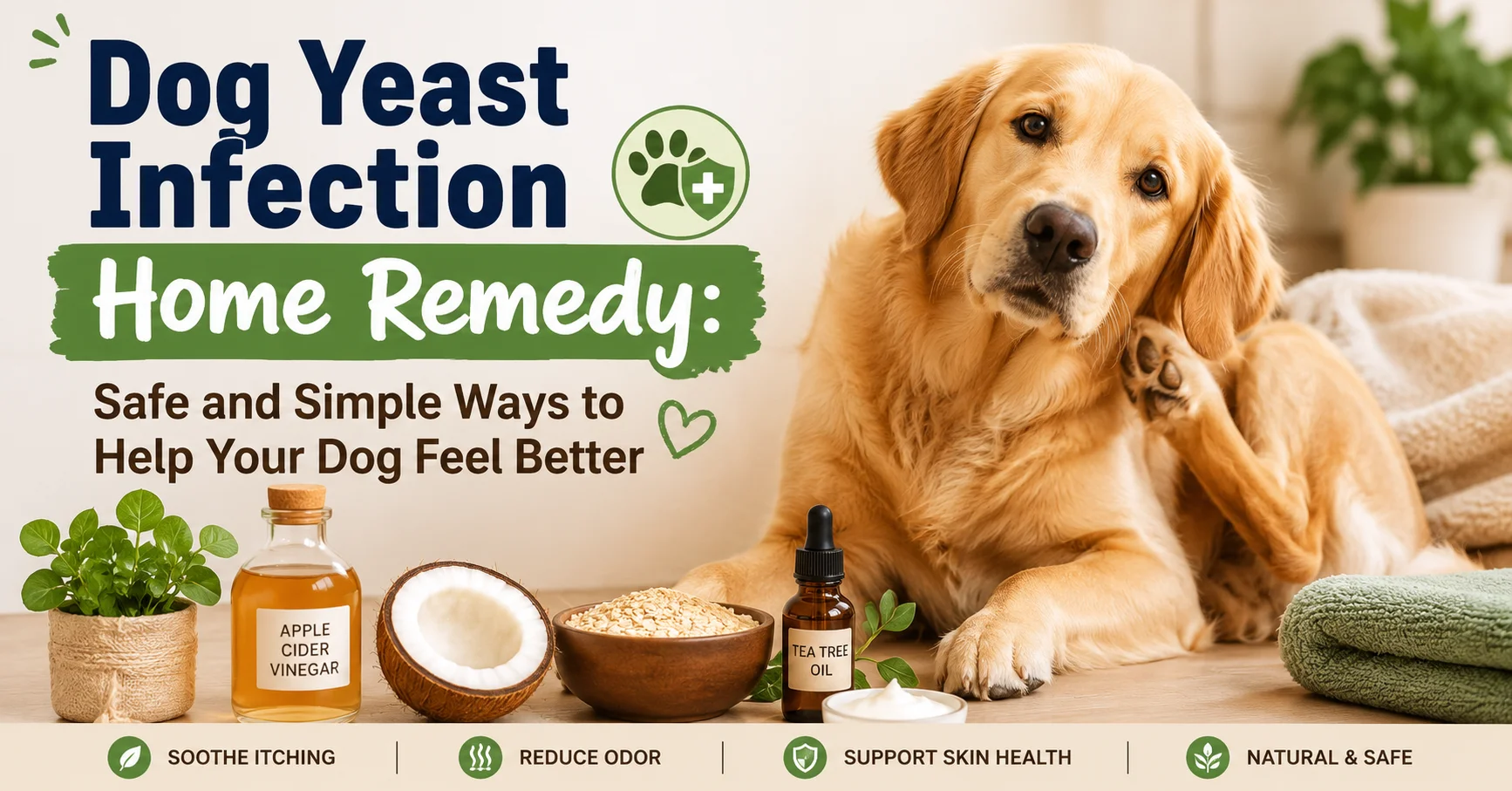
If your dog keeps scratching, licking paws, or smells a little “corn chip-like,” a yeast infection may be the reason. Many dog owners deal with this problem at least once. The good news is that there are several safe and gentle ways to help at home. A good dog yeast infection home remedy can calm itching, reduce redness, and support healthy skin when used correctly.
Yeast naturally lives on a dog’s skin. In small amounts, it is normal. Problems begin when yeast grows too fast. This often happens after allergies, poor diet, moisture buildup, or weak skin health. Dogs with floppy ears, skin folds, or sensitive immune systems may have more trouble with yeast infections.
I once cared for a dog that licked her paws every night. At first, it seemed harmless. Later, her paws became red and smelled bad. After changing her diet, cleaning her paws daily, and using gentle home care, her skin slowly improved. That experience showed me how much small habits matter.
This guide explains the best home remedies, what causes yeast infections, and when to see a vet. You will also learn helpful prevention tips to keep your dog comfortable long-term.
What Is a Yeast Infection in Dogs?
A yeast infection happens when yeast grows out of control on your dog’s body. The most common yeast involved is called Malassezia. It normally lives on the skin without causing problems. Trouble starts when the skin becomes warm, moist, or irritated.
Yeast infections often affect the ears, paws, belly, armpits, and skin folds. Some dogs develop dark, greasy skin. Others scratch all day or chew their paws until they turn red. The smell is another clue. Many owners describe it as moldy or sweet.
A mild infection may improve with proper cleaning and care. More severe cases can spread and become painful. That is why early treatment matters. A simple dog yeast infection home remedy may help mild symptoms before they get worse.
Dogs with allergies are especially at risk. Food sensitivities, pollen, and environmental triggers can weaken the skin barrier. When that happens, yeast grows faster than normal.
Common Signs of a Dog Yeast Infection
Knowing the signs helps you act quickly. Many symptoms look similar to allergies or bacterial infections, so pay close attention.
Here are the most common symptoms:
| Symptom | What It Looks Like |
|---|---|
| Itching | Constant scratching or rubbing |
| Paw licking | Dogs chew or lick feet often |
| Bad smell | Sweet, musty, or corn-chip odor |
| Red skin | Inflamed or irritated areas |
| Ear discharge | Brown wax or debris |
| Hair loss | Thinning fur around infected spots |
| Thick skin | Skin may darken or feel greasy |
| Head shaking | Common with ear yeast infections |
Some dogs only have one symptom. Others may show several signs together. If symptoms continue for weeks, a vet visit is important.
What Causes Yeast Infections in Dogs?
Many factors can trigger yeast overgrowth. Understanding the cause helps prevent future infections.
Allergies
Allergies are one of the biggest causes. Dogs can react to foods, dust, grass, or pollen. These reactions damage the skin and create the perfect place for yeast.
Moisture
Yeast loves warm and damp places. Dogs that swim often or stay wet after baths are at higher risk. Moist ears and skin folds are common trouble spots.
Weak Immune System
Some dogs cannot control yeast growth properly because of immune problems or long-term illness.
Antibiotics
Antibiotics kill harmful bacteria, but they may also reduce healthy bacteria. This imbalance can allow yeast to grow faster.
Poor Diet
Diets high in sugar and processed ingredients may support yeast growth. Many owners notice improvement after switching to healthier food.
Best Dog Yeast Infection Home Remedy Options
There is no single cure that works for every dog. The best remedy depends on the infection area and severity. Mild cases often improve with gentle care and consistency.
Apple Cider Vinegar Rinse
Apple cider vinegar is one of the most popular remedies. It may help restore skin balance and reduce yeast growth.
Mix equal parts water and raw apple cider vinegar. Use the solution on paws or itchy skin with a soft cloth. Do not use it on open wounds because it can sting badly.
Many dog owners use this remedy after walks. It helps clean paws and remove moisture. I have seen dogs improve after a week of regular use.
Coconut Oil for Skin Support
Coconut oil contains natural compounds that may help fight yeast. It can also soothe dry and irritated skin.
Apply a thin layer to affected areas once or twice daily. Too much oil can trap moisture, so use only a small amount.
Some owners also add tiny amounts of coconut oil to food. Always start slowly because too much may upset the stomach.
A gentle dog yeast infection home remedy like coconut oil works best alongside proper cleaning and diet changes.
Probiotics for Better Gut Health
Healthy digestion supports healthy skin. Probiotics add good bacteria that may help balance yeast levels naturally.
Look for dog-safe probiotics with multiple strains. Yogurt with no sugar may help some dogs, but many dogs are sensitive to dairy.
I once recommended probiotics to a friend whose bulldog had recurring ear infections. After several weeks, the dog scratched less and had fewer flare-ups. Gut health can make a real difference over time.
Oatmeal Baths for Itchy Skin
Oatmeal is gentle and calming. It does not kill yeast directly, but it can reduce discomfort.
Use plain oatmeal made for pets or grind plain oats into powder. Mix with lukewarm water and let your dog soak for about 10 minutes.
Avoid leaving the coat damp afterward. Dry your dog completely because moisture can worsen yeast growth.
This remedy works well for itchy belly skin or irritated paws.
Keeping Your Dog’s Ears Clean
Ear yeast infections are very common, especially in floppy-eared breeds. Moisture and trapped wax create the perfect environment for yeast.
Use a vet-approved ear cleaner once or twice weekly if your dog is prone to infections. Never push cotton swabs deep into the ear canal.
Signs of an ear yeast infection include:
- Head shaking
- Brown discharge
- Strong odor
- Ear scratching
- Redness inside the ear
A simple cleaning routine may prevent repeated infections.
Diet Changes That May Help
Food plays a major role in skin health. Some dogs improve when owners remove processed treats and low-quality ingredients.
Try adding:
- Lean proteins
- Fresh vegetables
- Omega-3 fatty acids
- Limited-ingredient dog food
Avoid foods with too much sugar or fillers. Some owners notice fewer symptoms after reducing grains, though every dog is different.
A healthy diet supports the immune system and helps the skin heal naturally.
Paw Care for Dogs With Yeast Problems
Paws trap dirt, moisture, and allergens. This makes them one of the most common infection spots.
After walks, wipe paws with a damp cloth or gentle paw wipe. Dry carefully between the toes.
You can also soak paws for a few minutes in diluted apple cider vinegar or mild antiseptic solutions recommended for dogs.
If your dog licks paws constantly, use an inflatable collar or distraction toys to prevent further irritation.
Natural Remedies to Avoid
Not every natural remedy is safe. Some internet tips may hurt your dog instead of helping.
Avoid these risky treatments:
| Remedy | Why It Can Be Dangerous |
|---|---|
| Undiluted vinegar | May burn skin |
| Tea tree oil | Toxic to dogs |
| Hydrogen peroxide | Can irritate tissue |
| Alcohol rubs | Dry and painful |
| Human creams | Some contain harmful ingredients |
Always test small areas first and stop if redness worsens.
How to Prevent Future Yeast Infections
Prevention is easier than treatment. Small daily habits can greatly reduce future problems.
Keep Skin Dry
Dry paws, ears, and folds after bathing or swimming. Moisture feeds yeast quickly.
Regular Grooming
Trim hair around paws and ears to improve airflow.
Healthy Diet
Feed balanced meals with quality ingredients.
Control Allergies
Work with your vet to identify food or environmental triggers.
Routine Cleaning
Clean ears and paws regularly, especially after outdoor play.
Dogs with chronic yeast problems often need long-term skin care. Staying consistent matters more than trying many random treatments.
When to See a Veterinarian
Home remedies help mild cases, but some infections need medical care. Severe yeast infections can spread or become painful.
See a vet if your dog has:
- Bleeding skin
- Severe swelling
- Thick ear discharge
- Constant pain
- Fever
- Hair loss spreading quickly
- Symptoms lasting over two weeks
A vet may prescribe antifungal medication, medicated shampoo, or allergy treatment. Sometimes yeast infections return because another health issue is hiding underneath.
Never ignore serious symptoms hoping home remedies alone will fix everything.
Breeds More Likely to Get Yeast Infections
Some breeds naturally struggle more with skin and ear problems.
These breeds often have higher risk:
- Bulldogs
- Cocker Spaniels
- Basset Hounds
- Golden Retrievers
- West Highland White Terriers
- Shih Tzus
Skin folds, floppy ears, and allergies increase the chance of yeast growth. Owners of these breeds should watch for symptoms early.
Can a Dog Yeast Infection Spread?
Most yeast infections are not contagious to healthy humans or pets. The yeast already exists naturally on the body.
However, dogs with weak immune systems may be more sensitive. Good hygiene is still important. Wash hands after treating infected areas and clean bedding often.
If multiple pets suddenly develop symptoms, ask a vet about possible environmental causes or other infections.
Helpful Daily Routine for Yeast-Prone Dogs
A simple daily routine can improve skin health over time.
Morning
- Check ears and paws
- Wipe away moisture
- Feed healthy meals
Afternoon
- Keep outdoor areas dry and clean
- Avoid standing water
Evening
- Inspect itchy spots
- Apply remedies if needed
- Brush coat gently
Consistency matters more than perfection. Even small habits help reduce flare-ups.
FAQs About Dog Yeast Infection Home Remedy
What is the best dog yeast infection home remedy?
Apple cider vinegar rinses, coconut oil, probiotics, and gentle cleaning routines are common remedies. The best option depends on the dog’s symptoms and infection location.
Can I treat my dog’s yeast infection without a vet?
Mild cases may improve with home care. Severe or recurring infections need veterinary treatment to find the root cause.
Does coconut oil help dog yeast infections?
Coconut oil may soothe irritated skin and support healing. Use only small amounts because excess oil can trap moisture.
How long does a yeast infection take to heal?
Mild infections may improve within one to two weeks. Severe cases often take longer and may require medication.
Can dog food cause yeast infections?
Yes. Food allergies or poor-quality ingredients may weaken skin health and trigger yeast overgrowth in some dogs.
Is apple cider vinegar safe for dogs?
Diluted apple cider vinegar is usually safe for skin and paws. Never use it on open wounds or raw skin.
Conclusion
A yeast infection can make life miserable for both dogs and owners. The scratching, odor, and constant discomfort are hard to ignore. Thankfully, a gentle dog yeast infection home remedy may help many mild cases when used correctly.
Simple habits often make the biggest difference. Clean paws, dry skin, healthy food, and regular ear care can reduce future flare-ups. Natural remedies like coconut oil and diluted apple cider vinegar may calm symptoms and support healing.
Still, it is important to know when home treatment is not enough. Severe infections need veterinary care to prevent complications and uncover hidden causes like allergies or immune problems.
Pay attention to your dog’s behavior. Small changes often tell you when something feels wrong. With patience and proper care, many dogs recover well and stay comfortable long-term.
