

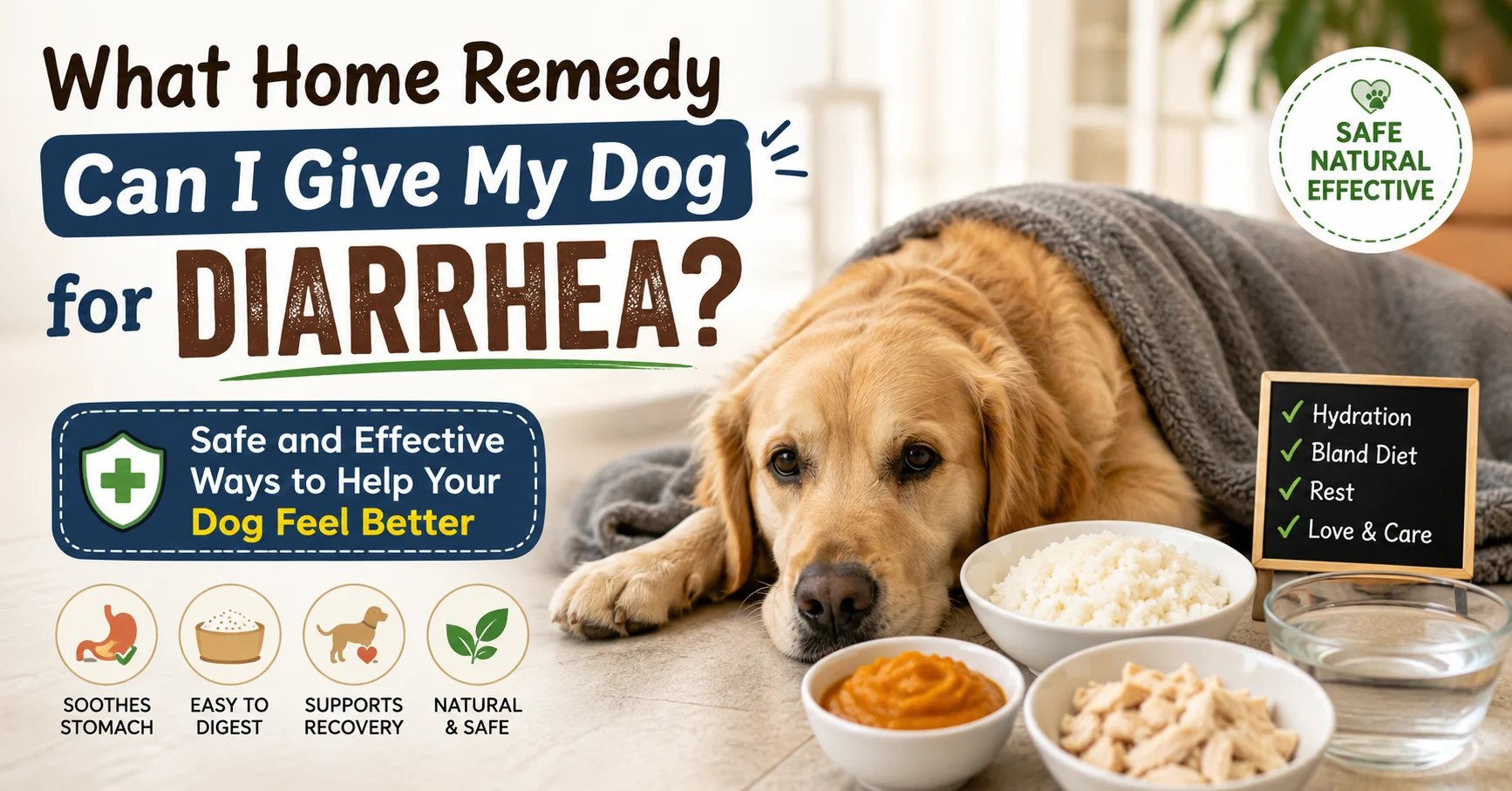
When your dog suddenly starts having diarrhea, it can be stressful. You may wonder if it’s something serious or just a temporary stomach upset. Many dog owners ask, what home remedy can I give my dog for diarrhea when they want to help their furry friend feel better quickly and safely.
The good news is that mild diarrhea often improves with simple home care. However, it is important to know which remedies are safe and when a vet visit is necessary. Understanding the cause of your dog’s diarrhea can also help you choose the best treatment.
In this guide, you’ll learn practical and vet-recommended tips, safe foods, hydration strategies, and warning signs to watch for. If you’ve ever wondered what can I give my dog for diarrhea home remedy, this article will provide clear answers and helpful advice.
Understanding Why Dogs Get Diarrhea
Diarrhea is not a disease itself. It is usually a sign that something is upsetting your dog’s digestive system. Just like humans, dogs can experience stomach issues from many different causes.
A sudden change in food is one of the most common reasons. Dogs often have sensitive stomachs, and switching brands too quickly can trigger digestive upset. Eating table scraps, spoiled food, garbage, or foreign objects can also cause diarrhea.
Other possible causes include stress, food allergies, intestinal parasites, bacterial infections, viral infections, and certain medications. Some dogs even develop diarrhea after exciting events such as travel, boarding, or moving to a new home.
Knowing the possible cause helps determine whether a simple home remedy is enough or if veterinary care is needed.
When Home Remedies Are Safe to Try
Many pet owners ask what home remedy can I give my dog for diarrhea before rushing to the vet. In some situations, home care can be appropriate.
Home remedies may help if your dog:
- Has mild diarrhea
- Is still active and alert
- Continues drinking water
- Has no vomiting
- Shows no signs of pain
- Has normal energy levels
If diarrhea lasts longer than two days or becomes severe, professional veterinary advice is recommended.
Young puppies, senior dogs, and dogs with medical conditions should be monitored more closely because they can become dehydrated faster.
The Importance of Keeping Your Dog Hydrated
One of the biggest dangers of diarrhea is dehydration. Dogs lose fluids quickly through loose stools. Replacing these lost fluids is often more important than food during the early stages of recovery.
Make sure your dog always has access to clean, fresh water. Encourage drinking by offering small amounts frequently throughout the day.
You can also provide ice cubes for your dog to lick if drinking large amounts seems difficult. Some owners offer low-sodium chicken broth to encourage fluid intake.
Watch for signs of dehydration such as:
| Sign | What It Means |
|---|---|
| Dry gums | Possible fluid loss |
| Sunken eyes | Moderate dehydration |
| Lethargy | Low energy from fluid loss |
| Loss of skin elasticity | Serious dehydration risk |
| Excessive panting | Body stress response |
If these symptoms appear, contact your veterinarian immediately.
A Bland Diet Can Help Calm the Stomach
One of the most trusted answers to what can I give my dog for diarrhea home remedy is a simple bland diet.
A bland diet allows the digestive system to rest while still providing nutrition. It is easy to digest and gentle on the stomach.
Common bland foods include:
- Boiled skinless chicken breast
- Plain white rice
- Boiled turkey
- Plain pumpkin puree
- Plain scrambled eggs
Serve small portions several times daily rather than large meals. Most dogs begin showing improvement within 24 to 48 hours.
Once stools become normal, gradually transition back to regular food over several days.
Pumpkin: A Natural Digestive Helper
Plain canned pumpkin is one of the most popular home remedies for mild diarrhea in dogs.
Pumpkin contains soluble fiber, which can help absorb excess water in the digestive tract. This often results in firmer stools and improved digestion.
For small dogs, one teaspoon may be enough. Medium-sized dogs can usually have one to two tablespoons, while larger dogs may tolerate slightly more.
Always use plain pumpkin puree. Avoid pumpkin pie filling because it contains added sugar and spices that may upset your dog’s stomach.
Many dog owners report positive results after adding pumpkin to bland meals.
Probiotics May Support Gut Health
Healthy bacteria play an important role in digestion. When diarrhea occurs, the balance of bacteria in the gut can become disrupted.
Dog-specific probiotics may help restore healthy digestion and improve stool quality.
Benefits of probiotics include:
| Benefit | How It Helps |
|---|---|
| Supports digestion | Improves food breakdown |
| Restores gut balance | Replaces healthy bacteria |
| Helps stool formation | Encourages firmer stools |
| Supports immunity | Healthy gut supports overall health |
Ask your veterinarian for recommendations regarding probiotic products designed specifically for dogs.
Human supplements may not always be appropriate.
Foods You Should Never Give a Dog with Diarrhea
While searching for what home remedy can I give my dog for diarrhea, it is important to know which foods may make the problem worse.
Avoid feeding:
- Fatty meats
- Fried foods
- Dairy products
- Spicy foods
- Sugary snacks
- Chocolate
- Grapes
- Raisins
- Onions
- Garlic
These foods can worsen digestive upset and may even be toxic.
Keeping your dog’s meals simple and bland is often the safest approach during recovery.
Rest Is an Important Part of Recovery
Many people focus only on food when dealing with diarrhea. However, rest plays a major role in healing.
A dog experiencing digestive upset may feel tired and uncomfortable. Providing a calm environment can help reduce stress on the body.
Limit vigorous exercise until stools return to normal. Avoid long walks, rough play, and stressful situations.
Give your dog a quiet place to relax with easy access to water and bathroom breaks.
Recovery often happens faster when dogs can rest comfortably.
Real-Life Example: What Worked for My Dog
Several years ago, my own dog developed mild diarrhea after sneaking food from a picnic table during a family outing.
At first, I was concerned. He remained playful, drank water normally, and showed no other symptoms. I started a bland diet consisting of boiled chicken and rice while making sure he stayed hydrated.
Within 24 hours, his stools became firmer. By the second day, he was almost completely back to normal.
This experience reinforced an important lesson. Mild digestive upset often responds well to simple home care, but close monitoring is essential.
Every dog is different, so always pay attention to changes in behavior and symptoms.
Signs That Mean You Should Call a Vet
Although many owners ask what home remedy can I give my dog for diarrhea, some situations require professional care.
Contact your veterinarian if you notice:
- Blood in stool
- Black or tarry stool
- Repeated vomiting
- Severe lethargy
- Fever
- Refusal to drink water
- Severe abdominal pain
- Diarrhea lasting longer than 48 hours
- Rapid weight loss
These symptoms may indicate a more serious medical condition requiring treatment.
Never ignore warning signs, especially in puppies or elderly dogs.
Preventing Future Episodes of Diarrhea
Prevention is often easier than treatment.
Simple habits can help reduce the risk of digestive problems:
| Prevention Tip | Benefit |
|---|---|
| Change food gradually | Prevents stomach upset |
| Avoid table scraps | Reduces digestive stress |
| Keep trash secured | Prevents accidental ingestion |
| Regular parasite control | Protects digestive health |
| Provide fresh water daily | Supports digestion |
| Schedule routine vet visits | Detects issues early |
Small preventive steps can make a big difference in your dog’s long-term health.
Building a Healthy Digestive Routine
Dogs thrive on consistency. Feeding meals at regular times and choosing high-quality dog food can support digestive wellness.
Many owners notice fewer stomach issues when they avoid frequent diet changes. Adding veterinarian-approved probiotics or fiber sources may also support healthy digestion in some dogs.
Regular exercise, hydration, and stress management contribute to a healthy gut as well.
When your dog’s digestive system stays balanced, episodes of diarrhea become less common.
Frequently Asked Questions
1. What home remedy can I give my dog for diarrhea?
A bland diet of boiled chicken and white rice is one of the safest home remedies. Plain pumpkin and adequate hydration may also help.
2. What can I give my dog for diarrhea home remedy if I don’t have pumpkin?
Boiled chicken and plain white rice are excellent alternatives. Ensure your dog drinks plenty of water.
3. How long should dog diarrhea last before seeing a vet?
If diarrhea lasts more than 48 hours or worsens, contact a veterinarian.
4. Can I give my dog human anti-diarrheal medicine?
Do not give human medications without veterinary guidance. Some can be harmful to dogs.
5. Is fasting helpful for dogs with diarrhea?
Some veterinarians may recommend a short fasting period for healthy adult dogs. Always consult your vet first.
6. Can stress cause diarrhea in dogs?
Yes. Travel, new environments, loud noises, and changes in routine can sometimes trigger digestive upset.
Conclusion
If you’re wondering what home remedy can I give my dog for diarrhea, the safest first steps usually involve hydration, rest, and a simple bland diet. Remedies like boiled chicken, white rice, and plain pumpkin often help mild cases recover naturally. Knowing what can I give my dog for diarrhea home remedy can help you respond calmly and effectively when digestive problems appear.
Always monitor your dog’s behavior closely. Mild diarrhea may improve quickly, but persistent symptoms, dehydration, vomiting, or blood in the stool require veterinary attention. By acting early and using safe home care strategies, you can help your dog feel comfortable and get back to their happy, healthy self.
