

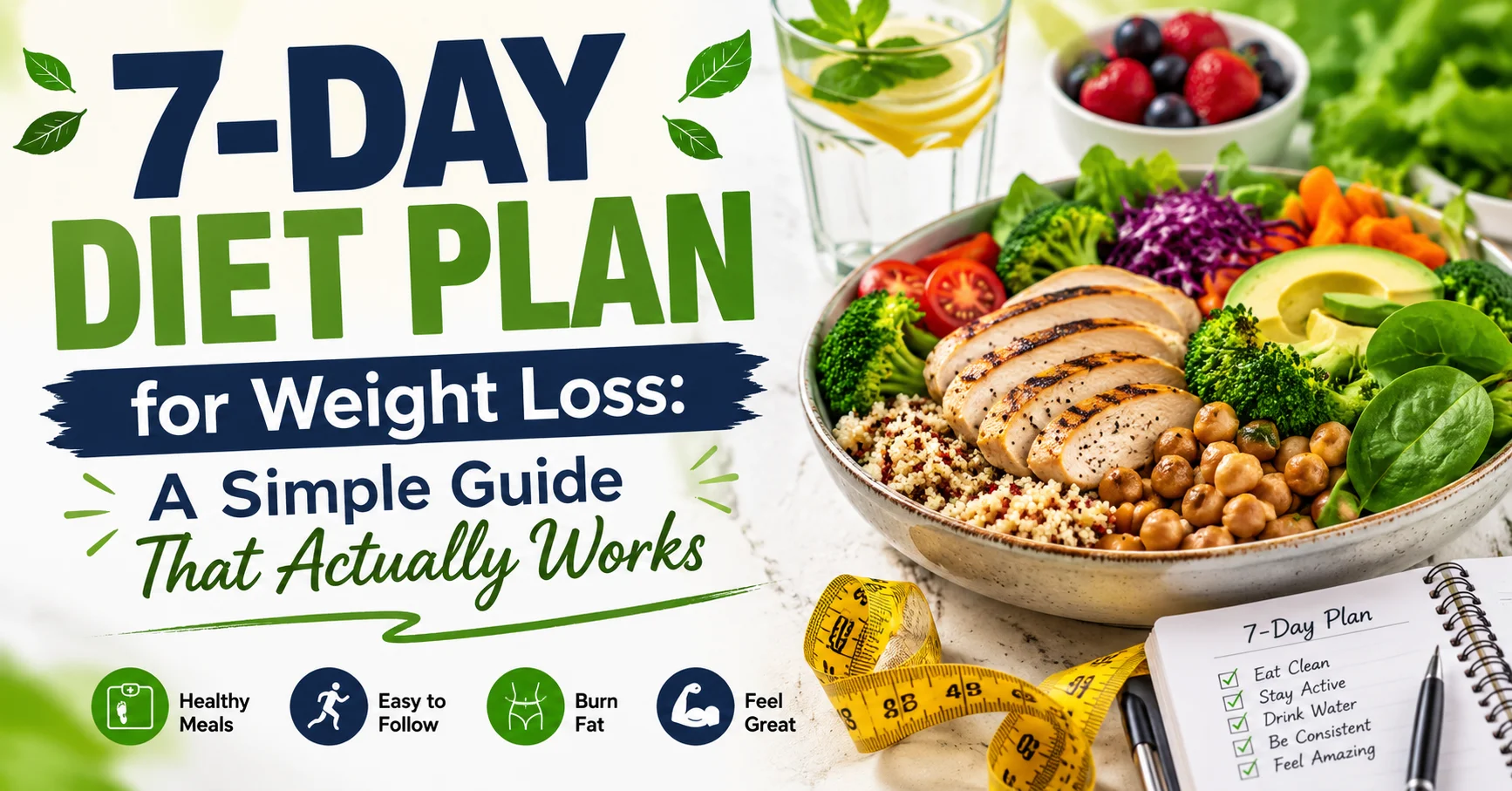
Losing weight can feel confusing at first. One day, carbs are bad. The next day, fats are the problem. Many people start strong but quit after a few days because the plan feels too hard. That is why a simple and realistic approach works best for most people.
A good 7-day diet plan for weight loss should help you eat better without making you feel hungry all the time. It should also fit into normal life. You do not need fancy foods or expensive shakes. Small changes can create real results when you stay consistent.
I once tried a strict crash diet that promised quick weight loss. I lost a few pounds fast, but I felt tired and cranky. The weight came back quickly too. After that, I learned that balanced eating works much better. A healthy plan should help your body feel stronger, not weaker.
This guide will walk you through a practical week of healthy eating. It includes simple meals, smart habits, and realistic advice. The goal is not perfection. The goal is progress you can actually maintain.
Why a Short Diet Plan Can Help You Start Strong
Starting with seven days feels less stressful than thinking about months of dieting. A shorter plan helps people stay focused. It also gives quick motivation when they notice small changes.
Many people feel lighter after just one week of cleaner eating. Bloating often goes down. Energy levels may improve too. Some people even sleep better when they stop eating too much junk food.
A 7-day diet plan for weight loss is also a great way to build healthier habits. During the week, you can learn better portion control, drink more water, and reduce emotional eating. These habits matter more than fast results.
The best part is that one good week can create momentum. When people see progress, they feel more confident. Confidence helps them continue their weight loss journey instead of giving up early.
What to Eat During a Weight Loss Week
Healthy weight loss foods are usually simple and easy to find. You do not need complicated recipes. Focus on whole foods that keep you full longer.
Good protein choices include eggs, chicken, fish, yogurt, beans, and lentils. Protein helps control hunger and supports muscle health. Fiber-rich foods are also important because they help digestion and reduce cravings.
Fresh fruits and vegetables should fill a large part of your plate. They contain vitamins, minerals, and fewer calories. Healthy fats like nuts, seeds, and olive oil can also help you stay satisfied.
Avoid sugary drinks and heavily processed snacks during your week. These foods often add extra calories without making you feel full. A clean eating plan works better when meals are balanced and simple.
Foods You Should Avoid for Better Results
Some foods make weight loss harder because they are high in sugar, unhealthy fats, or empty calories. Cutting back on these foods can help you notice changes faster.
Soft drinks are one of the biggest problems. They contain large amounts of sugar and do not reduce hunger. Packaged snacks like chips and cookies are also easy to overeat.
Fast food meals often contain too much salt, oil, and calories. Eating them regularly may lead to bloating and slow progress. Fried foods can also make you feel heavy and tired.
This does not mean you can never enjoy treats again. The key is balance. During your 7-day diet plan for weight loss, try to keep unhealthy foods limited so your body can reset and feel healthier.
Day 1: Start Fresh With Simple Meals
The first day should feel easy and manageable. Do not try to starve yourself. Focus on clean foods and proper portions.
For breakfast, oatmeal with banana slices works well. It gives fiber and steady energy. Lunch could be grilled chicken with salad and lemon dressing. Dinner might include vegetable soup with a boiled egg or fish.
Drink plenty of water during the day. Many people confuse thirst with hunger. Staying hydrated helps control cravings and supports digestion.
The first day is often the hardest mentally. You may miss sugary snacks or fast food. That feeling usually becomes easier after a day or two. Stay patient and remember why you started.
Day 2: Add More Protein and Fiber
By the second day, your body may already feel lighter. This is a good time to focus on meals that keep you full longer.
Eggs with whole-grain toast make a strong breakfast option. Greek yogurt with fruit also works well. For lunch, try brown rice with grilled vegetables and chicken or beans.
Healthy snacks can stop overeating later. Apple slices with peanut butter or a handful of nuts are better than chips or candy. Dinner should stay light but filling.
A 7-day diet plan for weight loss becomes easier when meals are satisfying. Protein and fiber help prevent sudden hunger attacks. They also reduce the chance of late-night snacking.
Day 3: Focus on Portion Control
Many people eat healthy foods but still struggle because portions are too large. Learning portion control is a major part of weight loss success.
Use smaller plates if possible. Eat slowly and stop before feeling overly full. Your brain needs time to notice when your stomach is satisfied.
For breakfast, try fruit with yogurt and chia seeds. Lunch could be tuna salad or lentil soup. Dinner may include grilled chicken with steamed vegetables.
One thing that helped me personally was avoiding eating while watching TV. I noticed I ate much more without realizing it. Paying attention during meals made a huge difference in controlling calories naturally.
Day 4: Keep Your Energy Levels High
Some people feel tired around the middle of the week. This usually happens when meals are too small or unbalanced.
Your body still needs fuel even during weight loss. Include healthy carbs like sweet potatoes, oats, quinoa, or brown rice. These foods provide energy without causing large sugar crashes.
Breakfast smoothies with spinach, banana, and yogurt can work well. Lunch might include turkey wraps or rice bowls with vegetables. Dinner should contain lean protein and greens.
Exercise can also help energy levels. A simple 20-minute walk supports fat burning and improves mood. You do not need extreme workouts to support your progress.
Day 5: Reduce Emotional Eating
Stress eating is very common. Many people snack because they feel bored, sad, or anxious rather than truly hungry.
During your 7-day diet plan for weight loss, try noticing why you eat. Before grabbing a snack, ask yourself if you are actually hungry. Sometimes drinking water or taking a short walk helps instead.
Healthy routines also matter. Poor sleep can increase cravings for sugary foods. Aim for enough rest each night so your body can recover properly.
A friend of mine used to snack heavily during stressful workdays. She started replacing chips with fruit and herbal tea. Over time, those small swaps helped her lose weight without feeling deprived.
Day 6: Make Healthy Eating Feel Normal
By day six, healthy eating may already feel easier. Cravings often become weaker after several days of balanced meals.
This is the perfect time to think long term. Weight loss should not feel like punishment. If your meals are too strict, you may struggle to continue after the week ends.
Try different healthy recipes to avoid boredom. Grilled fish tacos, vegetable stir-fries, and homemade soups are all good choices. Flavor matters because enjoyable meals are easier to maintain.
A successful 7-day diet plan for weight loss teaches habits you can continue later. Real results come from consistency, not perfection.
Day 7: Reflect on Your Progress
The final day is a chance to notice changes and celebrate effort. Even small progress matters.
You may feel less bloated, more energetic, or more confident. Some people lose a few pounds during the week. Others mainly notice better habits and improved mood. Both are positive signs.
Take a moment to think about what worked best. Maybe meal prep helped. Maybe drinking more water reduced cravings. Understanding your own habits can help future success.
Do not rush back to unhealthy eating after the week ends. Continue using the healthy habits you learned during the plan.
Smart Snack Ideas for Weight Loss
Snacks are not always bad. Healthy snacks can actually prevent overeating at meals.
Fresh fruit is one of the easiest choices. Apples, oranges, and berries provide fiber and natural sweetness. Yogurt with nuts is another filling option.
Vegetable sticks with hummus can also satisfy cravings. Air-popped popcorn works well when you want something crunchy without too many calories.
The key is planning ahead. Keeping healthy snacks nearby makes it easier to avoid junk food during busy days.
Best Drinks for Healthy Weight Loss
What you drink matters just as much as what you eat. Sugary drinks can add many hidden calories.
Water should be your main drink during a 7-day diet plan for weight loss. It supports digestion, hydration, and appetite control. Lemon water can also feel refreshing.
Green tea is another popular option because it contains antioxidants and may slightly support metabolism. Black coffee without too much sugar can also fit into a healthy plan.
Try limiting soda, sweet coffee drinks, and packaged juices. These drinks often contain more sugar than people realize.
Common Mistakes People Make During Dieting
One big mistake is skipping meals. Many people think eating less always means faster weight loss. In reality, skipping meals can increase cravings later.
Another common mistake is expecting perfect results in one week. Healthy weight loss takes time. Quick fixes often fail because they are too extreme.
Some people also rely too much on “diet foods.” Many packaged low-fat snacks still contain lots of sugar. Whole foods are usually the better choice.
Remember that consistency matters more than perfection. One unhealthy meal does not ruin progress. What matters is returning to healthy habits again.
How Exercise Helps Your Diet Plan
Exercise supports weight loss by burning calories and improving fitness. It also boosts mood and energy.
You do not need a gym membership to start moving more. Walking, cycling, dancing, or home workouts can all help. Even short daily activity adds up over time.
Strength exercises are also useful because they help build muscle. More muscle can support a healthier metabolism.
The best workout is one you enjoy enough to continue. A balanced routine paired with a healthy eating plan often gives the best long-term results.
FAQs About 7-Day Diet Plans
Can I really lose weight in seven days?
Yes, some people lose a few pounds in a week. Much of it may be water weight at first. Healthy habits matter more than fast results.
Is a 7-day diet plan safe?
Most balanced plans are safe for healthy adults. Avoid extreme diets that remove entire food groups or require starvation.
How much water should I drink daily?
Most people benefit from 6–8 glasses daily. Active people may need even more water.
Can I eat carbs during weight loss?
Yes. Healthy carbs like oats, brown rice, and sweet potatoes provide energy and fiber.
What is the best breakfast for weight loss?
A breakfast with protein and fiber works best. Eggs, oatmeal, yogurt, and fruit are good choices.
Should I exercise every day?
Light daily activity is helpful. Walking or simple workouts support better health and fat loss.
Conclusion
A healthy 7-day diet plan for weight loss does not need to be extreme. Simple meals, smart habits, and consistency can create real progress. The goal is not to become perfect in one week. The goal is to build a healthier lifestyle that lasts longer than seven days.
Focus on balance instead of strict rules. Eat whole foods, stay active, drink enough water, and listen to your body. Small changes may seem simple, but they can lead to powerful results over time.
Most importantly, be patient with yourself. Weight loss is a journey, not a race. One healthy week can become the start of a much stronger and happier lifestyle.
