

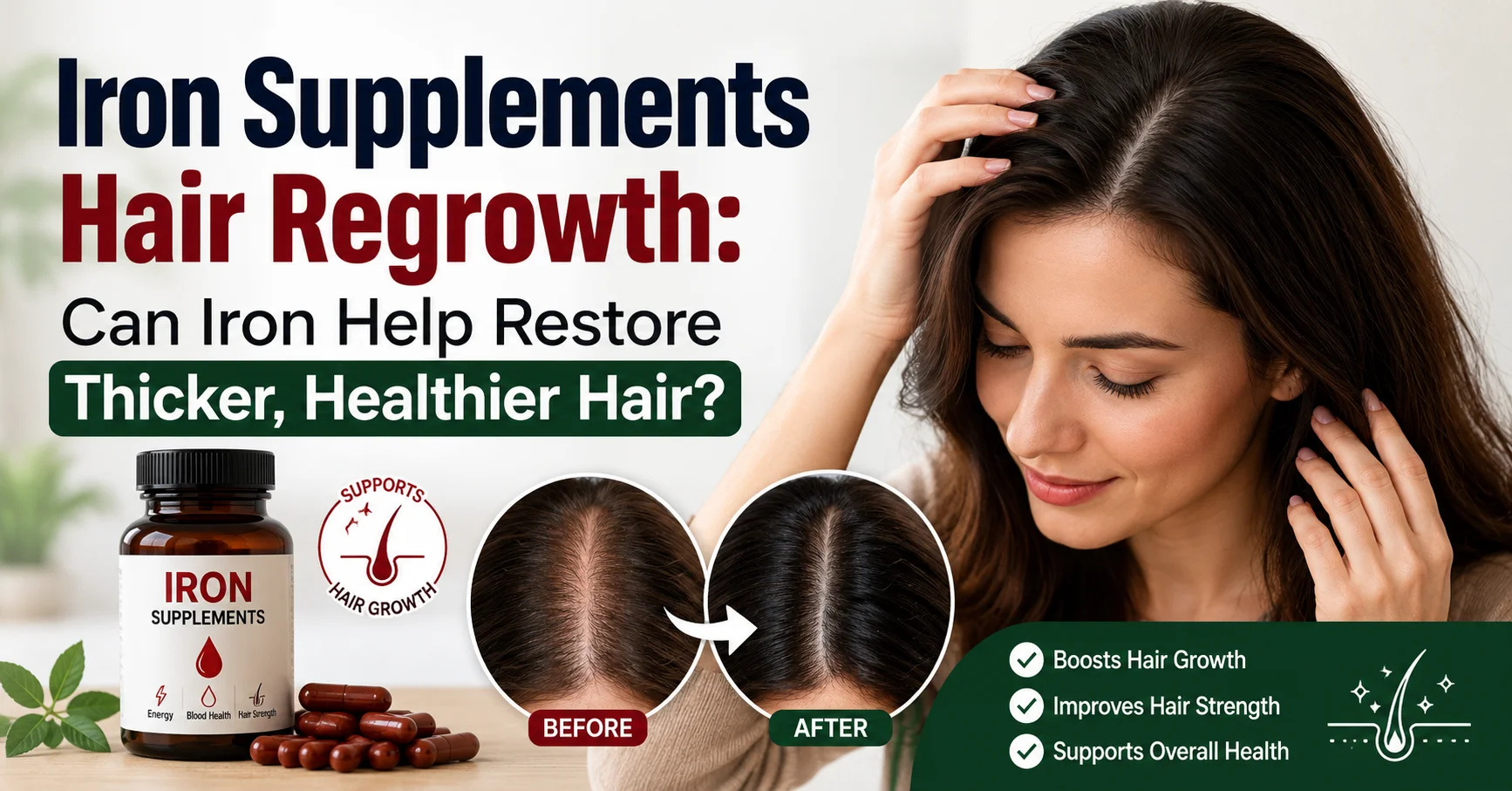
Hair loss can feel frustrating. You may notice more hair in your brush, shower drain, or on your pillow. While many people focus on expensive shampoos and treatments, they often overlook one common cause of hair thinning: low iron levels.
Iron plays an important role in many body functions. It helps carry oxygen through the blood and supports healthy cell growth. Hair follicles need oxygen and nutrients to grow strong, healthy strands. When iron levels drop, hair growth can slow down, and shedding may increase.
This is why many people search for information about iron supplements hair regrowth. They want to know if improving their iron levels can help their hair become fuller again. The good news is that for people with iron deficiency, iron supplementation may support healthier hair growth over time.
In this complete guide, you will learn how iron affects hair, what causes iron deficiency, how long recovery takes, and how to choose the best iron supplement for hair regrowth. We will also discuss realistic expectations and practical tips that can help support healthy hair growth.
Understanding the Connection Between Iron and Hair Growth
Hair growth is a complex process. Every hair follicle goes through cycles of growth, rest, and shedding. These cycles depend on several nutrients, including iron.
Iron helps red blood cells transport oxygen throughout the body. Hair follicles are among the fastest-growing tissues in the body. They need a steady supply of oxygen and nutrients to function properly.
When iron levels become too low, the body starts prioritizing essential organs over less critical functions like hair growth. As a result, hair follicles may receive less oxygen. This can push more hairs into the shedding phase.
Many people with low iron notice gradual thinning rather than sudden bald spots. Hair may become finer, weaker, and more difficult to grow. In some cases, restoring iron levels can improve hair health and support new growth.
The relationship between iron and hair is especially important for women, who are more likely to experience iron deficiency due to menstruation, pregnancy, or dietary factors.
What Is Iron Deficiency?
Iron deficiency occurs when the body does not have enough iron to meet its needs. It is one of the most common nutritional deficiencies worldwide.
At first, iron stores begin to decline. During this stage, symptoms may be mild or absent. Over time, iron levels can drop further, leading to iron deficiency anemia.
Common symptoms include:
- Fatigue
- Weakness
- Dizziness
- Pale skin
- Cold hands and feet
- Shortness of breath
- Brittle nails
- Hair thinning
Many people do not realize that hair loss may be linked to low iron. They may spend months trying different hair products before discovering the real issue through blood testing.
If hair loss is caused by iron deficiency, addressing the deficiency is often more effective than relying solely on cosmetic treatments.
Why Low Iron Can Lead to Hair Loss
Hair follicles require energy to produce new hair. Iron helps support this process by enabling oxygen delivery to cells.
When iron levels fall, follicles may enter a resting phase called telogen. This condition can contribute to excessive shedding known as telogen effluvium.
People experiencing low-iron-related hair loss often notice:
- Increased shedding while washing hair
- Hair appearing thinner overall
- A wider part line
- Reduced hair volume
- Slower hair growth
Hair loss caused by iron deficiency usually develops gradually. Because hair growth cycles take time, the effects may not become obvious for several months after iron levels decline.
Fortunately, if iron deficiency is identified and corrected early, hair follicles often remain healthy enough to resume normal growth.
Can Iron Supplements Really Help Hair Regrowth?
The answer depends on the cause of the hair loss.
If hair thinning is related to iron deficiency, iron supplements may help restore normal hair growth patterns. However, if hair loss is caused by genetics, hormones, autoimmune conditions, or other factors, iron supplements alone may not solve the problem.
Research suggests that low iron stores can be associated with certain types of hair loss. When iron deficiency is present, treatment often improves overall hair health.
Many people report noticeable hair regrowth after iron supplements once their iron levels return to normal. However, results vary between individuals. Hair growth is naturally slow, and improvements may take several months to become visible.
The key is identifying the underlying cause. A healthcare provider can determine whether low iron is contributing to your hair concerns.
Signs Your Hair Loss May Be Related to Iron Deficiency
Certain clues may suggest that low iron is playing a role in hair thinning.
You may want to discuss iron testing with a healthcare professional if you experience:
- Heavy menstrual periods
- Chronic fatigue
- Vegetarian or vegan eating patterns
- Recent pregnancy
- Frequent blood donation
- Digestive conditions affecting nutrient absorption
- Hair shedding combined with other symptoms of low iron
A simple blood test can evaluate iron status. Ferritin levels are often checked because ferritin reflects stored iron in the body.
Many hair specialists pay close attention to ferritin levels when investigating unexplained hair loss.
Knowing the cause helps ensure you receive the most effective treatment rather than relying on guesswork.
How Long Does Hair Regrowth Take After Iron Supplements?
One of the most common questions people ask is how quickly they will see results.
Hair growth takes patience. Even after iron levels improve, hair follicles need time to recover and restart normal growth cycles.
Most people can expect:
- Initial improvement in energy within weeks
- Reduced shedding after several months
- Visible new growth within three to six months
- Fuller results after six to twelve months
Because hair grows only about half an inch per month, changes happen gradually.
Many success stories involving hair regrowth after iron supplements come from individuals who remained consistent with treatment for several months. Stopping too early may prevent you from seeing the full benefits.
Patience and consistency are important parts of the recovery process.
Choosing the Best Iron Supplement for Hair Regrowth
Selecting the best iron supplement for hair regrowth depends on your individual needs and tolerance.
Several forms of iron supplements are available:
Ferrous Sulfate
This is one of the most common and affordable options. It contains a significant amount of elemental iron and is often recommended by healthcare professionals.
Ferrous Gluconate
This form may be gentler on the stomach for some individuals. It contains less elemental iron per tablet but may cause fewer digestive issues.
Ferrous Fumarate
This option provides a higher concentration of elemental iron and is commonly used to treat iron deficiency.
Iron Bisglycinate
Many people prefer this chelated form because it is often easier to absorb and may be less likely to cause stomach discomfort.
The best iron supplement for hair regrowth is not necessarily the strongest one. It is the one that effectively improves your iron levels while remaining comfortable enough for long-term use.
Foods That Support Iron Levels Naturally
Supplements can help correct deficiencies, but diet also matters.
Iron-rich foods include:
- Lean red meat
- Liver
- Chicken
- Turkey
- Fish
- Eggs
- Lentils
- Beans
- Spinach
- Pumpkin seeds
- Tofu
Combining iron-rich foods with vitamin C sources can improve absorption.
Good vitamin C foods include:
- Oranges
- Strawberries
- Kiwi
- Bell peppers
- Tomatoes
- Broccoli
Simple meal combinations can make a difference. For example, adding lemon juice to spinach or eating fruit alongside iron-rich meals may help your body absorb more iron.
Healthy nutrition supports both iron levels and overall hair health.
Other Nutrients Important for Healthy Hair
Iron is not the only nutrient involved in hair growth.
Hair follicles also benefit from:
Protein
Hair is primarily made of a protein called keratin. Inadequate protein intake may contribute to weak hair.
Zinc
Zinc supports hair tissue growth and repair.
Vitamin D
Low vitamin D levels have been linked to certain hair loss conditions.
Biotin
Biotin helps support healthy hair, skin, and nails.
Vitamin B12
This vitamin supports red blood cell production and overall cellular function.
Omega-3 Fatty Acids
These healthy fats help support scalp health.
A balanced diet provides a strong foundation for healthy hair growth and overall wellness.
Common Mistakes People Make With Iron Supplements
Many people unintentionally reduce the effectiveness of their supplements.
Common mistakes include:
- Taking iron with calcium supplements
- Drinking coffee or tea immediately after taking iron
- Stopping treatment too early
- Ignoring follow-up blood testing
- Self-diagnosing without confirmation
Certain foods and beverages can interfere with iron absorption.
To improve absorption, many healthcare providers recommend taking iron with vitamin C and avoiding calcium-rich foods around the same time.
Following professional guidance helps maximize results while reducing unwanted side effects.
Managing Side Effects of Iron Supplements
Some people experience digestive side effects when taking iron.
Common issues include:
- Constipation
- Nausea
- Stomach discomfort
- Dark stools
If side effects occur, several strategies may help:
- Taking iron with a small amount of food
- Switching to a different form of iron
- Starting with a lower dose
- Increasing water intake
- Adding fiber-rich foods
Never stop prescribed treatment without discussing concerns with your healthcare provider.
Finding a supplement that works well for your body can improve both comfort and consistency.
Realistic Expectations for Hair Recovery
Many online success stories create unrealistic expectations.
While hair regrowth iron supplements can support recovery when iron deficiency is present, they are not a miracle cure.
Results depend on:
- Severity of deficiency
- Duration of hair loss
- Overall health
- Age
- Genetics
- Consistency with treatment
Some people notice dramatic improvements. Others experience more modest changes.
The goal is not overnight transformation. The goal is restoring a healthier environment for hair growth over time.
Taking a long-term view often leads to greater satisfaction and better outcomes.
Lifestyle Habits That Support Hair Regrowth
Healthy habits work alongside proper nutrition.
Helpful practices include:
- Managing stress
- Getting enough sleep
- Staying hydrated
- Avoiding harsh hair treatments
- Limiting excessive heat styling
- Exercising regularly
Stress can contribute to hair shedding. Chronic sleep deprivation may also affect recovery.
Simple daily habits often play a bigger role than many people realize.
Combining healthy lifestyle choices with proper treatment provides the best environment for stronger, healthier hair.
Frequently Asked Questions
1. Can iron supplements stop hair loss completely?
If iron deficiency is causing the hair loss, correcting the deficiency may significantly reduce shedding. However, other causes of hair loss may require different treatments.
2. How long before I see hair regrowth after iron supplements?
Most people need at least three to six months before visible improvements appear. Full results may take up to a year.
3. What is the best iron supplement for hair regrowth?
There is no single best option for everyone. Iron bisglycinate, ferrous sulfate, ferrous gluconate, and ferrous fumarate are commonly used depending on individual needs.
4. Can I take iron supplements without testing my iron levels?
It is generally best to confirm iron deficiency through testing. Taking unnecessary iron can cause health problems.
5. Are iron supplements safe for long-term use?
They can be safe when used under medical supervision. Monitoring iron levels helps prevent excess iron accumulation.
6. Can men experience iron-deficiency-related hair loss?
Yes. Although iron deficiency is more common in women, men can also develop low iron levels and related hair thinning.
Conclusion
The connection between iron supplements hair regrowth is an important topic for anyone dealing with unexplained hair thinning. Iron helps deliver oxygen to hair follicles, supporting healthy growth and normal hair cycles. When iron levels become too low, increased shedding and slower growth may occur.
For people with iron deficiency, improving iron levels can often lead to healthier hair over time. Many individuals experience hair regrowth after iron supplements, though patience is essential because hair recovery happens gradually.
If you suspect low iron may be contributing to your hair loss, consider speaking with a healthcare professional and requesting appropriate testing. Identifying the root cause is the first step toward effective treatment.
With the right approach, balanced nutrition, consistent treatment, and realistic expectations, stronger and healthier hair may be within reach.
