

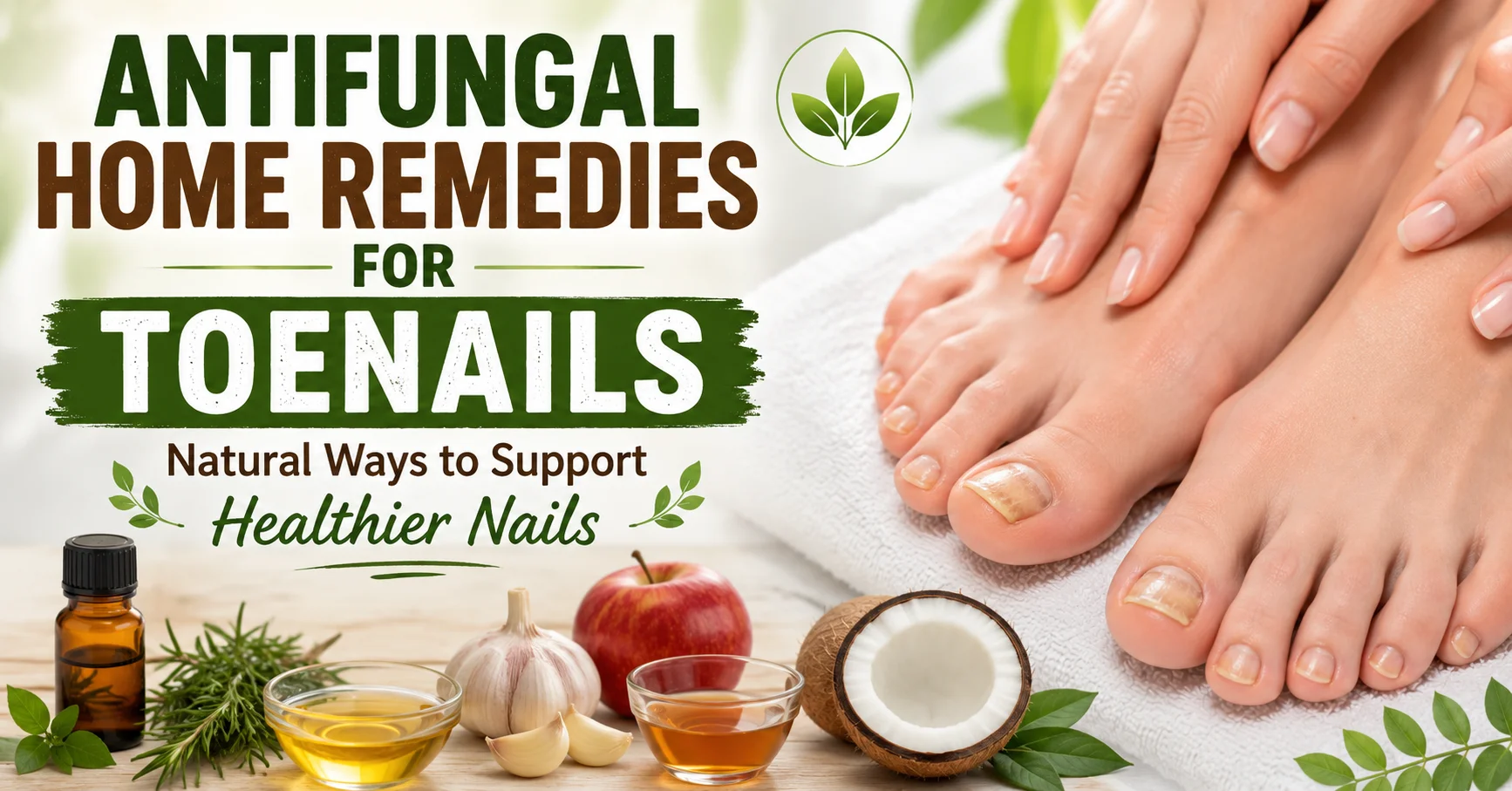
Toenail fungus is a common problem that affects millions of people around the world. It often starts as a small white or yellow spot under the tip of the nail. Over time, the nail may become thick, brittle, discolored, and difficult to trim. While prescription treatments are available, many people look for antifungal home remedies for toenails because they are affordable, easy to try, and use ingredients often found at home.
The good news is that several natural remedies may help create an environment that makes it harder for fungus to grow. However, it is important to understand that home remedies usually take time and work best when combined with good foot hygiene. Results vary from person to person, and severe infections may require medical care.
In this guide, you will learn about the most popular antifungal home remedies for toenails, how they work, how to use them safely, and what habits can help keep your nails healthy.
Understanding Toenail Fungus
Toenail fungus, also known as onychomycosis, develops when fungi grow under or around the nail. Warm and damp environments help these organisms thrive. Locker rooms, public showers, sweaty shoes, and tight footwear can increase the risk.
The infection usually begins slowly. Many people ignore the early signs because they are painless. As the fungus spreads, the nail may become thick, crumbly, or develop an unpleasant smell.
Recognizing the problem early gives you a better chance of success with natural treatments. If the infection covers most of the nail or causes pain, it is best to speak with a healthcare professional.
Common Signs of Toenail Fungus
Knowing the symptoms helps you start treatment sooner.
| Symptom | What It Looks Like |
|---|---|
| Discoloration | Yellow, white, or brown nails |
| Thickened Nails | Harder to trim than normal |
| Brittle Texture | Cracks and breaks easily |
| Nail Separation | Nail lifts from nail bed |
| Odor | Mild unpleasant smell |
These symptoms may worsen over time if left untreated.
Why People Choose Antifungal Home Remedies for Toenails
Many people prefer natural approaches before trying medications. Home remedies are often inexpensive and easy to access. Some natural ingredients also have properties that may help reduce fungal growth.
Another reason people try antifungal home remedies for toenails is convenience. Most remedies can be used at home without special equipment.
Still, patience is important. Toenails grow slowly. Even when treatment works, visible improvement may take several months.
Tea Tree Oil: One of the Most Popular Natural Options
Tea tree oil is often considered one of the most widely used antifungal home remedies for toenails. It contains compounds that may help fight fungi and bacteria.
To use tea tree oil:
- Wash and dry your feet thoroughly.
- Dilute the oil with a carrier oil if you have sensitive skin.
- Apply a few drops directly to the affected nail.
- Let it absorb completely.
Use it once or twice daily. Consistency matters because results can take weeks or months.
Many people report gradual improvement when tea tree oil becomes part of their daily nail care routine.
Apple Cider Vinegar Soaks
Apple cider vinegar is another favorite remedy. It creates an acidic environment that may make fungal growth more difficult.
How to Use It
Mix:
- 1 part apple cider vinegar
- 1 part warm water
Soak your feet for 15 to 20 minutes daily.
After soaking, dry your feet carefully, especially between the toes. Moisture can encourage fungal growth, so drying is just as important as the soak itself.
While scientific evidence is limited, many people include vinegar soaks among their preferred antifungal home remedies for toenails.
Coconut Oil and Its Natural Benefits
Coconut oil contains fatty acids that may help protect against certain microbes. It is also gentle on the skin and easy to apply.
Massage a small amount onto the affected nail and surrounding skin two or three times per day.
One advantage of coconut oil is that it moisturizes dry skin while supporting overall foot health. Many people combine coconut oil with other antifungal home remedies for toenails as part of a broader routine.
Garlic as a Traditional Home Remedy
Garlic has been used for centuries in traditional wellness practices. It contains compounds believed to have antimicrobial properties.
There are two common ways people use garlic:
| Method | Instructions |
|---|---|
| Garlic Paste | Crush fresh garlic and apply briefly |
| Dietary Use | Add garlic to meals regularly |
If applying directly to the skin, avoid leaving it on too long because it may cause irritation.
Although research is mixed, garlic remains one of the more commonly discussed antifungal home remedies for toenails.
Baking Soda for Foot Care
Baking soda does not necessarily kill fungus, but it may help absorb moisture. Since fungi thrive in damp environments, keeping feet dry can be beneficial.
Sprinkle baking soda inside shoes or socks to reduce moisture buildup.
You can also create a paste by mixing baking soda with water and applying it to the affected area for a short period before rinsing.
Combined with good hygiene, baking soda may support other antifungal home remedies for toenails.
Vicks VapoRub: A Surprising Home Option
Many people are surprised to learn that Vicks VapoRub is frequently mentioned as a home remedy for nail fungus.
Its ingredients include:
- Menthol
- Camphor
- Eucalyptus oil
Some small studies and personal experiences suggest it may help improve the appearance of infected nails.
Apply a thin layer to the affected nail daily. While it may not work for everyone, many users find it worth trying because it is inexpensive and widely available.
Oregano Oil and Natural Plant Compounds
Oregano oil contains a compound called carvacrol, which has been studied for antimicrobial properties.
Because oregano oil is very strong, it should usually be diluted before use.
Apply a small amount to the affected nail once or twice daily.
Many natural health enthusiasts include oregano oil among effective antifungal home remedies for toenails, although more research is needed to confirm its effectiveness.
Daily Habits That Help Prevent Fungus
Treatments work better when combined with healthy habits.
| Healthy Habit | Why It Helps |
|---|---|
| Keep feet dry | Reduces fungal growth |
| Change socks daily | Limits moisture buildup |
| Wear breathable shoes | Improves airflow |
| Trim nails regularly | Makes treatment easier |
| Disinfect nail tools | Prevents reinfection |
Simple daily habits often make a significant difference.
Foods That May Support Nail Health
Nutrition affects overall nail health. While no food can cure fungus directly, a balanced diet supports your body’s natural defenses.
Consider including:
| Food | Potential Benefit |
|---|---|
| Yogurt | Contains probiotics |
| Garlic | Natural plant compounds |
| Leafy Greens | Vitamins and minerals |
| Eggs | Protein for nail growth |
| Nuts and Seeds | Healthy fats and nutrients |
Healthy eating works best alongside other antifungal home remedies for toenails.
Mistakes That Can Slow Recovery
Many people unknowingly make mistakes that prolong fungal infections.
Common mistakes include:
- Stopping treatment too early
- Wearing damp socks
- Sharing nail clippers
- Ignoring infected shoes
- Covering feet in non-breathable footwear
Toenails grow slowly. Even when the fungus is gone, it takes time for healthy nail growth to replace damaged areas.
Consistency is often the key to success.
When to See a Doctor
Home remedies are not always enough.
Seek medical advice if:
- The infection spreads rapidly
- You have diabetes
- The nail becomes painful
- Multiple nails are affected
- Home treatments fail after several months
A healthcare professional can recommend stronger treatment options if needed.
My Personal Perspective on Natural Toenail Care
Over the years, I have seen many people become frustrated because they expect overnight results. The biggest lesson is that patience matters.
Most successful stories involve people who combine several healthy habits. They keep their feet clean, trim their nails properly, wear breathable footwear, and consistently apply their chosen remedy.
Whether using tea tree oil, apple cider vinegar, coconut oil, or another option, regular use over time is usually more important than constantly switching treatments.
Natural approaches may not work for everyone, but they often encourage better foot care habits that support long-term nail health.
Frequently Asked Questions
1. What is the best antifungal home remedy for toenails?
Tea tree oil is one of the most popular choices. Many people also use apple cider vinegar and coconut oil as part of their treatment routine.
2. How long do home remedies take to work?
Visible improvement may take several months because toenails grow slowly. Consistent treatment is essential.
3. Can vinegar kill toenail fungus?
Vinegar may help create conditions that make fungal growth more difficult, but results vary from person to person.
4. Is tea tree oil safe for toenail fungus?
Tea tree oil is generally safe when used correctly. People with sensitive skin should dilute it before application.
5. Can I combine multiple home remedies?
Many people combine remedies such as tea tree oil, vinegar soaks, and improved foot hygiene. However, watch for skin irritation.
6. When should I stop using home remedies?
You should continue until healthy nail growth replaces the infected portion. If symptoms worsen or persist, consult a healthcare professional.
Conclusion
Toenail fungus can be stubborn, but many people find success with antifungal home remedies for toenails when they stay consistent and patient. Natural options such as tea tree oil, apple cider vinegar, coconut oil, oregano oil, garlic, and baking soda may help support healthier nails and create an environment that discourages fungal growth.
The most effective approach combines these remedies with good foot hygiene, breathable footwear, regular nail care, and healthy daily habits. Remember that improvement often takes time because toenails grow slowly. If the infection becomes severe or does not improve, professional medical treatment may be necessary.
By staying committed to a simple care routine, you can give your nails the best chance to recover and stay healthy for the future.
