

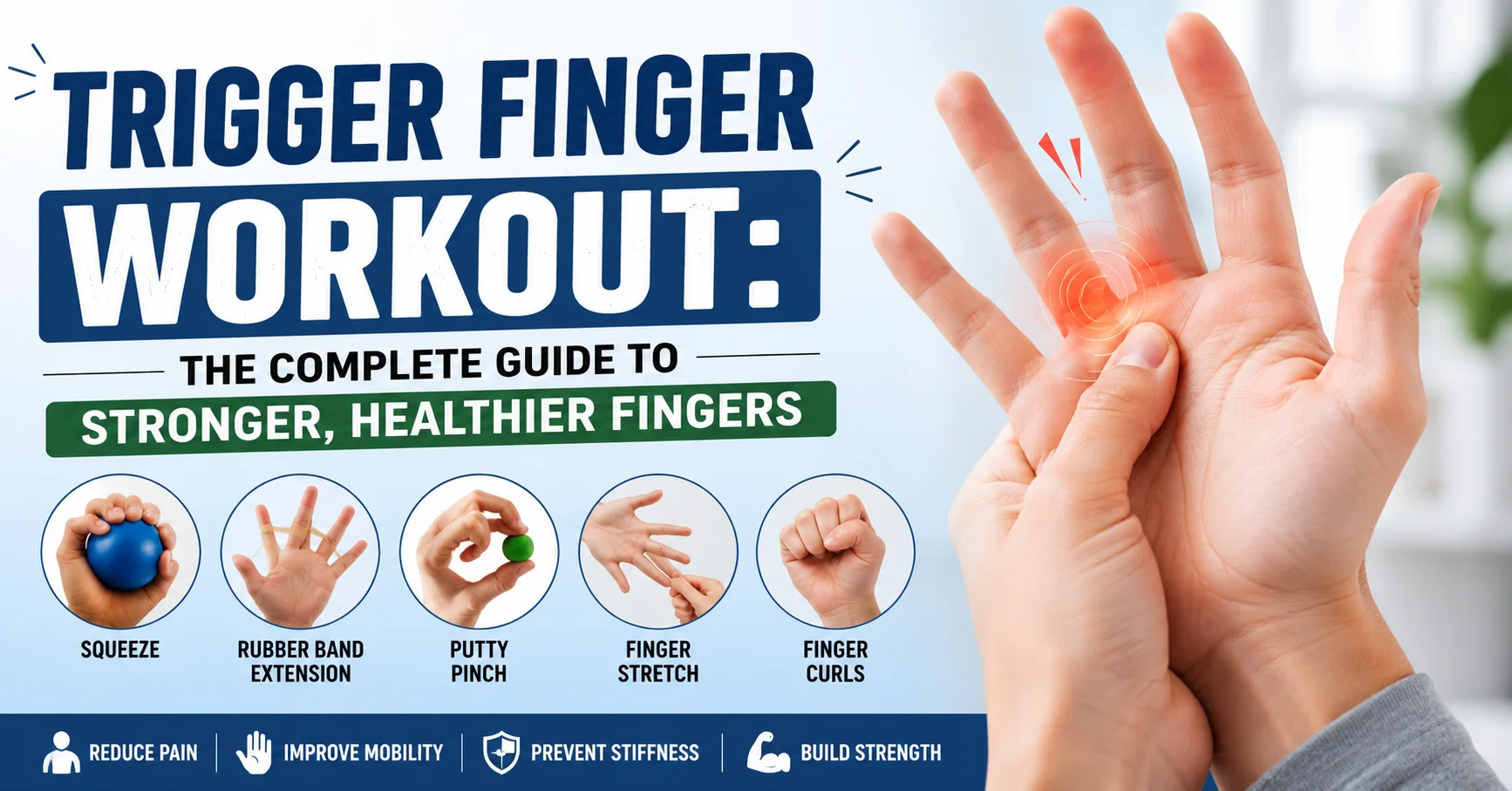
Introduction: Your Fingers Do More Than You Think
Think about everything your fingers do in a single day. They type messages, hold cups of coffee, play instruments, grip steering wheels, and scroll through your phone. We use our fingers constantly — yet most people never think about training them. That is, until something goes wrong.
If you have ever felt stiffness, pain, or a clicking sensation in a finger, you know how frustrating it can be. A trigger finger workout is one of the most effective ways to support finger health, reduce discomfort, and build real strength in your hands. Whether you are an athlete, a musician, a gamer, or someone recovering from a hand issue, finger workouts can make a big difference in how your hands feel and perform every single day.
This guide is your go-to resource. We will cover everything — what trigger finger is, how exercise helps, which moves work best, and how to build a simple routine you can stick with. Let us jump right in.
What Is Trigger Finger and Why Does It Happen?
Trigger finger is a condition where one of your fingers gets stuck in a bent position. It can snap or pop when you try to straighten it — just like a trigger being pulled and released. The medical name is stenosing tenosynovitis. That is a big word, but the idea is simple: the tendon in your finger gets inflamed and has trouble sliding smoothly through its sheath.
It often affects the ring finger or thumb, but it can happen to any finger. You might notice it most in the morning, when your hands feel stiff and achy. People who do repetitive gripping motions — like construction workers, farmers, musicians, or frequent smartphone users — are especially likely to develop it. The good news? A consistent trigger finger workout can ease symptoms and even help prevent the problem from getting worse over time.
| Risk Factor | Examples | How It Affects the Finger |
| Repetitive gripping | Gaming, typing, farming | Overworks the flexor tendons |
| Underlying health conditions | Diabetes, rheumatoid arthritis | Increases tendon inflammation |
| Age and gender | Women over 40 are more at risk | Natural wear on tendon sheaths |
| Prolonged forceful gripping | Power tools, weight lifting | Puts excess pressure on the tendon |
How a Trigger Finger Workout Helps
Exercise is a powerful tool. When done right, a trigger finger workout helps in several important ways. It increases blood flow to the tendons and surrounding tissue. More blood means more nutrients reaching the area, which supports healing. Stretching and strengthening the fingers also reduces inflammation and keeps the tendon gliding more freely inside its sheath.
Think of it like a rusty door hinge. If you never move it, the rust builds up and it gets harder to open. But if you keep it moving and apply the right care, it stays loose and functional. Your finger tendons work the same way. Regular, gentle movement keeps them lubricated and flexible.
A good trigger finger workout also strengthens the muscles that support the finger joints. This takes some of the load off the tendons themselves. The result? Less friction, less pain, and better movement over time. Exercises also help retrain your grip mechanics, so you are not unknowingly putting too much stress on vulnerable areas.
Warm-Up First: Never Skip This Step
Before any trigger finger workout, always warm up your hands. Cold muscles and tendons are more likely to get injured. Warming up takes only two or three minutes and makes a real difference.
Here is a simple warm-up routine: Start by rubbing your hands together briskly for 30 seconds. This creates gentle friction heat. Next, hold your hands under warm (not hot) running water for one minute. Then, slowly open and close your hands five times. Finally, gently shake your wrists out. That is it — your hands are ready. Skipping this step is one of the most common mistakes people make. Protect your tendons by starting every session with this quick warm-up.
The 10 Best Trigger Finger Workout Exercises
1. Finger Slides (Tendon Glide Exercise)
This is the gold-standard move for anyone dealing with trigger finger. It keeps the tendon moving through its full range of motion, which is exactly what it needs. Start with your fingers straight and together. Slowly curl your fingertips down to touch the top of your palm, forming a hook shape. Hold for three seconds. Then curl further into a full fist. Hold for three seconds. Finally, open your hand back flat. That is one rep. Do 10 reps, three times a day. You will feel gentle tension — that is normal. Stop if you feel sharp pain.
2. Tabletop Finger Extension
Place your hand flat on a table, palm down. Slowly lift each finger one at a time, holding it up for three seconds before placing it back down. This exercise targets the extensor tendons on the back of the hand — the ones that help straighten your fingers. Most people only focus on flexion (bending), but extension strength is equally important in a trigger finger workout. Do two sets of 10 lifts per finger.
3. Finger Spread and Squeeze
Hold your hand up with fingers together. Slowly spread them apart as wide as you can. Hold for five seconds. Then bring them back together. This simple move improves flexibility and circulation across the entire hand. You can also use a soft rubber band looped around all five fingers and spread them against the resistance. Do 10 to 15 reps per hand.
4. Thumb Opposition
Touch the tip of your thumb to the tip of each finger, one at a time. Make a clean “O” shape with each touch. Move slowly and deliberately. This exercise trains fine motor coordination and keeps the thumb tendon flexible. The thumb is one of the most commonly affected areas, so including this in your trigger finger workout routine is especially smart. Do two full rounds per hand, twice a day.
5. Soft Ball Squeeze
Grab a stress ball, putty, or a soft sponge. Squeeze it gently and hold for five seconds. Release and repeat. This builds grip strength gradually without overloading the tendons. The keyword here is “soft” — do not use a hard rubber ball when you are dealing with finger pain or stiffness. Start gentle, and only increase resistance as your symptoms improve. Aim for three sets of 10 squeezes per hand.
6. Wrist Flexion and Extension Stretch
Your wrist and finger tendons are connected. Keeping the wrist flexible helps the entire system work better. Extend your arm in front of you. Use your other hand to gently pull your fingers back (wrist extension). Hold for 20 seconds. Then point your fingers down (wrist flexion) and hold for 20 seconds. Switch hands. Do this stretch after every trigger finger workout session to reduce tension in the entire forearm and hand.
7. Pinch Strengthening
Place a small, soft object — like a folded piece of foam — between your thumb and index finger. Pinch it gently and hold for five seconds. Repeat with thumb and middle finger, then thumb and ring finger. This strengthens the pinch muscles and tendons without straining the affected area. Pinch strength is important for daily tasks like opening jars, buttoning shirts, and holding pens.
8. Fist and Fan
Make a slow, deliberate fist. Hold it for three seconds. Then open your hand as wide as possible — spreading all fingers like a fan. Hold for three seconds. Repeat 10 to 15 times. This rhythmic exercise improves fluid movement through the full range of motion and gets the tendons used to working both ways. Many people find this particularly soothing when done in warm water.
9. Individual Finger Curls with a Resistance Band
Loop a light resistance band around one finger. Slowly curl that finger toward your palm and hold for two seconds. Slowly release. This is an isolated exercise that builds strength in specific flexor tendons. It is especially useful when one finger is more affected than the others. Be gentle — the resistance should feel light, not straining. Do 10 reps per finger.
10. Gentle Massage and Tendon Mobilization
While not a traditional exercise, gentle self-massage is a powerful part of any trigger finger workout plan. Use your opposite thumb to apply slow, circular pressure along the palm side of the affected finger — from the base to the tip. This helps break up adhesions, improve circulation, and reduce inflammation around the tendon sheath. Spend two to three minutes massaging each affected finger after your exercise session.
Sample Weekly Trigger Finger Workout Plan
Consistency matters more than intensity. Here is a simple weekly plan anyone can follow:
| Day | Activities | Duration |
| Monday | Warm-up, Tendon Glides, Thumb Opposition, Fist and Fan | 15 minutes |
| Tuesday | Warm-up, Tabletop Extensions, Pinch Strengthening, Wrist Stretches | 12 minutes |
| Wednesday | Rest or gentle massage only | 5 minutes |
| Thursday | Warm-up, Soft Ball Squeeze, Finger Spread, Individual Curls | 15 minutes |
| Friday | Warm-up, Full routine (all 10 exercises, lighter sets) | 20 minutes |
| Saturday | Rest or warm water soaking with fist and fan movements | 10 minutes |
| Sunday | Complete rest | — |
What to Avoid During Your Trigger Finger Workout
Not every type of exercise is helpful when you have trigger finger. Some movements can actually make things worse. Knowing what to avoid is just as important as knowing what to do.
Avoid forceful gripping exercises, especially with hard objects. Do not use heavy hand grippers or squeeze hard rubber balls — these put too much stress on already inflamed tendons. Skip any exercise that causes a sharp, shooting pain. Mild tension is okay; pain is a warning sign. Avoid repetitive fast movements, like rapid finger tapping on a hard surface. These can worsen irritation. Also, try not to push through stiffness aggressively. Forced range of motion can damage the tendon sheath further.
| What to Avoid | Why It Is Harmful | Better Alternative |
| Hard rubber ball squeezes | Too much tendon load | Use soft foam or putty instead |
| Rapid repetitive tapping | Worsens inflammation | Slow, controlled movements only |
| Ignoring morning stiffness | Tendons are most vulnerable then | Always warm up before exercising |
| Skipping rest days | Overuse causes setbacks | Follow the weekly plan above |
| Exercising through sharp pain | Risk of tendon injury | Stop and consult a doctor |
Lifestyle Changes That Support Your Trigger Finger Workout
Exercise alone is powerful, but pairing it with some lifestyle changes makes it even more effective. First, pay attention to how you use your hands throughout the day. If you grip your phone tightly for hours, try using a phone holder or changing how you hold it. If you type for work, make sure your keyboard and chair height are ergonomically correct. Small changes in daily habits reduce the overall strain on your finger tendons.
Diet also plays a role. Anti-inflammatory foods like fatty fish, berries, leafy greens, and walnuts support tendon health from the inside. Staying well-hydrated keeps your tendons lubricated. If you smoke, quitting can significantly improve blood flow to the extremities, including your fingers. Sleep is another underrated factor — your body heals and repairs tissue during sleep. Getting seven to nine hours supports your recovery from any trigger finger workout program.
When to See a Doctor
A trigger finger workout is a great first step, but it is not a replacement for professional medical care. You should see a doctor if your finger becomes completely locked and you cannot straighten it at all. Also seek care if pain is severe or getting worse, if you notice significant swelling or warmth around the finger joint, or if symptoms have been ongoing for more than four to six weeks despite consistent exercise.
Doctors can offer other treatments like corticosteroid injections, splinting, or in more serious cases, a minor surgical procedure called a trigger finger release. These options work well and often bring fast relief. The key is not to wait too long. Catching the problem early and combining medical care with a smart trigger finger workout plan gives you the best chance of a full recovery.
Special Populations: Who Benefits Most?
A trigger finger workout is beneficial for many different groups of people. Gamers and esports players spend hours gripping controllers or hovering over keyboards. Their fingers are under enormous repetitive stress. A simple daily routine can extend their performance and prevent serious injury down the road. Musicians — especially guitarists, pianists, and drummers — also benefit greatly. Instrument playing requires precise, repetitive finger movements, and tendon health is critical.
Office workers who type for six or more hours a day are another high-risk group. Many develop early trigger finger symptoms and do not even realize it. Athletes in sports like rock climbing, baseball, or golf put heavy loads on their hand tendons. Older adults benefit too, since tendons naturally lose some elasticity with age and exercise helps counteract that loss. The trigger finger workout is truly a universal tool for hand health.
| Population | Common Risk | How Exercise Helps |
| Gamers and esports players | Controller grip strain | Reduces flexor tendon overuse |
| Musicians | Repetitive fine motor movements | Improves tendon glide and flexibility |
| Office workers and typists | Prolonged keyboard use | Counteracts repetitive extension strain |
| Athletes (climbers, golfers) | High force gripping | Builds balanced hand strength |
| Older adults (40+) | Natural tendon stiffness | Maintains range of motion and circulation |
Tools and Accessories That Enhance Your Routine
You do not need fancy equipment for a trigger finger workout. But a few simple tools can make your routine more effective and enjoyable. Therapy putty comes in different resistance levels and is great for controlled grip and pinch exercises. Soft foam stress balls provide gentle, low-impact resistance. Finger resistance bands are excellent for isolated tendon strengthening.
A warm water basin is one of the best tools you can have. Exercising your fingers in warm water reduces friction and makes movement easier and more comfortable. Some people also use paraffin wax baths — a technique often used by physical therapists — which deliver deep warmth and help loosen stiff tendons beautifully. Finger splints can be worn at night to hold the finger in an extended position while you sleep, which helps prevent morning stiffness and locking.
Conclusion: Start Small, Stay Consistent, Feel the Difference
Your fingers are incredible. They help you do everything that matters. Taking care of them through a regular trigger finger workout is one of the smartest investments you can make in your overall health and quality of life. You do not need hours a day. Even 10 to 15 minutes of gentle, focused exercise done consistently can lead to real, noticeable improvement.
Start with the warm-up. Pick two or three exercises from the list above. Do them gently and consistently for two weeks. Then add more as your comfort increases. Track how your fingers feel in the morning. Notice whether clicking, stiffness, or pain improves. Most people start seeing results within two to four weeks of sticking with a routine.
If you found this guide helpful, share it with someone who might benefit — a friend, a coworker, or a family member who is always typing or gaming. Strong, healthy fingers make every part of life easier. You have got this.
Frequently Asked Questions (FAQs)
Q1: How often should I do a trigger finger workout?
For best results, aim to do a gentle trigger finger workout once or twice a day. Morning sessions are especially helpful because fingers tend to be stiffest after a night of rest. Keep each session short — 10 to 20 minutes is plenty. Consistency matters far more than length. Doing a little bit every day beats doing a long session once a week. Just be sure to listen to your body and rest if you experience increased pain or swelling.
Q2: Can exercise cure trigger finger completely?
Exercise can significantly reduce symptoms and, in mild to moderate cases, may resolve the problem over time. However, it is not a guaranteed cure — especially for severe cases where the finger is fully locked. A trigger finger workout works best as part of a complete approach that may also include splinting, anti-inflammatory strategies, and in some cases medical treatment. Think of exercise as a powerful support tool, not a stand-alone fix for every situation.
Q3: Is it safe to exercise a trigger finger when it is painful?
Mild discomfort during gentle stretching is normal and generally okay. However, you should stop immediately if you feel sharp pain, increased swelling, or a sudden worsening of symptoms. The key rule is: gentle movement is helpful, forced movement is harmful. Always warm up first, move slowly, and stay well within your pain-free range. If pain consistently increases with exercise, see a healthcare provider before continuing your trigger finger workout routine.
Q4: What is the best time of day to do finger exercises?
Morning is often the most beneficial time. Trigger finger symptoms are typically worst after periods of inactivity — like sleep. Doing a gentle workout in the morning helps loosen up the tendons and sets your fingers up for a better day. A short evening session can also help release tension built up during daily activities. Avoid exercising right before bed if your fingers tend to swell — give them time to settle before sleeping.
Q5: Can children develop trigger finger?
Yes, though it is less common. Pediatric trigger finger usually affects the thumb and is sometimes present from birth. In children, the condition often resolves on its own as they grow. Gentle finger exercises can be helpful but should always be guided by a pediatric physician or hand therapist. Never attempt a full adult trigger finger workout routine on a child without professional guidance, as growing tendons need special care.
Q6: Are there exercises I can do at my desk during work?
Absolutely! Some of the best trigger finger workout moves are perfectly suited for the workplace. Finger slides, thumb opposition, and the fist-and-fan exercise can all be done at your desk without any equipment. Try doing a quick two-minute hand break every hour. Set a timer as a reminder. Keeping your fingers moving during the workday prevents the stiffness and tendon tightening that come from prolonged static gripping or typing positions.
