

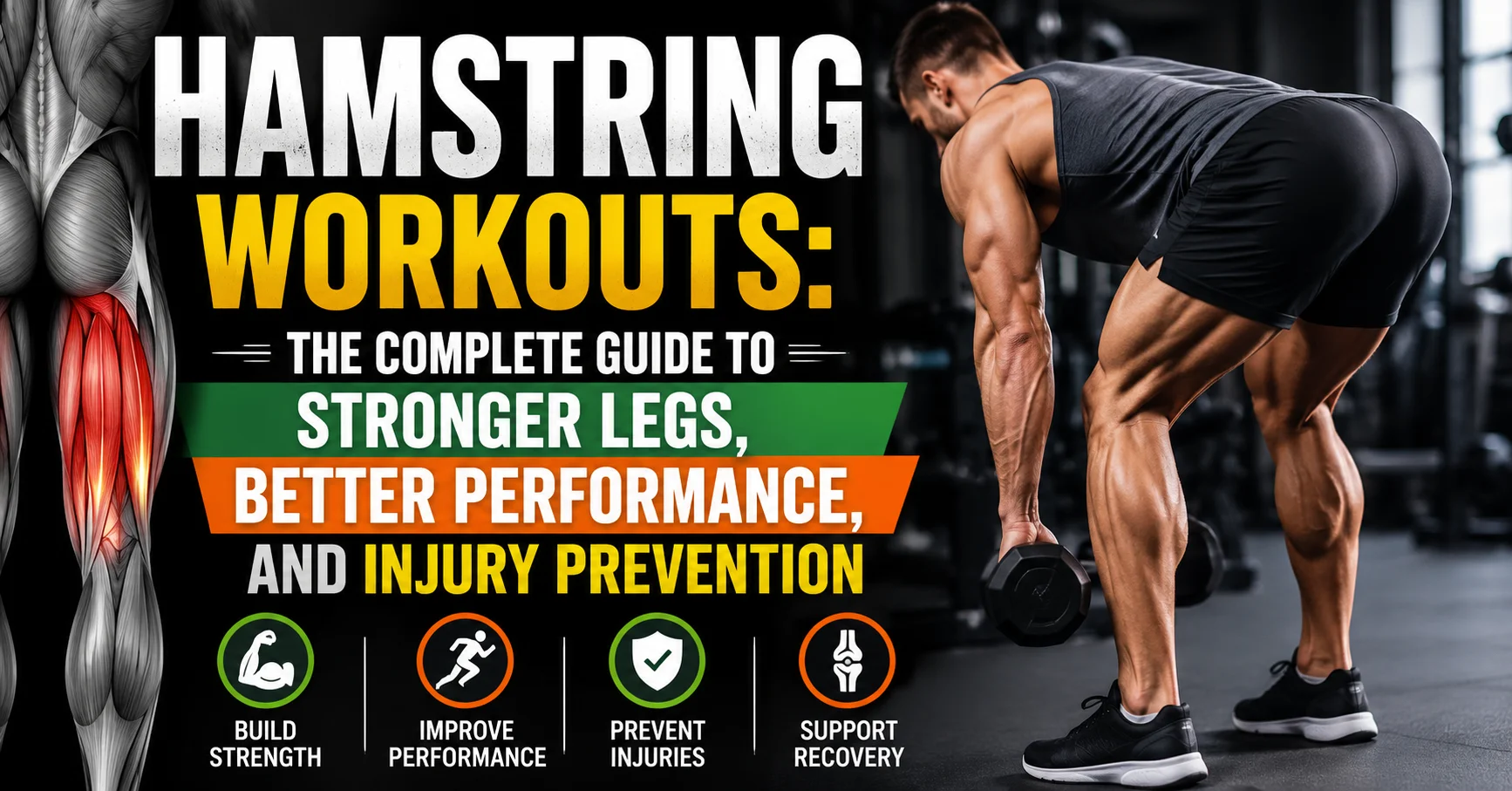
Introduction
Strong hamstrings are one of the most overlooked parts of fitness. Many people focus on their chest, arms, or abs, but the muscles on the back of the thighs play a huge role in movement, strength, balance, and athletic performance. Whether you run, lift weights, play sports, or simply want healthier legs, adding effective hamstring workouts to your routine can make a big difference.
Your hamstrings help you walk, jump, sprint, bend your knees, and stabilize your hips. Weak hamstrings can lead to poor posture, slower athletic performance, and a higher risk of injury. On the other hand, strong hamstrings improve speed, power, and overall lower-body strength.
I learned this lesson personally after focusing mostly on squats for months. My quads became stronger, but my hamstrings lagged behind. Once I started adding dedicated hamstring exercises, my deadlift improved, my knees felt more stable, and running became easier.
This guide covers everything you need to know about hamstring workouts, including the best exercises, training tips, injury prevention strategies, and sample workout plans for all fitness levels.
Understanding Your Hamstring Muscles
The hamstrings are a group of three muscles located on the back of the thigh:
- Biceps femoris
- Semitendinosus
- Semimembranosus
These muscles work together to bend the knee and extend the hip. They are active during walking, running, climbing stairs, and lifting objects from the ground.
Many people unknowingly create a strength imbalance by training their quadriceps more often than their hamstrings. Over time, this imbalance can affect movement patterns and increase injury risk.
Healthy hamstrings contribute to:
- Better posture
- Stronger lifts
- Faster sprinting
- Improved athletic performance
- Reduced injury risk
- Better knee stability
When designing hamstring workouts, it is important to train the muscles through both hip-hinge and knee-flexion movements.
Why Hamstring Training Matters
Strong hamstrings do much more than improve leg appearance. They support nearly every lower-body movement.
Athletes rely on powerful hamstrings for acceleration and jumping. Lifters use them during deadlifts and squats. Even everyday activities like standing up from a chair depend on these muscles.
Benefits of regular hamstring training include:
| Benefit | How It Helps |
|---|---|
| Improved Strength | Supports major compound lifts |
| Better Running Speed | Increases power during sprinting |
| Injury Prevention | Protects knees and hips |
| Improved Balance | Stabilizes lower-body movement |
| Better Posture | Supports pelvic alignment |
Many trainers consider hamstring strength a key factor in overall athletic development.
Signs Your Hamstrings Need More Attention
Not everyone realizes they have weak hamstrings. Some common signs include:
- Frequent lower back discomfort
- Knee instability
- Difficulty sprinting
- Tightness after exercise
- Poor balance during single-leg movements
- Struggling with deadlifts
If several of these sound familiar, adding dedicated hamstring workouts may help improve your performance and movement quality.
The Best Hamstring Workouts for Building Strength
The most effective training programs combine several movement patterns. This ensures every part of the hamstring receives proper stimulation.
Top Hamstring Exercises
| Exercise | Difficulty | Main Focus |
|---|---|---|
| Romanian Deadlift | Intermediate | Strength and size |
| Glute Bridge | Beginner | Hip extension |
| Nordic Curl | Advanced | Injury prevention |
| Leg Curl | Beginner | Knee flexion |
| Good Morning | Intermediate | Posterior chain strength |
| Kettlebell Swing | Intermediate | Power development |
Combining these movements creates some of the best hamstring workouts available for both beginners and experienced athletes.
Romanian Deadlifts: The King of Hamstring Training
Few exercises challenge the hamstrings as effectively as the Romanian deadlift.
This movement trains the hamstrings through a large range of motion while also strengthening the glutes and lower back.
How to Perform It
- Hold a barbell or dumbbells.
- Stand tall with feet hip-width apart.
- Push your hips backward.
- Keep your back straight.
- Lower the weight until you feel a stretch.
- Return to standing.
Benefits
- Builds muscle mass
- Improves hip mobility
- Enhances athletic performance
- Strengthens the posterior chain
For many people, Romanian deadlifts form the foundation of effective hamstring workout programs.
Glutes and Hamstrings Workout for Complete Lower-Body Development
The glutes and hamstrings work closely together during nearly every lower-body movement. Training them together often produces better results.
A balanced glutes and hamstrings workout can improve strength, posture, and athletic ability.
Sample Routine
| Exercise | Sets | Reps |
|---|---|---|
| Romanian Deadlift | 4 | 8-10 |
| Hip Thrust | 4 | 10-12 |
| Walking Lunge | 3 | 12 each leg |
| Stability Ball Curl | 3 | 15 |
| Glute Bridge | 3 | 20 |
This combination targets both muscle groups effectively while improving overall lower-body function.
Bodyweight Hamstring Exercises You Can Do Anywhere
You do not always need a gym to strengthen your hamstrings.
Bodyweight exercises can provide excellent results, especially for beginners.
Effective Options
- Glute bridges
- Single-leg glute bridges
- Nordic curls
- Sliding hamstring curls
- Reverse lunges
- Step-ups
These movements are perfect for home workouts and travel routines.
One of my favorite exercises is the sliding hamstring curl. It requires minimal equipment but creates an intense challenge.
Hamstring Workouts for Athletes
Athletes place tremendous demands on their hamstrings.
Sprint acceleration, jumping, and sudden changes of direction require strong and resilient muscles.
Athletic-focused training should emphasize:
- Explosive power
- Eccentric strength
- Speed development
- Injury prevention
Athlete Workout Example
| Exercise | Sets | Reps |
|---|---|---|
| Kettlebell Swings | 4 | 15 |
| Romanian Deadlifts | 4 | 8 |
| Nordic Curls | 3 | 6 |
| Broad Jumps | 3 | 8 |
| Sled Pushes | 4 | 20 meters |
These are among the best hamstring workouts for sports performance.
Hamstring Injury Workout: Training Safely During Recovery
Recovering from a hamstring injury requires patience and proper progression.
A good hamstring injury workout focuses on rebuilding strength gradually without causing further damage.
Early Recovery Exercises
- Isometric hamstring holds
- Glute bridges
- Standing leg curls
- Gentle stretching
Later Recovery Exercises
- Romanian deadlifts
- Single-leg deadlifts
- Nordic curls
- Resistance band curls
Always follow medical guidance when returning from an injury.
Pain should never be ignored during rehabilitation.
Stretching and Mobility for Healthy Hamstrings
Flexibility plays an important role in long-term hamstring health.
Tight muscles may limit movement and contribute to discomfort.
Helpful Stretches
- Standing hamstring stretch
- Seated forward fold
- Dynamic leg swings
- Downward dog
- Toe touches
Stretching works best after workouts when muscles are warm.
Aim for 5–10 minutes of mobility work several times per week.
Common Mistakes During Hamstring Training
Many people make mistakes that reduce results.
Some of the most common include:
Ignoring Proper Form
Poor technique shifts tension away from the hamstrings.
Using Too Much Weight
Heavy loads often cause lifters to compensate with their lower back.
Neglecting Recovery
Muscles need time to rebuild and grow.
Training Only One Movement Pattern
Both hip extension and knee flexion should be included.
Avoiding these mistakes will improve the effectiveness of your hamstring workouts.
How Often Should You Train Hamstrings?
Training frequency depends on your goals and experience.
Recommended Frequency
| Goal | Weekly Sessions |
|---|---|
| General Fitness | 1-2 |
| Muscle Growth | 2-3 |
| Athletic Performance | 2-4 |
| Injury Recovery | Based on guidance |
Most people achieve excellent results with two dedicated hamstring sessions per week.
This allows enough training stimulus while still supporting recovery.
Nutrition Tips for Hamstring Growth and Recovery
Exercise is only part of the equation.
Your muscles need nutrients to recover and grow.
Focus on:
- Lean protein
- Fruits and vegetables
- Whole grains
- Healthy fats
- Adequate hydration
Protein-rich foods such as chicken, fish, eggs, yogurt, and beans help support muscle repair after tough training sessions.
Sleep is equally important. Aim for seven to nine hours each night for optimal recovery.
Creating the Perfect Hamstring Workout Plan
A balanced program includes:
- One heavy compound exercise
- One moderate accessory movement
- One isolation exercise
- One mobility exercise
Example Weekly Plan
Day 1
- Romanian Deadlift
- Leg Curl
- Glute Bridge
Day 2
- Nordic Curl
- Single-Leg Deadlift
- Kettlebell Swing
This structure targets strength, size, and injury prevention simultaneously.
Advanced Techniques for Faster Progress
Once basic training becomes easy, advanced methods can help stimulate growth.
Options include:
- Slow eccentric repetitions
- Drop sets
- Supersets
- Pause reps
- Single-leg variations
For example, lowering slowly during Romanian deadlifts increases time under tension and challenges the hamstrings significantly.
These methods should supplement, not replace, solid fundamentals.
Frequently Asked Questions
1. What are the best hamstring workouts for beginners?
Glute bridges, Romanian deadlifts, leg curls, and step-ups are excellent starting exercises because they are simple and effective.
2. How often should I do a hamstring workout?
Most people benefit from training hamstrings two times per week with adequate recovery between sessions.
3. Can I build hamstrings without gym equipment?
Yes. Bodyweight exercises such as glute bridges, Nordic curls, lunges, and sliding curls can strengthen hamstrings effectively.
4. What is the best glutes and hamstrings workout?
A routine combining Romanian deadlifts, hip thrusts, walking lunges, and leg curls provides balanced lower-body development.
5. Can exercise help during hamstring injury recovery?
A properly designed hamstring injury workout can support recovery, but exercises should be progressed gradually under professional guidance.
6. Why are my hamstrings always tight?
Tightness may result from poor mobility, excessive sitting, muscle weakness, or inadequate recovery after exercise.
Conclusion
Strong hamstrings are essential for athletic performance, injury prevention, and overall lower-body health. Whether your goal is building muscle, running faster, improving sports performance, or recovering from an injury, consistent hamstring workouts can help you get there.
The key is balance. Train through multiple movement patterns, focus on proper form, and allow enough time for recovery. Exercises like Romanian deadlifts, Nordic curls, glute bridges, and leg curls remain some of the most effective choices for long-term success.
Remember that progress does not happen overnight. Small improvements each week add up over time. Stay consistent, challenge yourself gradually, and pay attention to how your body responds. With the right approach, stronger hamstrings can improve nearly every aspect of your fitness journey.
