

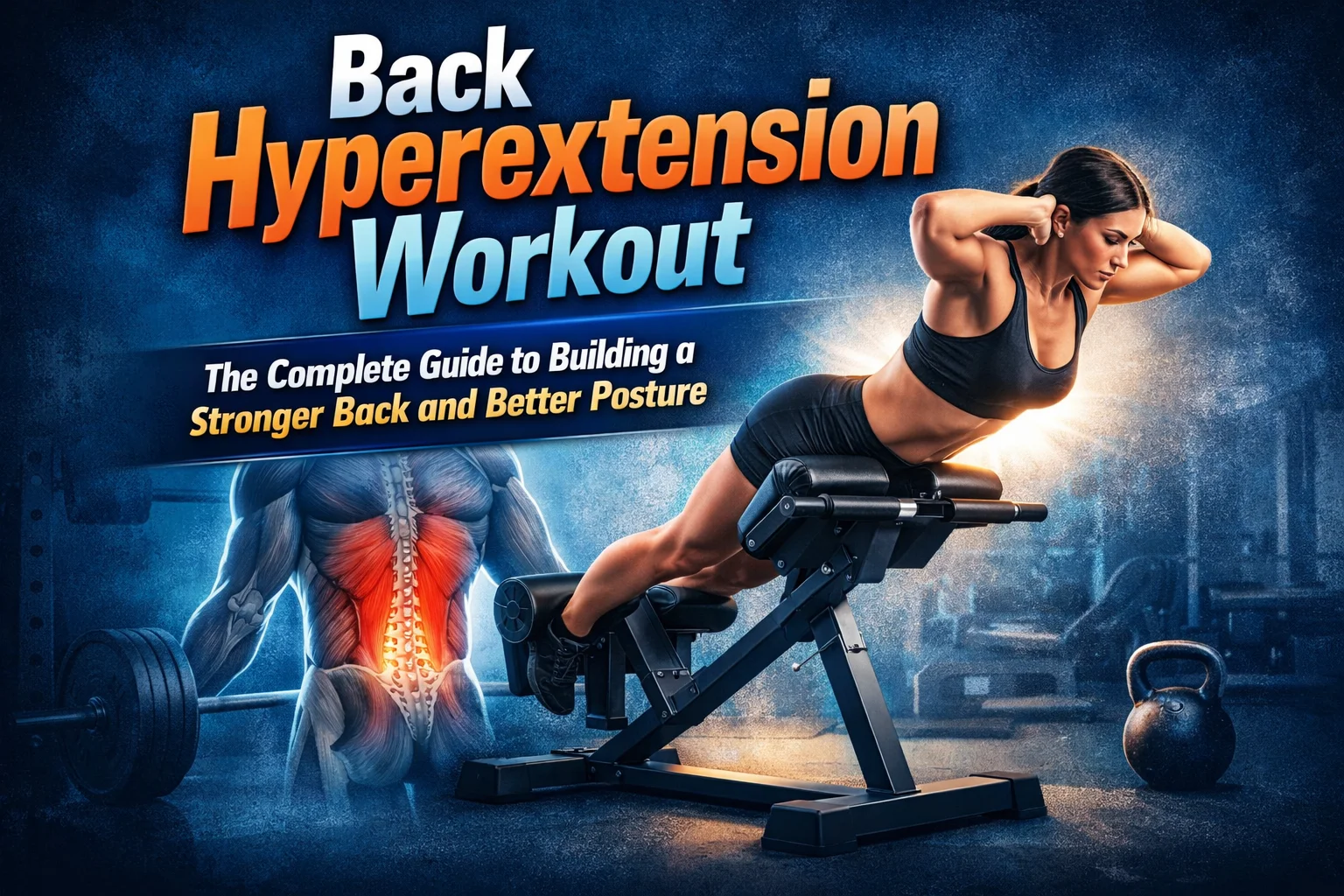
A strong back does much more than improve your appearance. It helps you stand tall, move safely, lift heavier objects, and reduce the risk of injuries. One exercise that often gets overlooked is the back hyperextension workout. While it may seem simple, this movement can strengthen important muscles that support your spine and improve overall fitness.
Many people spend hours sitting at desks, driving, or looking at screens. These habits can weaken the lower back and lead to poor posture. Adding a back hyperextension workout to your training routine can help counter these problems. It targets muscles that are difficult to train with many common exercises.
Whether you are a beginner, an athlete, or someone looking to improve back health, hyperextensions can be a valuable addition to your workouts. In this guide, you will learn everything about the exercise, including benefits, proper form, mistakes to avoid, workout variations, and tips for getting the best results.
What Is a Back Hyperextension Workout?
A back hyperextension workout is a strength-training exercise that focuses on the muscles along the back side of the body. It is often performed using a hyperextension bench, sometimes called a Roman chair.
The movement involves bending forward at the hips and then raising the upper body until it forms a straight line with the legs. During this motion, the lower back, glutes, and hamstrings work together.
Despite the name, the goal is not to overextend the spine. Instead, the exercise teaches controlled movement and strengthens the muscles that support good posture and spinal stability.
Many trainers consider hyperextensions one of the best exercises for improving the posterior chain, which includes the muscles running from the back of the legs to the upper back.
Why the Posterior Chain Matters
The posterior chain is responsible for many daily movements. Walking, running, jumping, lifting, and even standing all depend on these muscles.
When the posterior chain becomes weak, other parts of the body often try to compensate. This can lead to discomfort, poor posture, and increased injury risk.
The hyperextension back workout is effective because it targets multiple muscles at once. Rather than isolating only one area, it trains the body to work as a connected system.
Strong posterior chain muscles can improve athletic performance, support healthy movement patterns, and make everyday activities easier.
Muscles Worked During a Back Hyperextension Workout
One reason this exercise is so popular is the number of muscles involved.
Lower Back Muscles
The erector spinae muscles run along the spine. They help keep the back stable and support upright posture.
Glutes
Your glute muscles play a major role in hip extension. During hyperextensions, they help raise the torso.
Hamstrings
The hamstrings assist the glutes during the lifting phase and help stabilize the hips.
Core Muscles
The abdominal muscles work to maintain balance and protect the spine throughout the movement.
Upper Back
The upper back also helps maintain posture and proper body alignment.
Because so many muscles work together, the back workout hyperextension exercise delivers excellent value in a short amount of time.
Benefits of Adding Hyperextensions to Your Routine
Hyperextensions offer many advantages for people with different fitness goals.
First, they strengthen the lower back. This can help support better movement and reduce weakness caused by prolonged sitting.
Second, they improve posture. Strong back muscles make it easier to keep the shoulders back and maintain a neutral spine.
Third, they can enhance athletic performance. Sports that involve running, jumping, or lifting often benefit from stronger posterior chain muscles.
Another benefit is injury prevention. A balanced body is less likely to experience strains caused by muscle weaknesses.
Many lifters also report improved performance in exercises such as squats and deadlifts after consistently performing hyperextensions.
How to Perform the Exercise Correctly
Good form is essential for safety and results.
Start by adjusting the hyperextension bench so the pad rests just below your hips. Your hips should be free to move while your legs remain secure.
Cross your arms over your chest or place your hands lightly behind your head.
Slowly bend forward at the hips while keeping your back neutral. Lower your torso until you feel a stretch in the hamstrings.
Pause briefly at the bottom position.
Next, squeeze your glutes and hamstrings to raise your body. Stop when your body forms a straight line from head to heels.
Avoid lifting higher than this point. Excessive arching can place unnecessary stress on the lower back.
Repeat the movement using controlled and steady motions.
Common Mistakes to Avoid
Many people make small errors that reduce effectiveness or increase injury risk.
One common mistake is moving too quickly. Fast repetitions often reduce muscle engagement and make form harder to maintain.
Another mistake is overextending the spine at the top. The body should reach a straight line rather than leaning backward.
Using momentum is also a problem. Swinging the torso removes tension from the target muscles.
Some people position the machine incorrectly. If the pad sits too high, hip movement becomes restricted.
Poor breathing can also affect performance. Exhale while lifting and inhale while lowering.
Focusing on proper technique will help you gain the most benefits from every repetition.
Is the Back Hyperextension Workout Safe?
When performed correctly, hyperextensions are generally safe for healthy individuals.
The exercise uses natural movement patterns and can strengthen muscles that support spinal health.
However, people with existing back injuries should consult a healthcare professional before starting any new exercise program.
The key is controlled movement. Problems usually occur when people use excessive weight or force the spine into uncomfortable positions.
Beginners should start with bodyweight only. Once they master proper technique, they can gradually increase difficulty.
Listening to your body is always important. Mild muscle fatigue is normal, but sharp pain is not.
Hyperextension Variations for Different Fitness Levels
One great thing about hyperextensions is their versatility.
Beginner Hyperextensions
Start with bodyweight repetitions. Focus on learning proper form before adding resistance.
Weighted Hyperextensions
Hold a weight plate or dumbbell against your chest. This increases resistance and muscle activation.
Single-Leg Hyperextensions
Perform the movement with one leg taking most of the load. This improves balance and stability.
Glute-Focused Hyperextensions
Round the upper back slightly and focus on driving through the hips. This places more emphasis on the glutes.
Resistance Band Hyperextensions
Attach a resistance band for added tension throughout the movement.
These variations help keep training interesting and allow progression over time.
How Often Should You Do Hyperextensions?
Training frequency depends on your goals and recovery ability.
For most people, two to three sessions per week work well.
Beginners can start with two sessions and monitor how their body responds.
A typical workout might include:
- 3 sets of 10–15 repetitions
- Rest 60–90 seconds between sets
- Focus on slow, controlled movement
More advanced athletes may use heavier resistance and lower repetition ranges.
Consistency is more important than extreme volume. Performing the exercise regularly produces better results than doing large amounts occasionally.
Hyperextensions vs Deadlifts
Many people compare hyperextensions and deadlifts because both target the posterior chain.
Deadlifts are a full-body strength exercise. They build overall power and allow heavy loading.
Hyperextensions are more focused. They specifically target the lower back, glutes, and hamstrings with less overall stress.
Deadlifts require more technical skill and recovery.
Hyperextensions are easier to learn and can complement a deadlift program.
Rather than choosing one over the other, many fitness professionals recommend using both exercises together.
The combination creates a balanced approach to posterior chain development.
Using Hyperextensions for Better Posture
Poor posture has become increasingly common due to modern lifestyles.
Long periods of sitting often weaken the muscles responsible for keeping the body upright.
The hyperextension back workout strengthens these muscles and helps improve postural awareness.
While exercise alone will not fix posture overnight, it can play a major role in long-term improvement.
Combining hyperextensions with stretching and mindful sitting habits often produces the best results.
Many people notice that standing and walking feel more comfortable after several weeks of consistent training.
Can Hyperextensions Help Reduce Back Discomfort?
Many fitness enthusiasts report reduced back discomfort after strengthening their posterior chain.
Weak muscles can sometimes contribute to poor movement patterns and extra stress on the spine.
The back workout hyperextension exercise helps develop strength and endurance in the supporting muscles.
However, it is important to understand that not all back pain has the same cause.
Anyone dealing with persistent or severe pain should seek professional medical advice.
For healthy individuals, stronger back muscles often support better movement quality and daily comfort.
Sample Back Hyperextension Workout Routine
If you are new to hyperextensions, try this simple routine:
Warm-Up
- 5 minutes light cardio
- Dynamic hip stretches
- Bodyweight squats
Main Workout
- Hyperextensions: 3 x 12
- Glute Bridges: 3 x 15
- Bird Dogs: 3 x 12 per side
- Plank Hold: 3 x 30 seconds
Cool Down
- Hamstring stretch
- Hip flexor stretch
- Child’s pose
This routine strengthens key muscles while promoting balance and mobility.
Tips for Maximizing Results
Small improvements can make a big difference.
Focus on quality rather than quantity. Controlled repetitions create better muscle engagement.
Maintain a neutral spine throughout each repetition.
Increase resistance gradually over time.
Pair hyperextensions with other compound exercises for complete development.
Pay attention to recovery, sleep, and nutrition.
Most importantly, stay consistent. Progress comes from regular effort over weeks and months.
Frequently Asked Questions
1. What does a back hyperextension workout target?
It primarily targets the lower back, glutes, hamstrings, and core muscles while improving posterior chain strength.
2. Are hyperextensions good for beginners?
Yes. Beginners can safely perform bodyweight hyperextensions while focusing on proper form and control.
3. How many hyperextensions should I do?
Most people benefit from 3 sets of 10–15 repetitions two or three times per week.
4. Can hyperextensions replace deadlifts?
No. Hyperextensions and deadlifts serve different purposes. They work best when used together.
5. Should I add weight to hyperextensions?
Only after mastering bodyweight technique. Gradually increase resistance as strength improves.
6. Are hyperextensions effective for posture?
Yes. Strengthening the posterior chain can support better posture and improve spinal stability over time.
Conclusion
The back hyperextension workout is one of the most valuable yet underrated exercises for building a stronger, healthier body. It targets the lower back, glutes, hamstrings, and core while improving posture, balance, and overall movement quality.
Whether your goal is athletic performance, injury prevention, or simply feeling stronger during daily activities, hyperextensions can help. The exercise is beginner-friendly, easy to modify, and highly effective when performed with proper technique.
Start with bodyweight repetitions, focus on controlled movement, and gradually progress as your strength improves. Over time, the benefits can extend far beyond the gym.
If you have never included a hyperextension back workout in your routine, now is a great time to start. Your back, posture, and overall fitness may thank you for it.
Tipsforhealthy.com
https://tipsforhealthy.com/peptides-for-weight-loss/
