
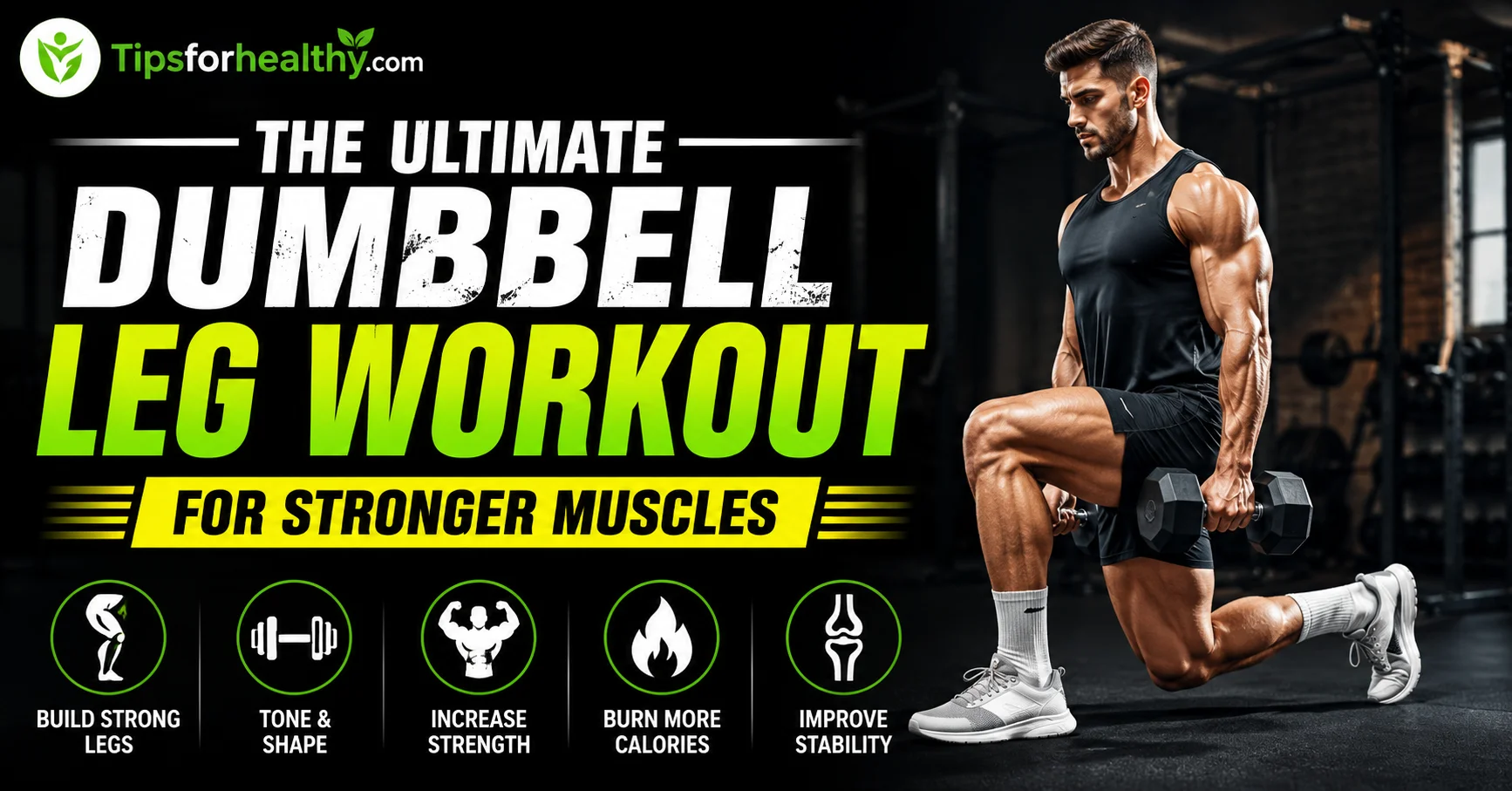
Do you want to build strong, toned legs without a massive gym machine? You are in the right place. Many people think you need heavy barbells or leg press machines to grow big leg muscles. However, that is not true at all. A simple pair of dumbbells can give you an incredible workout right at home or in a small corner of the gym.
Working out your lower body helps you burn calories fast. Your leg muscles are the biggest muscles in your whole body. When you train them, your body burns energy long after you finish your workout. This comprehensive guide will show you exactly how to structure a complete routine using only dumbbells. Get ready to feel the burn and see amazing results.
Why Choose a Dumbbell Leg Workout?
Using dumbbells for your lower body training offers unique benefits that you cannot get from big machines. First, dumbbells force each leg to work independently. This prevents your stronger leg from doing all the heavy lifting, which fixes muscle imbalances. If one leg is weaker, dumbbells will help it catch up quickly.
Second, dumbbells are great for your joint health. They allow your body to move in a natural path. Machines lock you into a fixed track, which can sometimes hurt your knees or lower back. Dumbbells let you turn your wrists and move your hips in a way that fits your unique skeleton. This makes your training much safer over time.
Finally, dumbbells build amazing core strength and balance. Because the weights can move in any direction, your small stabilizer muscles have to work extra hard to keep you steady. You will find that your balance improves in daily life, like when walking on uneven ground or climbing up long flights of stairs.
The Main Anatomy of Your Leg Muscles
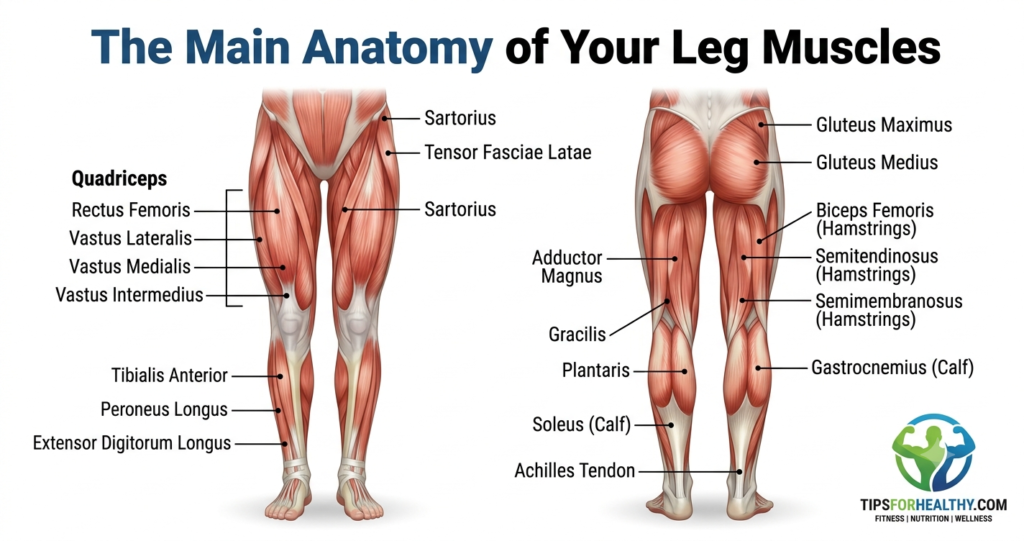
Before you start lifting, it helps to understand what you are actually training. Your lower body has four main muscle groups that you need to target. Knowing these groups will help you focus on the right areas during each exercise.
- Quadriceps (Quads): These are the muscles on the front of your thighs. They help you straighten your knees and are heavily used during squats.
- Hamstrings: These muscles run down the back of your thighs. They help you bend your knees and push your hips forward.
- Glutes: This is your backside. It is the biggest muscle group in your body and gives you power for jumping, running, and lifting.
- Calves: These are the lower leg muscles. They help you lift your heels and push off the ground when you walk.
How to Warm Up Correctly Before Lifting
Never jump straight into heavy lifting without a proper warm-up. Your muscles are like rubber bands. If you stretch them when they are cold, they might snap or tear. A good warm-up gets your blood flowing and lubricates your joints so you can move smoothly.
Spend five to ten minutes doing simple bodyweight movements. Start with gentle bodyweight squats, arm circles, and leg swings. You can also do a few walking lunges without any weights. The goal is to break a light sweat, not to tire yourself out before the real workout begins.
Exercise 1: The Dumbbell Goblet Squat
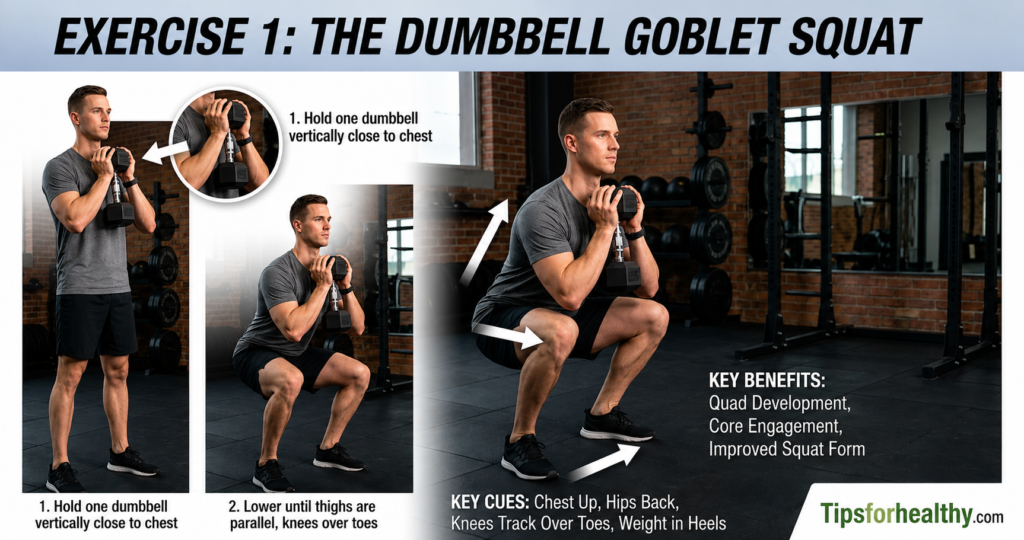
The goblet squat is one of the best movements for any dumbbell leg workout. It is very friendly for beginners but remains challenging for advanced lifters. To do it, you hold a single dumbbell vertically against your chest, right under your chin. This front-loading position helps keep your torso upright, which protects your lower back.
Stand with your feet slightly wider than shoulder-width apart. Point your toes out just a little bit. Sit back into your hips as if you are sitting down into a low chair. Keep your chest up high and your weight in your heels. Drop down until your thighs are parallel to the floor, then push hard through your feet to stand back up.
Exercise 2: Dumbbell Romanian Deadlifts
If you want to target the back of your legs, the Romanian deadlift is your best choice. This movement focuses entirely on your hamstrings and your glutes. Hold a dumbbell in each hand in front of your thighs. Stand tall with your feet matching the width of your hips.
Keep a very slight bend in your knees. Instead of squatting down, push your hips straight back toward the wall behind you. Let the dumbbells slide down the front of your legs. You should feel a deep stretch in the back of your thighs. Once the weights pass your knees, squeeze your glutes and push your hips forward to stand back up. Keep your spine perfectly straight the entire time.
Exercise 3: Dumbbell Bulgarian Split Squats
Warning: this exercise is tough, but it works wonders. The Bulgarian split squat isolates one leg at a time. This unilateral training is amazing for building balance and serious leg strength. You will need a sturdy bench, chair, or couch behind you for this movement.
Stand about two feet in front of your bench while holding a dumbbell in each hand. Reach one foot back and rest the top of your foot flat on the bench. Now, lower your hips until your back knee almost touches the floor. Your front thigh should be parallel to the ground. Press through your front heel to rise back up to the starting position. Complete all your repetitions on one side before switching legs.
Exercise 4: Walking Lunges with Dumbbells
Walking lunges are fantastic because they mimic natural human movement. They build functional strength that helps you move better in everyday life. Hold a pair of dumbbells at your sides with your arms hanging straight down. Ensure you have a clear path ahead of you before starting.
Take a large step forward with your right foot. Lower your body until your left knee is just hovering an inch above the floor. Your front right knee should form a perfect ninety-degree angle. Press through your front foot to step forward, bringing your back foot up to meet your front foot. Repeat the movement by stepping forward with your left foot.
Exercise 5: The Dumbbell Sumo Squat
The sumo squat uses a wide stance to change how the weight hits your legs. This variation targets your inner thighs and your glutes much more than a standard squat. Grab one heavy dumbbell and hold it by one end so it hangs straight down between your legs.
Step your feet out wide, well past your shoulders. Turn your toes outward at roughly a forty-five-degree angle. Keep your core tight and lower your hips straight down. Your knees must follow the same direction as your toes. Go down until your thighs match the floor, then drive through your feet to stand up.
Exercise 6: Dumbbell Calf Raises
We cannot forget about the lower legs. Strong calves support your ankles and help you run and jump with more power. This exercise is simple but highly effective. Stand tall with your feet close together, holding a dumbbell in each hand at your sides.
Press down through the balls of your feet and raise your heels as high as possible. Imagine you are standing on your tiptoes. Hold the squeeze at the very top for one second to maximize the contraction. Lower your heels slowly back to the ground. To make this harder, you can stand on the edge of a step to let your heels drop even lower.
Creating Your Weekly Workout Plan
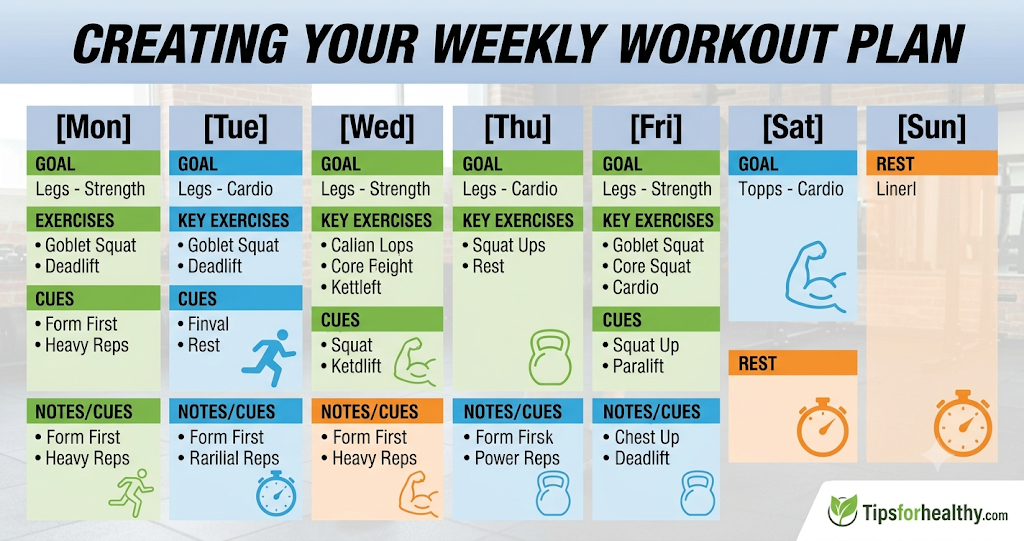
To get the most out of your training, you need a smart plan. You should not just lift weights randomly. Below is a structured routine that combines all the exercises we discussed. You can perform this routine two times per week for the best results.
Beginner to Intermediate Leg Routine
| Exercise | Target Muscle Group | Sets | Repetitions | Rest Time |
| Goblet Squat | Quads & Glutes | 3 | 10 to 12 | 60 Seconds |
| Romanian Deadlift | Hamstrings & Glutes | 3 | 10 to 12 | 60 Seconds |
| Bulgarian Split Squat | Quads & Glutes | 3 | 8 per leg | 90 Seconds |
| Dumbbell Calf Raise | Calves | 4 | 15 to 20 | 45 Seconds |
Common Mistakes to Avoid to Stay Safe
When performing a dumbbell leg workout, form is much more important than the amount of weight you lift. The most common mistake people make is letting their knees collapse inward during squats or lunges. This places massive stress on your knee joints. Always force your knees out so they line up perfectly with your toes.
Another dangerous mistake is rounding your lower back during deadlifts. When your back curves, the weight pulls on your spine instead of using your leg muscles. This is a quick way to cause a painful injury. Always keep your chest proud, your shoulders pulled back, and your core braced tightly as if someone is about to punch your stomach.
How to Choose the Right Weight
Choosing the right dumbbells can feel tricky. If the weight is too light, your muscles will not grow. If the weight is too heavy, your form will break down. A good rule of thumb is to pick a weight that feels difficult for the last two repetitions of your set.
If your training plan calls for twelve repetitions, you should feel like you could only do fourteen total before needing a break. If you finish twelve reps and feel like you could easily do twenty, the weight is too light. Gradually increase the weight over time as you get stronger. This slow increase is known as progressive overload.
Nutrition and Recovery for Leg Growth
Lifting weights is only half of the equation. Your muscles do not actually grow while you are working out. They grow while you are resting and recovering. To build strong legs, you must give your body the building blocks it needs to repair muscle tissue.
Make sure you are eating enough protein every day. Good sources include chicken, eggs, fish, tofu, and beans. Protein acts like bricks to rebuild your muscles stronger than before. Additionally, aim for seven to eight hours of high-quality sleep each night. Sleep is when your body releases its natural growth hormones.
Frequently Asked Questions
Can I build big legs with just dumbbells?
Yes, you absolutely can. Your muscles only recognize tension and stress; they do not know the difference between a barbell and a dumbbell. As long as you lift heavy enough and push close to failure, your legs will grow.
How many times a week should I train my legs?
Training your legs two times per week is ideal for most people. This frequency provides enough stimulus to trigger muscle growth while allowing your body plenty of time to rest and recover between sessions.
Why do my legs sore so much days after a workout?
This soreness is called Delayed Onset Muscle Soreness, or DOMS for short. It happens when you create tiny, harmless micro-tears in your muscle fibers during exercise. It is totally normal and will decrease as your body gets used to the routine.
What should I do if an exercise hurts my joints?
If you feel sharp joint pain, stop the exercise immediately. Sharp pain is a warning sign from your body. Check your form in a mirror or lower the weight. If the pain continues, replace that movement with a different exercise.
Can beginners do Bulgarian split squats?
They can, but it is best to start without any weights. Master the balance and the movement path using just your body weight first. Once you can do ten steady reps per leg, hold light dumbbells to increase the challenge.
Should I do cardio before or after my leg workout?
It is best to save intense cardio for after your weight training or do it on a separate day. Cardio uses up the energy stores in your muscles. If you do it first, you will be too tired to lift safely and effectively.
Conclusion: Take Action Today
Starting a dedicated dumbbell leg workout routine is one of the best decisions you can make for your fitness journey. You do not need an expensive gym membership or complex equipment to build a powerful lower body. All you need is a pair of weights, some open space, and consistency.
Pick two days this week to try out these movements. Focus on keeping your form clean, breathing deeply, and challenging yourself. Your legs carry you through life every single day, so give them the strength they deserve. Leave a comment below if you have any questions about these exercises, and share your fitness progress with us!
