
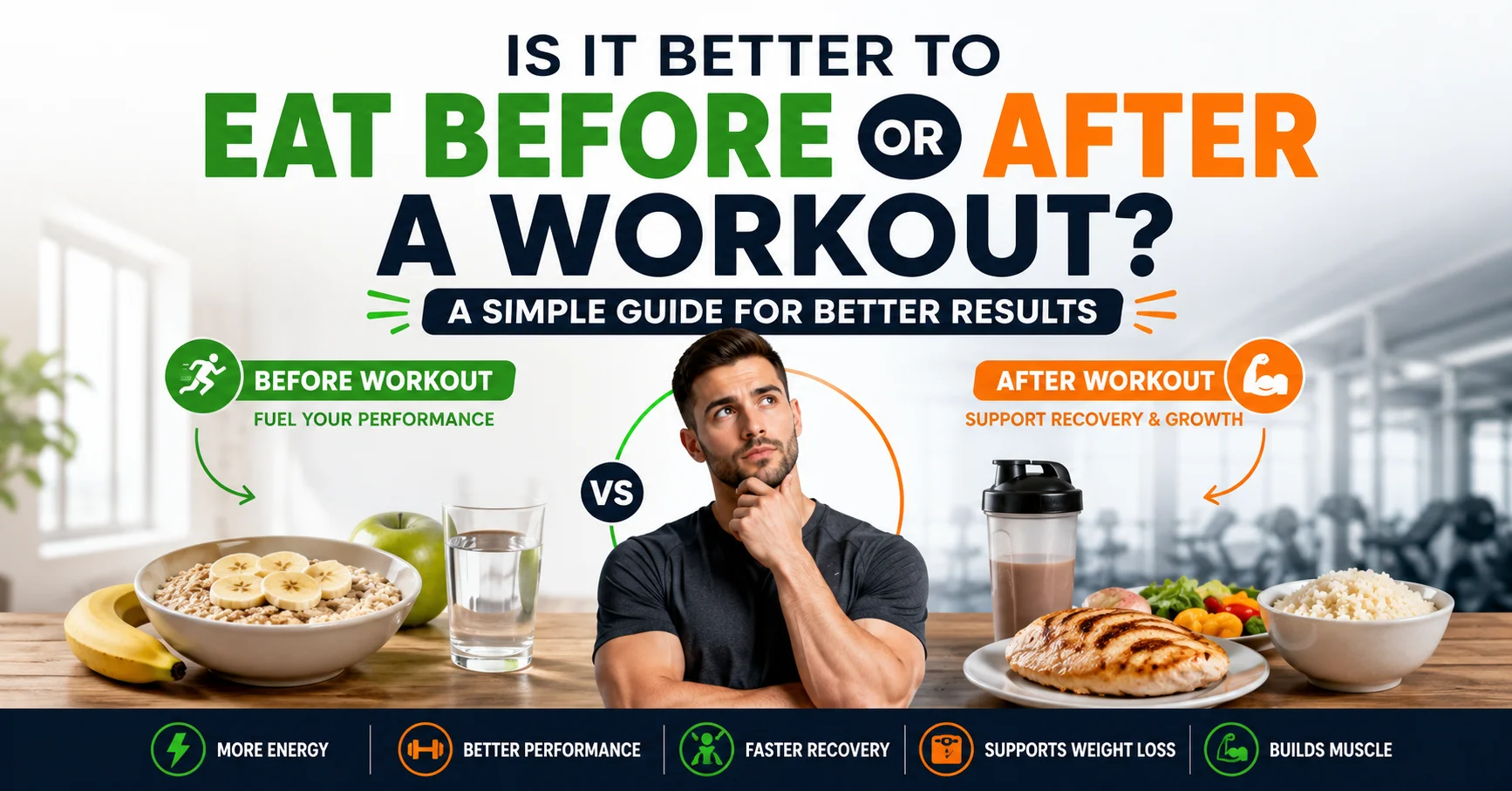
When it comes to fitness, many people ask the same question: is it better to eat before or after a workout? The answer depends on your goals, workout style, body type, and daily routine. Some people feel strong after eating before exercise, while others prefer training on an empty stomach.
The good news is that both options can work. What matters most is choosing the right timing and foods for your body. Eating at the right time can improve energy, muscle recovery, fat loss, and overall performance.
Many beginners think they need expensive supplements or strict diets to see results. That is not true. Simple meals and smart timing often work better than complicated fitness plans. I learned this myself after changing my eating habits around workouts. Once I started paying attention to meal timing, my energy improved and my workouts felt easier.
In this guide, you will learn everything about workout nutrition in a simple way. We will discuss the benefits of eating before and after exercise, the best foods to choose, common mistakes, and tips for weight loss or muscle gain.
Why Workout Nutrition Matters
Your body needs fuel to move, lift, run, and recover. Food gives your muscles energy and helps repair them after exercise. Without proper nutrition, workouts may feel harder and recovery may take longer.
Think of your body like a car. A car cannot run well without fuel. In the same way, your body performs better when you eat the right foods at the right time.
Eating around workouts can help with:
- Better energy levels
- Faster muscle recovery
- Improved performance
- Reduced muscle soreness
- Better fat burning
- Muscle growth
People often focus only on exercise and ignore nutrition. But both work together. Even the best workout routine may not give results if your meals are poor.
This is why many fitness experts talk about pre-workout meals and post-workout recovery foods. Timing matters because your body uses nutrients differently before and after exercise.
Is It Better to Eat Before or After a Workout?
The truth is simple: both can help depending on your goals.
If you want more energy and strength during exercise, eating before a workout may help. If your goal is muscle recovery and repair, eating after exercise becomes very important.
For most people, the best approach is to eat a light meal before training and a balanced meal afterward. This supports both performance and recovery.
However, every person is different. Some people feel sick if they eat before exercise. Others feel weak without food. You should test what feels best for your body.
Here is a quick breakdown:
| Goal | Best Timing |
|---|---|
| More workout energy | Eat before |
| Faster muscle recovery | Eat after |
| Weight loss | Either can work |
| Muscle gain | Both are important |
| Morning fasted cardio | May work for some |
The key is consistency. Healthy eating habits matter more than perfect timing.
Benefits of Eating Before a Workout
Eating before exercise gives your body fuel. This can improve endurance, strength, and focus during workouts.
Carbohydrates are especially helpful because they provide quick energy. Protein before workouts may also protect muscles during exercise.
A pre-workout meal can help you:
- Feel more energetic
- Improve workout performance
- Reduce tiredness
- Prevent dizziness
- Support muscle maintenance
I noticed a huge difference when I started eating a banana and oatmeal before workouts. My energy stayed steady, and I did not feel exhausted halfway through training.
People who do intense workouts often benefit the most from eating before exercise. Activities like weightlifting, running, cycling, or sports require energy.
Still, meal size matters. Large meals right before training may cause stomach discomfort. Smaller meals are usually better.
Best Foods to Eat Before a Workout
The best pre-workout foods contain carbohydrates, moderate protein, and low fat. These foods digest easier and provide steady energy.
Good options include:
- Oatmeal with fruit
- Banana with peanut butter
- Greek yogurt with berries
- Whole grain toast with eggs
- Smoothies with protein and fruit
- Rice with chicken
- Cottage cheese and fruit
Carbs help fuel your workout, while protein supports muscles. Fat and fiber should stay moderate because they digest slowly.
Hydration also matters. Drink water before exercising to avoid dehydration.
A simple meal around 1–3 hours before exercise works well for most people. If you are short on time, a small snack 30 minutes before training can still help.
Benefits of Eating After a Workout
After exercise, your muscles need nutrients to recover. This is where post-workout nutrition becomes important.
Exercise creates tiny tears in muscles. Protein helps repair them. Carbohydrates help refill stored energy called glycogen.
Eating after a workout may help:
- Build muscle
- Reduce soreness
- Improve recovery
- Restore energy
- Support metabolism
Many people skip meals after exercise because they feel busy or tired. But recovery nutrition is important, especially after intense training.
I personally recover faster when I eat protein after workouts. Without it, my muscles feel sore longer.
The body becomes more sensitive to nutrients after exercise. This makes it a good time to eat balanced meals.
Best Foods to Eat After a Workout
Post-workout meals should include protein and healthy carbohydrates. This combination supports recovery and muscle repair.
Some good post-workout foods include:
- Grilled chicken with rice
- Protein shake and banana
- Eggs with toast
- Salmon with potatoes
- Greek yogurt with fruit
- Turkey sandwich
- Cottage cheese with berries
Protein helps repair muscles, while carbs restore energy.
Water is also important after exercise. Sweating causes fluid loss, so hydration supports recovery and performance.
Many people think they need fancy supplements after workouts. In reality, whole foods often work just as well.
Can You Work Out on an Empty Stomach?
Some people prefer fasted workouts, especially in the morning. This means exercising without eating first.
Fasted cardio became popular for fat loss. The idea is that the body burns more stored fat when no food is available.
For light workouts, fasted exercise may feel fine. Walking, yoga, or easy cardio often work well without food.
However, intense exercise on an empty stomach can reduce energy and performance. Some people feel weak or dizzy.
Research on fasted workouts is mixed. Fat loss mainly depends on total calories and consistency, not just workout timing.
If you feel strong while training fasted, it may work for you. If you feel tired or shaky, eating first is probably better.
Is It Better to Eat Before or After a Workout for Weight Loss?
Many people asking is it better to eat before or after a workout are trying to lose weight.
The truth is that both strategies can help with weight loss. The biggest factor is your total daily calorie intake.
Eating before workouts may improve performance, allowing you to burn more calories during exercise. Eating after workouts may reduce overeating later.
For weight loss, focus on:
- Balanced meals
- Protein intake
- Portion control
- Regular exercise
- Healthy habits
Protein is especially important because it helps keep you full and supports muscle maintenance during fat loss.
Some people enjoy fasted cardio for weight loss. Others perform better with a small snack before exercise. There is no single perfect method.
Consistency matters more than timing alone.
Is It Better to Eat Before or After a Workout for Muscle Gain?
Muscle growth requires both training and nutrition. In this case, eating before and after workouts can help.
Protein supports muscle repair, while carbohydrates provide energy for hard training.
Before workouts, carbs help fuel strength and performance. After workouts, protein helps muscles recover and grow.
For muscle gain, try to include:
- Protein at every meal
- Healthy carbohydrates
- Enough calories
- Strength training
Good protein sources include:
- Chicken
- Eggs
- Fish
- Greek yogurt
- Cottage cheese
- Lean beef
- Protein shakes
People trying to build muscle should avoid skipping meals after workouts. Recovery nutrition plays a major role in progress.
How Long Should You Wait to Eat Before Exercise?
Meal timing depends on meal size.
Large meals need more digestion time. Small snacks digest faster.
General guidelines:
| Meal Size | Time Before Workout |
|---|---|
| Large meal | 2–3 hours |
| Medium snack | 1 hour |
| Small snack | 30 minutes |
Eating too close to exercise may cause cramps or bloating.
Everyone digests food differently. You may need to experiment to find your ideal timing.
For example, I can eat fruit 30 minutes before cardio without issues. But heavy meals before running make me uncomfortable.
Listen to your body.
How Soon Should You Eat After a Workout?
Many people talk about the “anabolic window.” This refers to the period after exercise when muscles absorb nutrients well.
Experts once believed you had to eat immediately after workouts. Newer research suggests the timing is more flexible.
Still, eating within 1–2 hours after exercise is a smart idea. This supports recovery and reduces hunger later.
Protein after workouts is especially helpful if you do strength training.
If you ate a balanced meal before exercise, the timing becomes less critical. But regular nutrition still matters.
Common Workout Nutrition Mistakes
Many people make small mistakes that hurt their progress.
Here are common problems:
Skipping Water
Dehydration reduces energy and performance. Drink water before and after workouts.
Eating Too Much Before Exercise
Heavy meals can cause stomach pain and sluggishness.
Avoiding Protein
Protein helps muscles recover and grow.
Depending Only on Supplements
Whole foods should come first.
Exercising Without Enough Fuel
Low energy may reduce workout quality.
Overthinking Meal Timing
Healthy daily eating habits matter more than exact timing.
Simple habits often create the best long-term results.
Best Pre-Workout Snacks for Busy People
Not everyone has time for full meals. Quick snacks can still help fuel workouts.
Easy options include:
- Banana
- Protein bar
- Apple with peanut butter
- Yogurt cup
- Smoothie
- Rice cakes
- Trail mix
These snacks are simple, portable, and beginner-friendly.
Choose foods that feel comfortable in your stomach during exercise.
Best Post-Workout Meals for Recovery
Recovery meals do not need to be complicated.
Simple combinations work well:
- Chicken and rice
- Tuna sandwich
- Eggs and toast
- Protein smoothie
- Turkey wrap
- Salmon and vegetables
Balanced meals support energy and recovery better than junk food.
Many people reward workouts with unhealthy meals. This can slow progress, especially during weight loss goals.
Should Morning and Evening Workouts Have Different Meals?
Yes, sometimes.
Morning workouts often happen after fasting overnight. Small snacks may improve energy.
Evening workouts usually happen after meals during the day, so energy levels may already be higher.
Morning pre-workout ideas:
- Banana
- Toast
- Yogurt
- Small smoothie
Evening post-workout meals:
- Lean protein
- Vegetables
- Rice or potatoes
The best routine is the one you can follow consistently.
Listening to Your Body Matters Most
Fitness advice online can feel confusing. Some people swear by fasted workouts. Others insist you must eat before exercise.
The truth is simpler than many people think.
Your body gives signals. Pay attention to:
- Energy levels
- Hunger
- Performance
- Recovery
- Digestion
What works for one person may not work for another.
I learned this through trial and error. Some days I need food before training. Other days a light snack works best.
The goal is finding a routine that feels sustainable and healthy.
FAQs About Eating Before or After Workouts
Is it better to eat before or after a workout for fat loss?
Both can work. Weight loss mainly depends on calorie balance and consistent exercise.
What should I eat before a workout?
Choose light foods with carbs and protein, like oatmeal, fruit, yogurt, or toast with eggs.
What should I eat after exercise?
Eat protein and carbs to support recovery. Chicken, rice, eggs, and smoothies are good choices.
Can I work out without eating?
Yes, some people enjoy fasted workouts. However, others may feel weak or tired without food.
How long after a workout should I eat?
Try to eat within 1–2 hours after exercise for better recovery and muscle repair.
Conclusion
So, is it better to eat before or after a workout? The answer depends on your goals, body, and workout style. Eating before exercise may improve energy and performance, while eating afterward supports recovery and muscle growth.
For most people, combining both strategies works best. A small meal before workouts and balanced nutrition afterward can improve results, energy, and recovery.
Remember, you do not need a perfect diet to stay healthy. Simple habits matter most. Focus on balanced meals, hydration, regular exercise, and consistency.
Fitness should feel sustainable, not stressful. Test different meal timings, notice how your body feels, and choose what works best for you.
